7-ton asteroid lights up daylight sky, fragments over Valley City, Ohio; sonic booms felt for miles
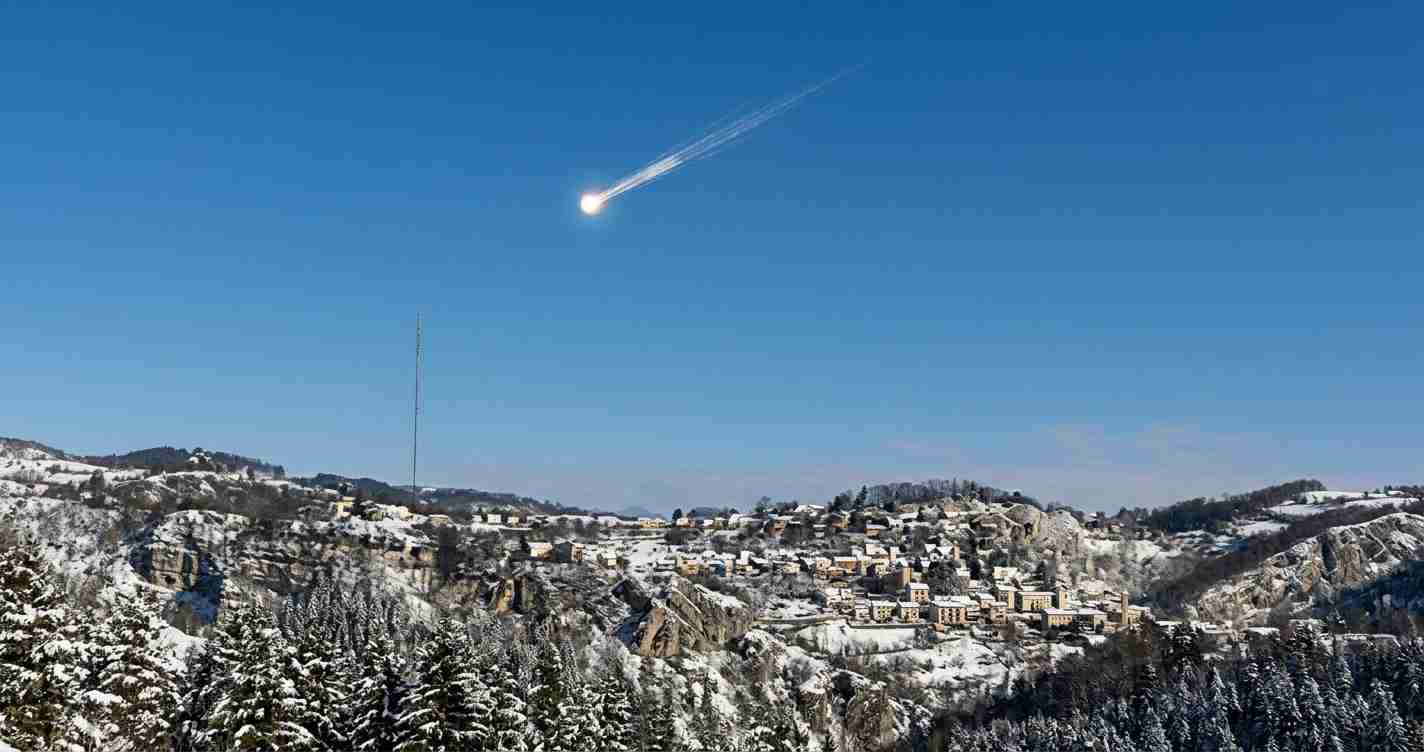
A massive seven-ton asteroid roughly six feet wide produced a dramatic daylight fireball above Lake Erie on March 17, 2026, breaking apart over Valley City, Ohio, and generating sonic booms and ground-level pressure waves felt across multiple states.
Key takeaways
- Daylight fireball: A ~6-foot, ~7-ton object created a bright daytime fireball above Lake Erie before fragmenting over Valley City, Ohio.
- Powerful breakup: NASA estimates the fragmentation released energy ~equal to 250 tons of TNT, producing sonic booms heard for miles.
- Path and reports: The object moved south-southeast ~40,000–45,000 mph, traveling 34+ miles in the upper atmosphere; eyewitness reports came from numerous states and Canada.
- Fragments and search: Small fragments may have reached Medina County; organized searches and reporting procedures are underway.
What happened
Just before 9 a.m. ET on Tuesday, March 17, 2026, observers saw a very bright daylight fireball above Lake Erie that moved south-southeast and broke apart over Valley City, Ohio. NASA estimated the object was about six feet across and weighed roughly seven tons; when it fragmented it released energy equivalent to about 250 tons of TNT, producing the pressure wave responsible for the sonic booms many people reported (CBS News, Los Angeles Times).
Path, size and energy
Instrument and eyewitness reconstructions show the object traveled more than 34 miles through the upper atmosphere at speeds up to about 45,000 mph, breaking apart roughly 30 miles above Valley City. Some fragments continued on a southward trajectory, raising the possibility of meteorites near Medina County. The size, speed and fragmentation timing combined to create a pressure pulse detected on the ground (sources: CBS News, Los Angeles Times).
A rare daytime fireball, captured on camera
Employees at the National Weather Service office in Pittsburgh recorded dramatic footage of the streak across the sky, and the NWS geostationary lightning mapper detected a green flash over Cleveland as the object entered the atmosphere. Those instrument detections helped scientists reconstruct the trajectory and timing (CBS News).
NASA and the American Meteor Society received reports from witnesses across a broad region — Delaware, Indiana, Illinois, Kentucky, Maryland, Michigan, New York, Ohio, Pennsylvania and the District of Columbia — with additional reports from Wisconsin and Ontario, Canada. The bright daylight appearance made the event visible unusually far from the breakup location (Los Angeles Times, CBS News).
Sonic booms and local reaction
As the asteroid fragmented and lost mass, it deposited energy high in the atmosphere and created a pressure wave that reached the ground as one or more loud booms. NASA said the sound was louder and longer than a typical aircraft sonic boom because of the energetic breakup and relatively low altitude of fragmentation (CBS News, Signal Cleveland).
Northeast Ohio residents reported rattling windows, door chimes activating and brief shaking of houses. Emergency managers in Lorain County and other local offices logged numerous calls; early checks reported no immediate damage or injuries. National Weather Service staff in Cleveland and other offices said they felt or heard the vibrations themselves (Signal Cleveland).
Science behind the spectacle
Fireballs (very bright meteors) are relatively common, but daytime fireballs that produce ground-level booms are much rarer. Whether a pressure wave is heard depends on speed, altitude and fragmentation behavior. Many meteors break up high enough that pressure waves dissipate before reaching the surface; in this case the breakup was energetic and low enough for the wave to travel to ground.
NASA’s Meteoroid Environments Office analyzed instrument data and eyewitness reports; Bill Cooke and colleagues processed recordings and mapped debris paths. Internally, some NASA scientists referred to the event as “Chicken Little” while studying the recordings (CBS News).
Fragments and the search for meteorites
Only a small fraction of an original meteoroid typically survives to the ground; NASA notes that most meteors smaller than a football field burn up, and usually less than 5% of the original mass reaches the surface as meteorites. Scientists estimate a small portion of this 7-ton object may have reached the surface near Medina County, south of Valley City, but as of early reports there were no verified recoveries (CBS News, Los Angeles Times).
Local officials and volunteer groups in Medina County have begun organizing searches and coordinating with state and federal agencies to document any finds and ensure safety. Authorities urge residents to not disturb suspected meteorite sites without permission and to report potential finds to local law enforcement, county officials or organizations such as the American Meteor Society for identification (Signal Cleveland, Los Angeles Times).
“Photograph the find in place, note GPS coordinates, and contact local authorities or an established meteorite-reporting organization.”
Context: recent activity and monitoring
The Valley City event follows other regional fireballs reported in Ohio earlier in March and February, some captured on doorbell cameras. Such episodes demonstrate how modern sensor networks — weather satellites, lightning mappers, regional cameras and social reports — help scientists detect and track small asteroids entering Earth’s atmosphere (CBS News).
What authorities are advising
- Report sightings: If you saw the flash or heard the boom, submit eyewitness information to organizations such as the American Meteor Society and NASA to refine the path (Los Angeles Times).
- Do not disturb sites: Do not dig on private property without permission; meteorites have scientific value and may be protected (Signal Cleveland, Los Angeles Times).
- Document finds: Photograph in place, note GPS coordinates and contact local authorities or an established meteorite-reporting organization for guidance.
Implications for Fresno, California
Public awareness and preparedness: Although the event occurred over Ohio, it underscores that small asteroids frequently strike Earth’s atmosphere. Fresno residents should be aware that visible fireballs and rare sonic booms can occur anywhere; clear communication from local emergency managers helps calm concerns.
Science and education: The Valley City event offers opportunities for Fresno schools, museums and community groups to teach about meteors, atmospheric physics and near-Earth objects, connecting local audiences to national tracking efforts.
Search and recovery best practices: The same rules apply regardless of location: document suspected finds, do not disturb property without permission, and report to authorities or established organizations. Fresno-area collectors and amateur astronomers sometimes assist searches elsewhere; coordination with officials is essential.
Infrastructure and safety: The 250-ton equivalent blast pressures did not cause reported damage in Ohio, and most small asteroids pose minimal risk. Still, robust public messaging prevents misidentification of atmospheric events as explosions or infrastructure failures.
Cultural and community interest: Events like this can inspire local news coverage, museum programs and community talks that tie Fresno residents to broader science efforts tracking near-Earth objects.
Sources for reporting and further reading
Reporting contributed by Times Media Service; science reporting based on statements from NASA and the National Weather Service.