
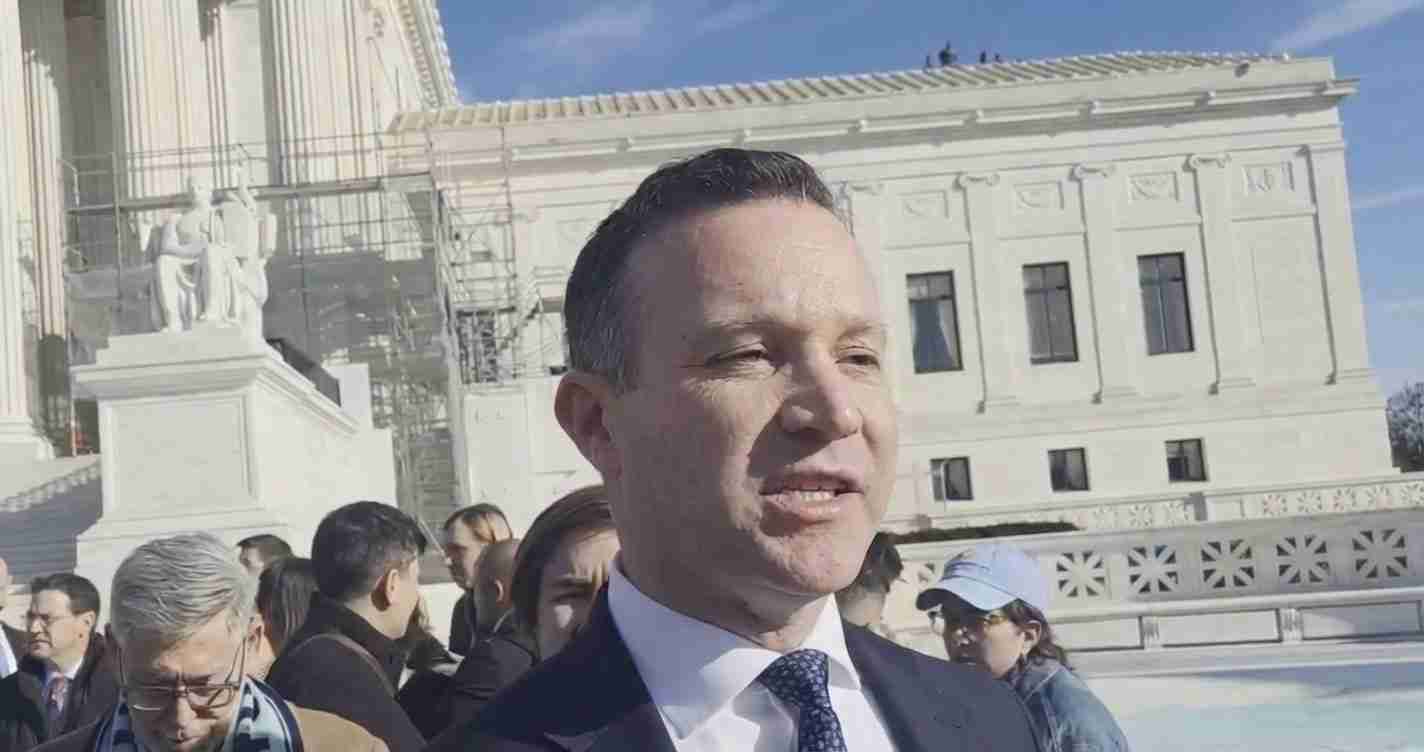
GOP Rep. Nancy Mace slams ACLU attorney for refusing to define “sex” at Supreme Court hearing in trans-athlete case
During a January 13, 2026 Supreme Court hearing, ACLU attorney Joshua Block declined to define “sex” while arguing West Virginia v. B.P.J., a challenge to a 2021 West Virginia law banning transgender biological males from girls’ sports, sparking political backlash.
- Key takeaway: ACLU attorney Joshua Block resisted adopting a single nationwide definition of sex in Title IX arguments, prompting sustained questioning from justices.
- Political reaction: Rep. Nancy Mace posted courtroom video and criticized the ACLU’s credibility; West Virginia counsel John Bursch called the stance “completely bizarre.”
- Local stakes: A Supreme Court ruling could reshape school-sports eligibility rules nationwide and produce tangible impacts for Fresno-area schools, families and recruiters.
What happened at the hearing
At oral argument in West Virginia v. B.P.J., ACLU attorney Joshua Block argued that Title IX does not require the Court to adopt a specific, narrow definition of sex and warned that treating sex only as a biological category could miss other forms of discrimination, such as punishing a man for acting feminine. (See Fox News reporting.)
Chief Justice John Roberts pushed back, saying the word “sex” in Title IX “must mean something” and asking how the Court could decide the case without some workable definition. Justice Samuel Alito similarly pressed on whether common words like “man,” “woman,” “boy” or “girl” have legal meaning — an exchange reporting outlets captured in real time. (See Fox News account and Ground.News roundup.)
Block did, however, soften his position for the purposes of the case: he said he could accept “for the sake of this case” that West Virginia was using the term to refer to biological sex, but he resisted proposing a single nationwide definition that the Court should adopt. (Reported at Fox News.)
Other moments from the argument
The argument explored how the law operates in practice. Block downplayed some competitive impacts — noting, for example, that cross-country teams often do not make cuts — and described displacements by transgender athletes as “unfortunate” but not always unfair. He also warned that forcing a transgender girl to play on a boys’ team could be harmful. (Report: Fox News.)
After the argument, reporters sought Block’s personal definition of sex; media accounts say he declined and walked away without answering. (See Fox News post.)
Political reactions and public comments
Rep. Nancy Mace (R‑S.C.) posted footage of the exchange on X, writing:
“If the ACLU can’t even define what sex is, they have no credibility lecturing anyone about sex discrimination, which is the whole basis of their argument.”
Her post and the video were widely shared in conservative outlets. (See Fox News coverage.)
John Bursch, lawyer for West Virginia and for the female athletes challenging the law, called Block’s approach “completely bizarre,” arguing it is impossible to decide how Title IX or the Equal Protection Clause applies without settling what “sex” means and noting that Title IX was written around biological distinctions. (Statement reported at Fox News.)
The coverage and its leanings
Much of the immediate, detailed reporting cited here comes from conservative-leaning outlets and aggregators. Ground.News and other assemblers noted the prominence of right-leaning coverage in post‑hearing accounts; some outlets framed the case as a potential turning point that could allow courts to uphold state bans on transgender girls competing on girls’ teams. (See coverage at Ground.News and reporting aggregations such as AOL News.)
What the case is about
At the center of West Virginia v. B.P.J. is whether a 2021 West Virginia law restricting participation in girls’ school sports to students who are biologically female violates federal law — including Title IX and the Constitution. The Court’s treatment of the word sex could determine how schools and states write and enforce eligibility rules nationally. (Background reporting: Fox News.)
Why definition matters
Legal rules turn on language. If the Supreme Court accepts a biological definition of sex for Title IX, states may have wider latitude to restrict transgender girls from girls’ teams. If the Court adopts a broader understanding tied to gender identity or anti-discrimination principles, state bans could be vulnerable to challenge. The justices’ questions signaled that the choice will have concrete consequences for schools, athletes and families.
Implications for Fresno, California
A national ruling will reverberate locally in Fresno across economic, political and social lines:
Economic impact
High school sports generate revenue and visibility for Fresno‑area schools and the Central Valley. Changes in national standards could affect enrollment, travel budgets and the local appeal of postseason competition; differing state rules could also create confusion for college recruiters and event organizers.
Political consequences
Fresno sits in a politically mixed region where school boards and local officials already face heated education debates. A decision favoring state bans could spark renewed local policy fights, school board meetings and campaign activity tied to district governance.
Social effects
Families in Fresno include transgender and cisgender students, parents and coaches seeking fair play and safety. A ruling could create uncertainty around team membership, tryouts and locker‑room policies, prompting advocacy groups to press districts for clear guidance and support.
Practical applications for Fresno schools and families
- Districts (including Fresno Unified) should review athletic policies and consult legal counsel to align with state law and any new federal guidance.
- Coaches and athletic directors may need training on eligibility rules, student privacy and dispute management.
- Districts can host community forums to explain policies, gather feedback and reduce confusion.
- Families should monitor district communications and be prepared to seek clarification if eligibility decisions affect team placement.
Reporting notes and sources
This article draws on immediate post‑hearing reports and public social posts documenting courtroom exchanges and public reactions. Key accounts and quotes are reported by Fox News and related pieces (Fox News analysis), coverage gathered at Meaww, a roundup at Ground.News, and aggregated reporting such as AOL News.
Local officials and Fresno-area school districts did not provide comment at the time of publication; readers should look for district statements as the Court’s decision approaches.



