
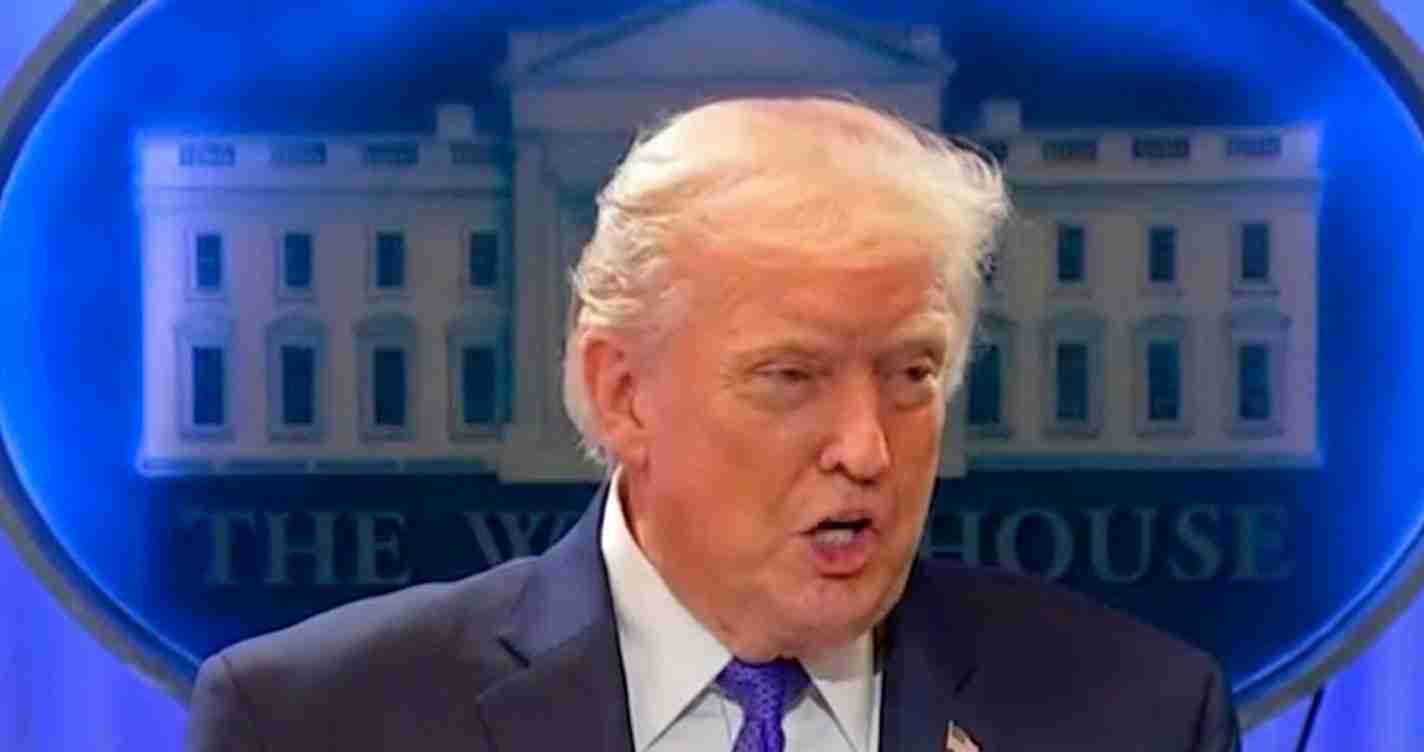
Trump blasts Supreme Court majority as “automatic no,” vows New 10% Global Tariff after 6-3 Tariffs Ruling
President Trump held a White House press conference on February 20, 2026, after a 6-3 Supreme Court ruling struck down his emergency-order tariffs; he attacked the majority and announced a new 10% global tariff by executive order.
Key takeaways
- Supreme Court rebuke: A 6-3 majority found the emergency-order tariffs exceeded presidential authority, with Roberts, Gorsuch and Barrett joining the liberal justices in the majority. See Democracy Docket and Los Angeles Times.
- Dissent and consequences: Justices Thomas, Alito and Kavanaugh dissented; Kavanaugh warned of refunds for collected tariffs and serious practical consequences.
- Trump’s reaction: He attacked the majority as “automatic no” voters, praised dissenters, and announced a New 10% Global Tariff by executive order while signaling other legal routes.
Main story
WASHINGTON (Times Media Service) — President Trump held a White House press conference on February 20, 2026, hours after the Supreme Court handed down a 6-3 decision striking down his sweeping tariffs imposed via emergency powers. He criticized the majority justices, praised the dissenters and immediately announced alternative tariff plans, including a New 10% Global Tariff by executive order — signaling a major policy confrontation.
What the Court said
The high court concluded that using declared emergency powers to impose sweeping tariffs ran afoul of federal law and that major tariff and tax policy belong to Congress, not the president acting unilaterally. Chief Justice John Roberts and conservative justices Neil Gorsuch and Amy Coney Barrett joined liberal justices Sonia Sotomayor, Elena Kagan and Ketanji Brown Jackson in the majority — a coalition the opinion uses to stress congressional primacy on taxation and trade. (Reporting cited at Democracy Docket and Los Angeles Times.)
Kavanaugh’s dissent and legal stakes
Justice Brett Kavanaugh wrote the principal dissent, arguing that long-standing presidential practice supports broader executive authority over tariffs. He warned of “serious practical consequences,” including the possibility that tariffs already collected may need to be refunded — a point highlighting immediate financial and legal uncertainty.
Why it matters: The dissent presents a sharply different historical reading and underscores the contested balance between Congress and the White House on trade. Legal experts say similar challenges could arise if the administration pursues a broad, across-the-board tariff under other statutory authorities. (See Democracy Docket and Los Angeles Times reporting.)
Trump’s response and the announced New 10% Global Tariff
At the White House, Trump framed the ruling as partisan and unfair. He repeatedly described the three liberal justices as “automatic no” voters and called them “a disgrace to our nation,” while thanking Justices Clarence Thomas, Samuel Alito and Brett Kavanaugh for their dissents. He said the decision was a temporary setback and announced plans for a New 10% Global Tariff to be issued by executive order.
Administration rationale: Trump argued the alternative plan would collect “hundreds of billions of dollars” and make the country “a lot stronger,” claiming there are “alternatives” such as actions under the 1974 Trade Act and the 1962 Trade Expansion Act. Treasury Secretary Scott Bessent has said the administration sees other legal paths to replicate parts of the tariff program. (See Los Angeles Times.)
Legal analysis and likely challenges
Legal experts warn that an across-the-board 10% tariff issued by executive order could face immediate court challenges testing whether the action exceeds statutory authority in the same way the emergency-order tariffs were struck down. Courts will likely examine whether the cited statutes actually authorize such broad, unilateral trade measures and whether refunds for previously collected tariffs are required — an outcome flagged by Justice Kavanaugh’s dissent.
Political reactions and stakes
Democratic officials praised the ruling. Senator Elizabeth Warren urged refunds for Americans who paid the earlier tariffs and called the policy damaging; California Governor Gavin Newsom called the prior tariffs an “illegal cash grab” that hurt households and U.S. alliances. Republican reactions were mixed: some conservatives welcomed the dissenting opinions and defended stronger trade tools, while other Republicans urged a pivot to broader economic messaging to retain congressional support ahead of elections.
Broader context: executive power, trade and the courts
The decision is a notable check on the administration’s use of emergency powers for trade policy and one of the most direct public attacks on Supreme Court justices by President Trump since his return to office. The majority opinion — and a separate concurrence by Justice Gorsuch emphasizing respect for Congressional authority on taxation and trade — reinforce that major economic tools like tariffs are primarily congressional prerogatives. (Reporting consolidated from Democracy Docket and Los Angeles Times.)
Economic questions
While the administration projects significant revenue from a New 10% Global Tariff, economists warn tariffs act as taxes on imports and can raise costs for businesses and consumers. Companies dependent on global supply chains may face higher input costs; consumers could see price increases on everyday goods. This trade-off is central to debates over both the emergency powers and any alternative tariff plan.
Implications for Fresno, California
Economic impact: Fresno and the San Joaquin Valley are major agricultural hubs. Many farms and food processors rely on imported inputs — fertilizers, equipment, packaging and parts. A New 10% Global Tariff or other higher trade barriers could raise costs for growers and processors, squeeze profit margins, and potentially lead to higher local food prices. Export markets could be affected if trading partners retaliate, reducing demand for Central Valley crops. (Source reporting in Los Angeles Times.)
Political consequences: Fresno-area leaders may face pressure from constituents worried about higher prices and farm income; state leaders who criticized the prior tariffs may push for congressional remedies or targeted relief.
Social and cultural effects: Low- and middle-income Fresno households are sensitive to price changes; tariff-driven inflation could increase demand for food banks and social services. Farmers value predictable policy, and sudden shifts or legal uncertainty may unsettle long-standing export relationships.
Practical advice: Local businesses should review supply chains and pricing, consider hedging, seek alternative suppliers, and coordinate with state officials on relief options. Residents should monitor potential price volatility and any congressional action on refunds or tariff adjustments.
Sources and further reading
- Democracy Docket: “Trump Supreme Court Disloyal Tariffs Ruling”
- Los Angeles Times: “Trump lashes out at justices, announces new 10% global tariff”
Reporting consolidated from Times Media Service; source material cited above.



