Jackie and Shadow lay new egg on Big Bear Lake nest cam, reigniting hope after raven attack
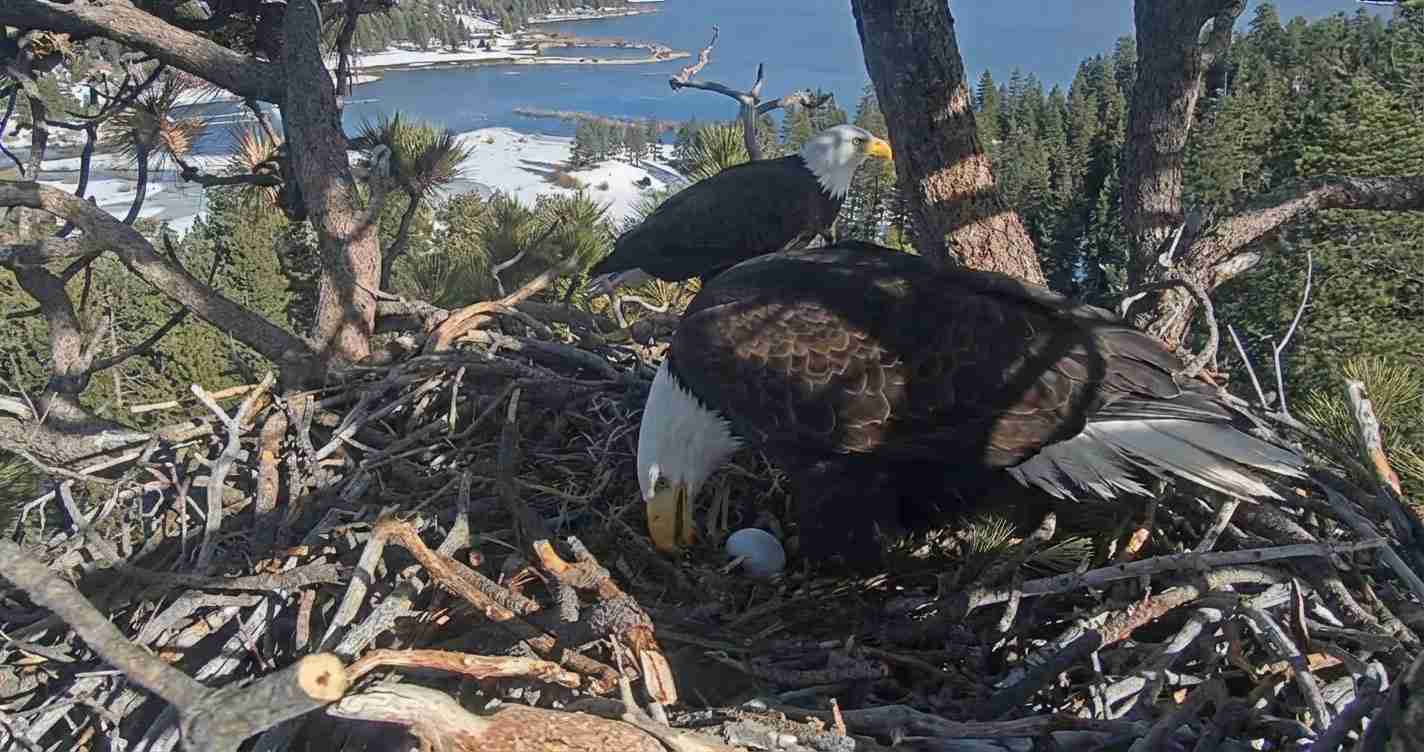
Jackie and Shadow, Big Bear Lake’s iconic bald eagle pair, laid a new egg Feb. 24, 2026, live on the Friends of the Big Bear Valley nest cam — the first egg of a second clutch after ravens destroyed earlier eggs.
- New egg recorded: Jackie laid the egg at about 2:30 p.m. Feb. 24, 2026, observed on the Friends of the Big Bear Valley Eagle Live Nest Cam (FOBBV).
- Second clutch after loss: This is the first egg in a second clutch after ravens destroyed two eggs on Jan. 30; bald eagle eggs typically incubate about 35 days.
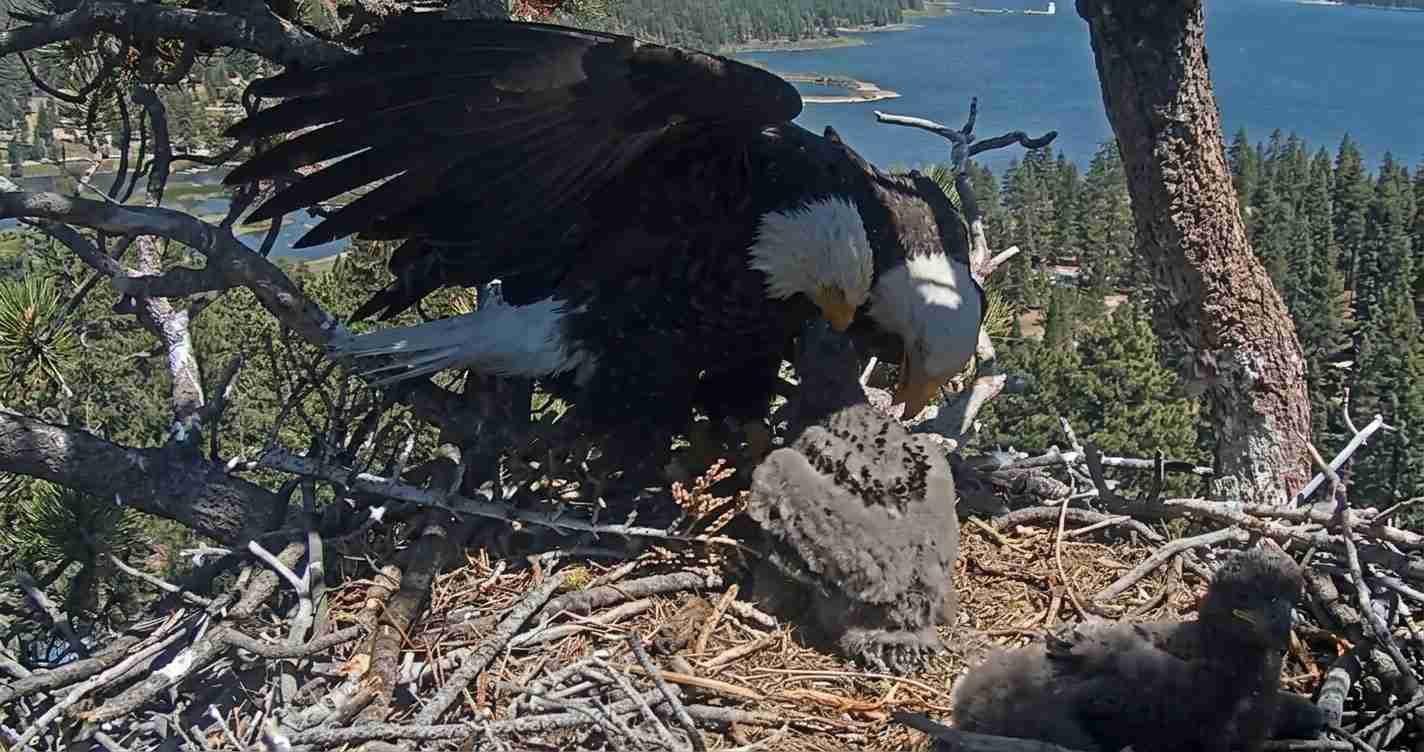
- Vigilant following: Cameras and volunteers captured nest maintenance, mating behaviors and continuous incubation as thousands watched the livestream.
- Ongoing uncertainty: FOBBV said Jackie “did a great job” and was resting; it remains unclear whether additional eggs will follow.
Nesting timeline and what cameras recorded
Jackie and Shadow’s season began in late January. Jackie’s first egg was recorded on Jan. 23 and Shadow’s on Jan. 26. On Jan. 30, ravens breached the nest while the adults were away and destroyed both eggs. Volunteers and viewers reviewed footage that showed the pair had been incubating faithfully but may have been distracted by territory defense or other signals before the raid.
Following that loss, the nest cams captured renewed courtship, nest repairs and frequent nest visits. On Feb. 24, under clear skies and milder temperatures, cameras recorded Jackie standing, inspecting a newly laid egg at about 2:30 p.m., rearranging nest material, and then settling to incubate as Shadow returned minutes later.
What the FOBBV feeds and volunteers reported
The Friends of the Big Bear Valley runs 24/7 live cams (Cam 1 and Cam 2) and posts updates, recaps and clips. FOBBV issued a short update after the new egg noting Jackie “did a great job” and that she was resting; they did not confirm additional eggs. The organization’s streams and social posts provide context and a running record of the pair’s activities for global viewers.
Key feeds: FOBBV website and the FOBBV live channel on YouTube.
Why ravens are a recurring threat
Ravens are opportunistic and intelligent; they have been documented destroying eagle eggs across the West when nests are unguarded. In this season’s Jan. 30 incident, both eggs were breached while adults were away for hours, prompting debate about human intervention versus noninterference in wild nests. Wildlife experts generally advise monitoring and reporting clear threats rather than direct interference.
Survival rates and the stakes for each egg
Since the first recorded hatch in Big Bear Valley in 2012, roughly a dozen eggs have been recorded there; only a fraction have hatched and reached maturity. Nationally, about half of eaglets survive to adulthood, underscoring how critical each successful incubation and hatch is for local population resilience. Jackie and Shadow have successfully raised eaglets in prior seasons, including chicks nicknamed Sunny and Gizmo.
Background on Jackie and Shadow
Jackie is an unbanded female believed to have hatched around 2012 and arrived in Big Bear in September 2016. Shadow is an unbanded male estimated to have hatched in 2014 and has been part of the nest since May 2018. The pair frequently engages in feeding on fish and waterbirds, nest “nestorations” (rearranging materials), preening and aerial displays that draw large online audiences.
Public reaction and community involvement
Fans worldwide expressed heartbreak after the Jan. 30 loss and rallied when the new egg appeared. Viewers shared messages on social media and tuned in to the nest cam in large numbers. FOBBV’s streams serve as both a public classroom on raptor behavior and a focal point for community connection, with social outreach across Instagram, Facebook and TikTok.
“Jackie did a great job,” FOBBV volunteers wrote after the new egg, reflecting relief and cautious optimism among viewers.
What remains unknown and what experts watch for
It is unclear whether Jackie will lay more eggs; bald eagles can lay eggs at roughly three-day intervals and typically produce two to three eggs per clutch. Experts will monitor incubation behavior, nest defense, feeding patterns and any renewed territorial challenges from ravens or other raptors. If incubation proceeds normally, the new egg’s expected hatching window is about 35 days after Feb. 24 — potentially late March.
Implications for Fresno, California
Economic
Fresno benefits indirectly when regional wildlife attractions draw visitors to mountain communities. Big Bear’s popularity with birdwatchers and nature tourists supports regional tourism marketing across Southern California and the Central Valley, which can translate to more visitors passing through Fresno en route to mountain recreation.
Environmental and conservation
The episode highlights conservation issues affecting Fresno and the San Joaquin Valley — watershed health, prey availability and habitat corridors. Protecting raptor habitat in mountain–valley interface zones sustains biodiversity that benefits downstream ecosystems and supports research and volunteer partnerships.
Public engagement and policy
The nest cam serves as a statewide educational tool. Fresno teachers and nature centers can use the stream to teach raptor life cycles, food chains and human impacts. The raven attack also spotlights tensions in wildlife policy between nonintervention and active management, suggesting opportunities for reporting systems, public education and regional coordination.
Source list for reporting and live viewing
- CBS Los Angeles coverage
- ABC7 coverage
- Friends of the Big Bear Valley website
- FOBBV live channel
- Selected FOBBV video post (hwiTHNebbx0)
- Selected FOBBV video post (n6ysxq-AnwY)
- Selected FOBBV video post (Cv_c-EgZFS0)
Follow the nest
For real-time updates and to follow the new egg’s progress, watch the Big Bear Lake nest cam and check Friends of the Big Bear Valley’s posts and recaps on the feeds above. Viewers can expect continuous live coverage, clips and volunteer updates as the pair continues incubation.