Federal judge blocks Trump National Guard Portland deployment, citing constitutional limits
A federal judge in Oregon has temporarily blocked President Trump’s planned deployment of the National Guard to Portland, ruling the administration failed to show protests amounted to a “rebellion” and that state authorities were unable to enforce the law.
- Emergency order: A U.S. District Court halted the federalization of the Oregon National Guard after the state and city sued to stop the deployment.
- Statutory threshold not met: Judge Karin J. Immergut found the government did not prove protests rose to a level of rebellion under 10 U.S.C. § 12406.
- Appeal filed: The Department of Justice has appealed to the Ninth Circuit seeking to lift the restraining order and permit deployment while litigation proceeds.
The ruling: why the judge blocked the deployment
U.S. District Judge Karin J. Immergut issued an emergency restraining order after Oregon and Portland argued that a federal deployment would violate state sovereignty and was not justified by the facts on the ground. The judge emphasized that military intervention is a last resort and warned against using armed forces for routine civil policing.
“This country has a longstanding and foundational tradition of resistance to government overreach, especially in the form of military intrusion into civil affairs… this is a nation of Constitutional law, not martial law.”
The court reviewed evidence showing many demonstrations were small and often peaceful, with some events fewer than 30 participants. The judge found Portland’s Police Bureau had sufficient staffing, training, and mutual-aid arrangements to manage public safety, and saw no proof of a coordinated attempt to overthrow the government or inability of local authorities to enforce the law. Sources: NPR/VPM, ClickOrlando, Los Angeles Times.
Legal basis: 10 U.S.C. § 12406
The dispute centers on 10 U.S.C. § 12406, the narrow statute that permits the President to call the National Guard into federal service in limited circumstances. The statute provides that the President may federalize Guard units when:
Whenever—
(1) the United States is invaded, or is in danger of invasion by a foreign nation; (2) a rebellion or danger of a rebellion against the authority of the United States exists; or (3) the President is unable with the regular forces to execute the laws of the United States; the President may call into Federal service members and units of the National Guard … in such numbers as he considers necessary to repel the invasion, suppress the rebellion, or to execute those laws.
Judge Immergut found the government failed to meet the statute’s threshold showing a rebellion or that state forces were unable to execute the laws; because the statute is narrowly written, federalizing the Guard required a higher factual showing than the government provided. (Source: NPR/VPM)
Administration response and DOJ appeal
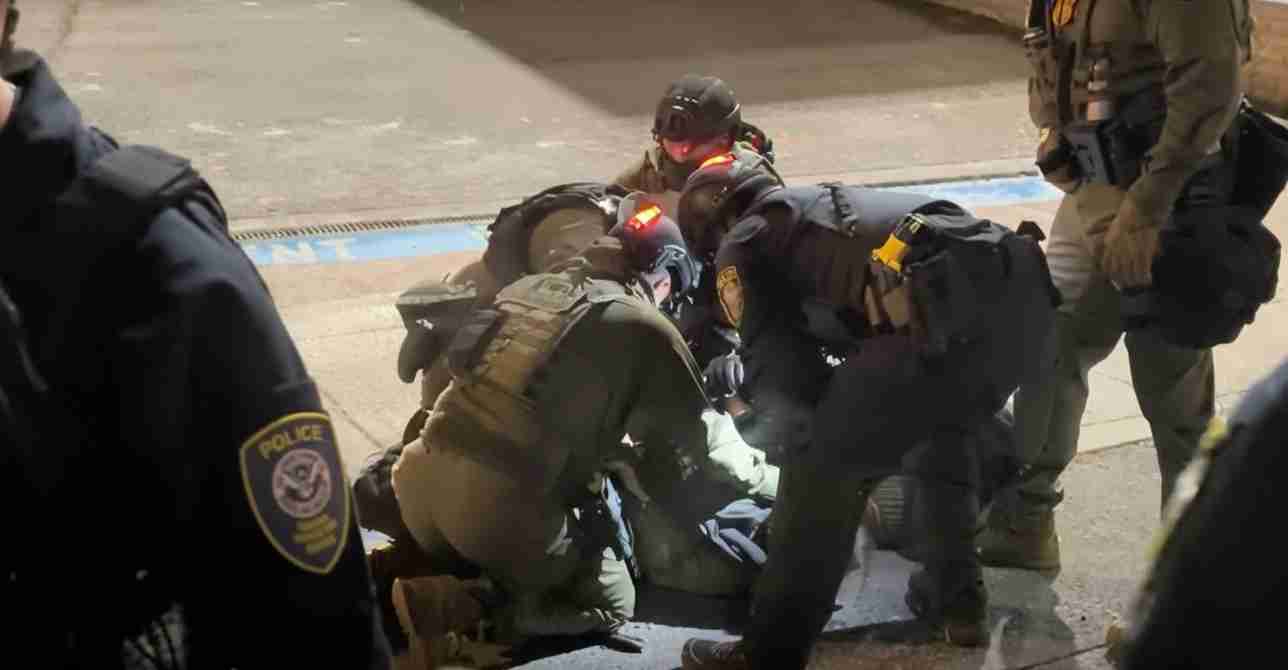
The Trump administration argued the deployment was necessary to protect federal personnel and property—specifically Immigration and Customs Enforcement (ICE) agents—during planned operations in Portland. Officials said federal forces faced threats that justified a federal response.
The Department of Justice promptly filed an appeal with the U.S. Court of Appeals for the Ninth Circuit, seeking to overturn the emergency restraining order and allow Guard units to deploy while the legal challenge proceeds. The appeal will test how appellate courts weigh federal interests in protecting federal operations against state sovereignty and limits on domestic military involvement. (Source: ClickOrlando)
Context and historical significance
Legal experts note this is a rare and constitutionally sensitive issue: presidents have seldom federalized state Guard units absent clear, extreme justification. Historically, federal troop deployments against state wishes have occurred in moments such as the civil rights era, and courts have traditionally guarded against using the armed forces as a substitute for civilian law enforcement.
The Portland dispute is part of broader national debates over federal authority in responding to protests, immigration enforcement, and public safety. Similar proposals or actions have been discussed for other cities, and the case could set precedent on how far the executive branch may go when asserting unrest threatens federal operations. (Source: Los Angeles Times)
Evidence and the court’s factual findings
The court examined arrest and incident reports, police staffing levels, and public safety plans. The ruling notes Portland’s Police Bureau has more than 800 sworn officers and works with state and federal partners through mutual aid. The court found no sharp spike in violent crime tied to protests that would indicate local law enforcement could not execute the laws.
In weighing potential harms, Judge Immergut stressed the constitutional balance between national security and civil liberties and warned that deploying military forces without clear statutory or factual justification risks undermining the relationship between federal and state governments and eroding civil liberties protections. (Source: NPR/VPM)
What comes next in the courts
With the DOJ appeal pending, the Ninth Circuit may choose to stay the restraining order and permit deployment while the case proceeds, or it may allow the order to stand. Given the short-term nature of emergency deployments and the government’s interest in acting quickly, the appellate process is expected to move rapidly with aggressive briefing and potentially expedited oral argument.
Implications for Fresno, California
Economic impact
A ruling limiting federal authority to deploy National Guard units over state objections could alter how federal responses to protests and emergencies are handled across California. Fresno and other Central Valley cities may see fewer sudden federal troop deployments, reducing immediate business disruptions tied to large-scale federal operations—but local governments may need to increase budgets for law enforcement and emergency planning.
Political consequences
The decision underscores governors’ and local officials’ roles in public safety. In Fresno, leaders may point to the ruling to argue for more local control and clearer rules about when federal forces can intervene—an issue likely to surface in local and state political debates about policing and public safety.
Social effects
Community groups in Fresno that organize or protest may view the ruling as protective of First Amendment activities from federal military presence, while residents concerned about law and order may press for stronger local policing. That tension could shape conversations about police budgets, crowd-control policies, and community safety programs.
Cultural relevance & practical applications
Fresno’s civic institutions may host forums to discuss the balance between protest rights and public safety. City officials should review mutual aid agreements, emergency response plans, and communication strategies; the ruling highlights that governors’ consent or clear statutory grounds are likely needed before National Guard units can be federalized. (Sources: NPR/VPM, Los Angeles Times)
Source links
Reporting by Times Media Service.