
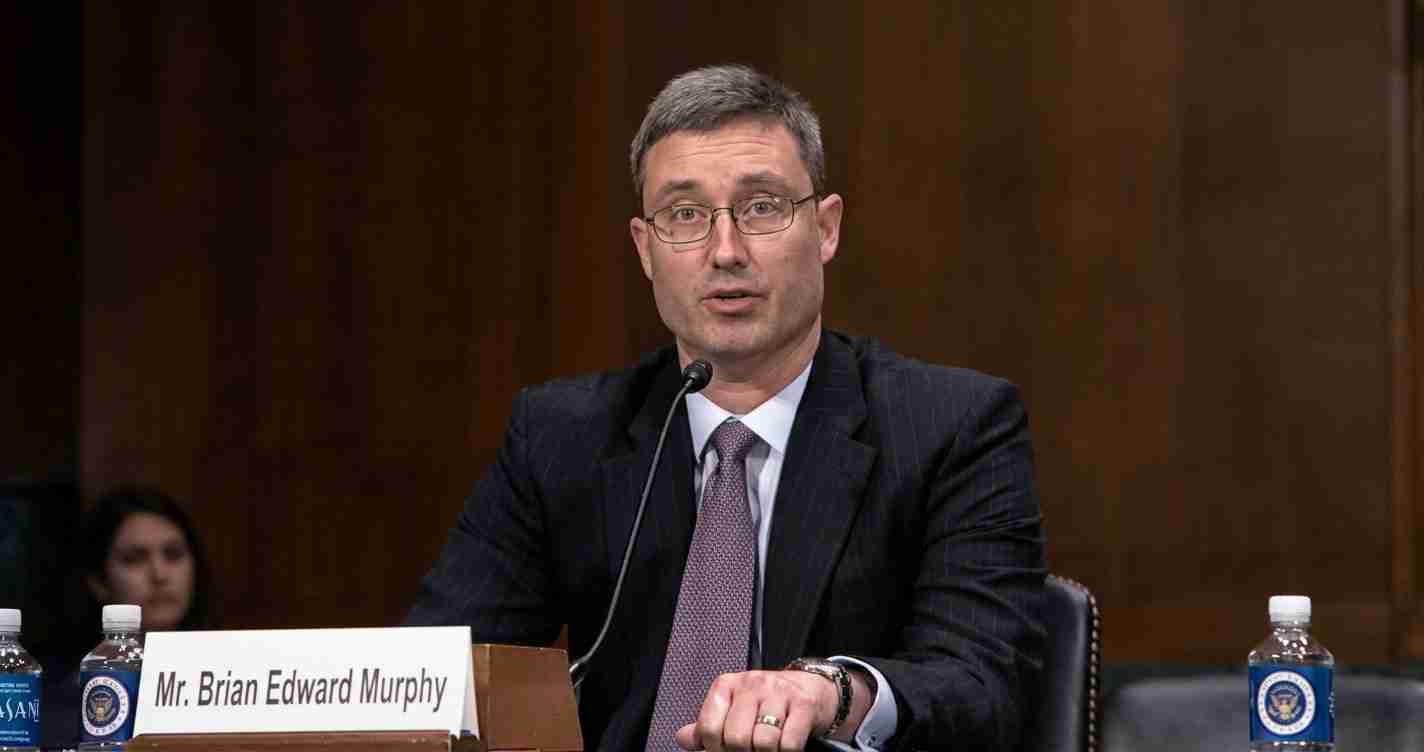
Biden-Appointed Judge Brian Edward Murphy Draws Conservative Fire After Blocking Trump Immigration and CDC Vaccine Moves
Judge Brian Edward Murphy, a Biden appointee to the U.S. District Court in Massachusetts, has issued high-profile injunctions blocking Trump administration immigration and CDC vaccine policies—rulings repeatedly stayed or reversed by higher courts amid sharp conservative criticism.
Key takeaways
- Confirmed Dec. 2024: Federal Judicial Center records show Murphy received his commission on Dec. 6, 2024.
- High-profile injunctions: Murphy blocked the third-country deportation policy and a January 2026 CDC immunization schedule, actions widely reported by Fox News.
- Rapid appellate stays: The Supreme Court and the 1st Circuit issued stays of Murphy’s orders in 2025–2026, drawing criticism from legal conservatives and the Department of Justice (Fox News).
- March 16, 2026 vaccine injunction: Murphy issued a sweeping preliminary injunction pausing a new CDC schedule and invalidating a newly appointed vaccine advisory committee while litigation proceeds (Fox News).
Background on Judge Murphy
Brian Edward Murphy was born in 1979 in Columbia, Maryland. He earned a B.A. from the College of the Holy Cross in 2002 and a J.D. from Columbia Law School in 2006. Before joining the federal bench, Murphy worked as a public defender in Massachusetts and later in private criminal defense practice, including service with the Committee for Public Counsel Services in Worcester (2006–2009) and at firms such as Todd & Weld LLP and Murphy & Rudolph LLP. See the Federal Judicial Center for his official biography and the Vetting Room profile.
Nomination and confirmation: President Biden nominated Murphy on March 21, 2024, to the seat vacated by Judge Patti B. Saris. He was confirmed by the Senate on Dec. 2, 2024, and received his commission on Dec. 6, 2024. Senators Edward Markey and Elizabeth Warren praised his public defender work and commitment to constitutional protections; see the Markey/Warren press release.
During confirmation, Republicans raised concerns about Murphy’s service on the Massachusetts Association of Criminal Defense Lawyers board and a 2020 letter advocating reduced arrests for certain offenses; that item was initially omitted from his Senate questionnaire and drew scrutiny (Senate Judiciary release).
The immigration rulings and federal response
Murphy first garnered national attention when he issued an injunction blocking the Department of Homeland Security’s third-country deportation policy, a measure intended to accelerate removals by allowing deportations to a third country under certain circumstances. Court filings indicated Murphy’s order could affect thousands of immigration cases. Reporting on these developments is available from Fox News.
The Supreme Court intervened in June 2025, issuing a 6–3 stay of Murphy’s injunction and, a week later, a rare 7–2 follow-up order. Legal scholars described the second order as an admonishment of what some called trial-court overreach; law professor Jonathan Turley called it a “stiff arm” from the high court aimed at “rogue operators” at the trial level.
On March 16, 2026, the 1st Circuit paused a separate Murphy injunction that again blocked the third-country deportation policy. That appeals-court stay arrived the same day Murphy issued a sweeping vaccine injunction, prompting a sharp response from the Department of Justice. Deputy Attorney General Todd Blanche posted on X: “How many times can Judge Murphy get reversed in one year? The same day he is stayed for repeatedly refusing to follow the law, he issues another activist decision. We will keep appealing these lawless decisions, and we will keep winning.” (reported by Fox News).
The vaccine case and Murphy’s legal reasoning
In a lawsuit brought by several medical organizations, Murphy issued a preliminary injunction on March 16, 2026, pausing a January 2026 CDC immunization schedule and voiding the actions of a newly appointed vaccine advisory committee while litigation proceeds. The plaintiffs argued that HHS Secretary Robert F. Kennedy Jr. had violated statutory requirements in overhauling established CDC vaccine policies; Murphy concluded the plaintiffs were likely to succeed on the merits and that the changes posed public-health risks (reporting: Fox News).
Murphy invoked scientific authority in his opinion, quoting Carl Sagan that science is “the best we have,” and stressed vaccine effectiveness as a central rationale for the injunction.
This emphatic use of scientific reasoning by a trial judge in a dispute over federal agency policy is notable and has been cited by critics as evidence of judicial activism; supporters say it reflects normal trial-court scrutiny where plausible legal claims and risks of harm exist.
How critics and defenders view Murphy’s record
Conservative critics argue Murphy’s pattern of enjoining major administration policies only to be stayed on appeal demonstrates a willingness to substitute judicial judgment for that of elected officials and higher courts. University of Minnesota law professor Ilan Wurman described the rulings as striking and suggested they raise questions about a double standard. The Department of Justice has pledged continued appeals (Fox News).
Defenders and many legal observers counter that vigorous trial-court intervention is a standard part of judicial review: trial judges are often the first and only forum for challenges to new rules, and preliminary injunctions are commonly issued when courts find a plausible claim and likely harm. Supporters point to Murphy’s background and case posture rather than label his actions exceptional (Federal Judicial Center).
A short tenure marked by big cases
Murphy has been on the federal bench for roughly 15 months as of March 2026. In that compressed timeframe he has handled at least two cases directly challenging major Trump administration priorities: immigration enforcement and changes to vaccine policy. The combination of rapid, high-profile rulings and swift appellate pushback has intensified scrutiny across the political spectrum (Federal Judicial Center; Fox News).
Implications for Fresno, California
Economic impact
Fresno health systems and school districts track federal vaccine guidance closely. If the CDC immunization schedule remains in limbo because of litigation, local clinics and pediatric practices could face uncertainty about school enrollment requirements, supply planning, billing rules, and public-health outreach (CDC policy matters reported; reporting: Fox News).
Political consequences
Fresno sits in a region where immigration policy is a major local issue. Federal pauses on deportation measures or enforcement changes can affect local law enforcement, community trust, and city and county debates. Elected officials may face constituent pressure, and the episode could surface in campaign messaging for local and state races (reporting: Fox News).
Social effects
Fresno’s large immigrant communities may experience anxiety when federal policies shift quickly due to court orders. Community groups, nonprofits, and legal-aid organizations in the Central Valley could see increased demand for services to answer questions about deportation risk, relief eligibility, and family impacts. Public-health groups may need to intensify education campaigns if federal guidance is unclear (Federal Judicial Center).
Cultural relevance and practical advice
Debates over vaccines and immigration touch on broader local conversations about health-care access, institutional trust, and public safety. Murphy’s invocation of scientific authority in the vaccine ruling will interest leaders who work to build vaccine confidence. Residents should monitor guidance from the California Department of Public Health and Fresno County Public Health; local schools generally follow state rules, and legal uncertainty at the federal level can slow implementation.
For practical help, Fresno families and providers can contact local legal-aid groups and public-health hotlines for current advice. Local institutions that rely on federal rules — from schools to clinics — should prepare contingency communications and outreach while courts decide these disputes.
Reporting and next steps
The Department of Justice has indicated it will press appeals quickly; the 1st Circuit, the U.S. Courts of Appeals, and potentially the Supreme Court will shape the legal landscape in coming months. Fresno officials and stakeholders will be watching closely as higher courts consider the scope of federal authority and the limits of trial-court injunctions.
Sources
- Federal Judicial Center — bio and case details
- Fox News — reporting on rulings and reactions
- Vetting Room — vetting profile
- Markey/Warren press release — statements on nomination
- Senate Judiciary release — confirmation materials and scrutiny



