
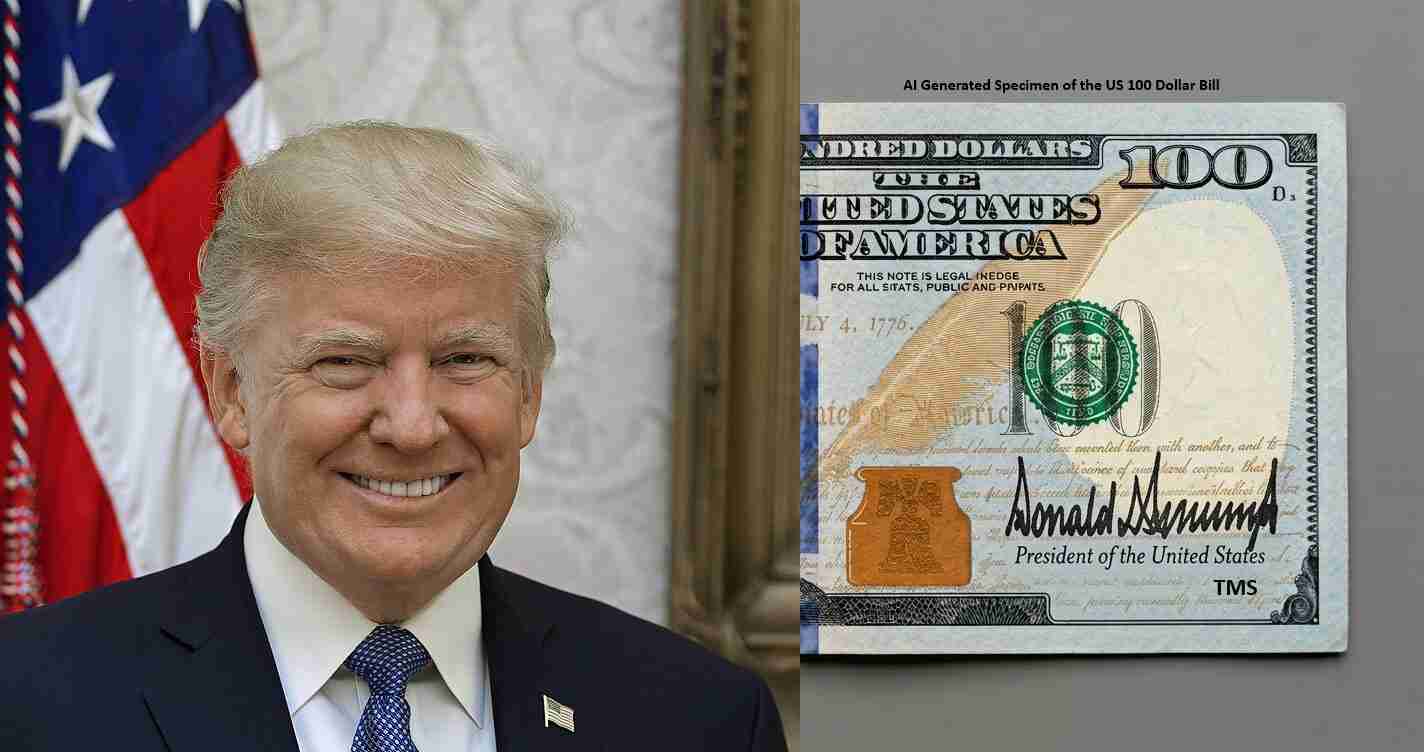
Treasury to Add President Trump’s Signature to New U.S. Paper Currency, Starting with June 2026 $100 Notes
The Treasury announced Thursday, March 26, 2026, that President Trump’s signature will replace the Treasurer’s on newly produced U.S. paper currency, beginning with $100 bills in June 2026 — the first time a sitting president’s name will appear on U.S. notes.
Key takeaways
- First-ever sitting president’s signature: President Trump’s signature will appear on newly produced bills, starting with $100 notes in June 2026.
- Signature replaces Treasurer’s: The Treasury said the president’s signature will replace the Treasurer of the United States’ signature on new runs.
- Existing notes remain in circulation: The Bureau of Engraving and Printing will continue finishing runs that bear signatures of former officials, circulating alongside new notes.
- Local and legal implications: Mixed public reaction, potential collector interest, and unresolved legal questions about living persons on currency.
Key information
The announcement: The Treasury Department said the president’s signature will replace the Treasurer’s signature on all newly produced U.S. paper currency. The initial limited production run will be $100 bills printed in June 2026, with other denominations to follow in subsequent months.
The department framed the decision as part of national Semiquincentennial (250th anniversary) commemorations and as recognition of what officials described as the administration’s economic achievements. The primary public sources for the announcement were ABC News and KSAT.
Why this is unusual
U.S. paper currency has historically carried only the signatures of the Treasury Secretary and the Treasurer. Replacing the Treasurer’s signature with that of a sitting president breaks a 165‑year tradition and marks the first instance of a living, sitting president’s name appearing on U.S. paper money.
What the Treasury said
“There is no more powerful way to recognize the historic achievements of our great country and President Donald J. Trump than U.S. dollar bills bearing his name,” Treasury Secretary Scott Bessent said, framing the move as a symbol of economic strength and “last[ing] dollar dominance.”
Treasurer Brandon Beach described the change as “not only appropriate, but also well‑deserved,” suggesting the new bills could become sought-after collectors’ items. These quotes and statements were reported by ABC News and KSAT.
Legal and historical context
Federal law generally prohibits the depiction of living persons on U.S. currency, and longstanding practice has excluded living presidents from note and coin portraits. Treasury and White House officials argue there is a legal distinction between images and signatures, and that exceptions apply to commemorative items; however, experts say the modern legal test has not been fully adjudicated and questions remain about precedent and statutory interpretation.
Operational details and timeline
A limited production run of $100 notes bearing President Trump’s signature alongside Treasury Secretary Scott Bessent’s will begin in June 2026. The Bureau of Engraving and Printing (BEP) will continue producing notes that bear signatures of former leaders—specifically former Treasury Secretary Janet Yellen and former Treasurer Lynn Malerba—so multiple signature combinations will circulate simultaneously.
Distribution to banks and consumers will follow normal Treasury and Federal Reserve channels; individuals and institutions will not be able to select which signature combination they receive. The change is expected to roll out across denominations over months as production scales up.
Questions and reactions
The announcement produced swift and mixed reactions. Supporters framed the change as an appropriate commemoration of the Semiquincentennial and recognition of economic achievements. Critics warned that placing a living, partisan leader’s name on circulating currency risks politicizing a national symbol and contravening longstanding norms.
Operational concerns: Collectors, cash-handling businesses, and banks are monitoring potential effects on inventory, counterfeit detection, and sorting machinery. Independent experts say it may take months for the new notes to fully enter circulation and for banks and businesses to update systems that rely on signature placement for authentication.
Related coin effort
Separately, a federal Commission of Fine Arts panel approved a design for a commemorative 24‑karat gold coin featuring President Trump based on a White House photograph, and other proposals—including a $1 coin with the president’s image—are under consideration. The Treasury has signaled support for several commemorative items tied to the Semiquincentennial; those coin initiatives follow separate laws and processes from paper currency.
Implications for Fresno, California
Economic impact: Local banks, credit unions, armored carriers, coin dealers and cash-handling businesses in Fresno should expect to accommodate new bills, though experts say direct economic effects will likely be small. Currency-sorting equipment generally verifies multiple security features; a change in signature placement alone is unlikely to require major upgrades. Local memorabilia shops and numismatists may see enhanced short-term demand for early runs, particularly the first June $100 notes.
Political consequences: Fresno’s mixed political landscape may produce varied reactions. Moderates and independents may prioritize practical impacts, while partisan groups could frame the change either as an earned honor or as inappropriate politicization of currency. Local officials and candidates may reference the announcement in Semiquincentennial-era messaging.
Social and cultural effects: Community organizations, libraries, schools and museums may debate featuring the new currency or commemorative coins in displays. The new notes could prompt conversations about civic norms, historical commemoration and how national milestones are celebrated across Fresno’s diverse communities.
Practical steps: Fresno businesses that handle cash (restaurants, farmers markets, thrift stores, small retailers) should monitor Federal Reserve and armored carrier guidance on distribution timing and train staff to recognize new notes. Banks should reassure customers that older notes remain legal tender and communicate what the new notes look like.
What to watch next
- Detailed operational guidance from banking and cash-handling organizations and the Federal Reserve.
- Local timing and distribution updates from the Federal Reserve branches serving California and from armored carriers.
- Possible legal challenges or clarifying Treasury rules about signatures and living persons in commemorative programs.
- Collector demand and how early-run notes (especially June $100s) trade in numismatic markets.
Sources
Primary reporting and details were published by ABC News and KSAT. Original dispatch: WASHINGTON (Times Media Service).



