
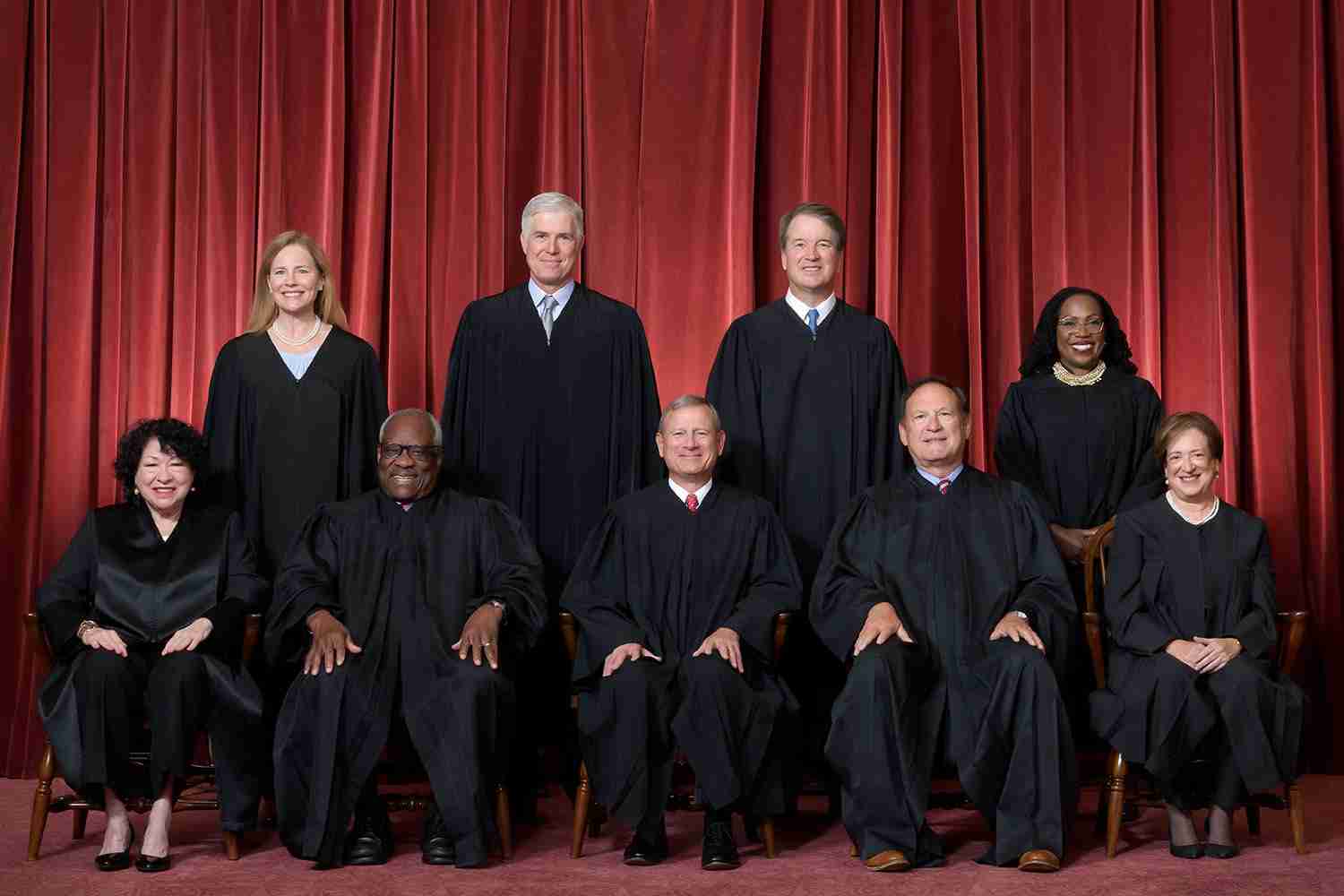
Alito cites Scalia’s “microwave” analogy as Supreme Court weighs limits on birthright citizenship
During oral arguments over President Trump’s executive order on birthright citizenship, Justice Samuel Alito invoked Justice Antonin Scalia’s “microwave” analogy to argue a textualist reading of the 14th Amendment may cover circumstances drafters could not foresee.
- Key takeaway: Justice Alito used a Scalia analogy to press a textualist view of the 14th Amendment’s citizenship clause (Fox News, AOL).
- Administration stance: Solicitor General John Sauer aligned with the “general principle” framing that could limit birthright citizenship (Fox News).
- Precedent in focus: United States v. Wong Kim Ark (1898) and concepts like parental domicile were central to questioning (Mediaite, SCOTUSblog).
- Court reaction: Justices showed mixed views — Alito and Thomas seemed receptive while others pressed history and precedent (Fox News, SCOTUSblog).
Alito’s Scalia analogy and textualism
Alito recalled that Justice Antonin Scalia used an illustration about an old theft law written long before the existence of a microwave oven — the law banning theft remains operative even when new items exist to steal. Alito applied that logic to the 14th Amendment, asking whether a “general rule” about citizenship at birth should govern instances the drafters could not have anticipated.
“If the drafters could not foresee modern immigration patterns, does that mean the plain text cannot reach them?” — Justice Samuel Alito (paraphrase of court exchange)
Alito emphasized textualism — following the Constitution’s plain text and original meaning — and noted that illegal immigration was “basically unknown” in 1868. He asked whether children of people who entered unlawfully can be read into exceptions to the 14th Amendment, analogous to recognized historical exceptions such as children of foreign diplomats or certain Native Americans.
Solicitor General’s position and justices’ pushback
Solicitor General John Sauer told the court he “strongly agree[d] with the way that you framed it,” aligning the administration with Alito’s general-principle approach and arguing the phrase “subject to the jurisdiction thereof” does not include children of people who lack lawful status (Fox News).
Other justices were skeptical. Much of the questioning probed historical evidence, nineteenth-century meanings of key words, and existing precedent. Justice Elena Kagan challenged the government’s focus on temporary visitors rather than undocumented migrants, saying the argument appeared inconsistent with Alito’s framing (Fox News).
Precedent in play: Wong Kim Ark and historical limits
A central precedent was United States v. Wong Kim Ark (1898), in which the Court held that a child born in the U.S. to foreign parents was a citizen under the common-law principle of jus soli. Alito questioned how notions like parental domicile factor into that decision and whether finer readings of older opinions matter for the present case (Mediaite, SCOTUSblog).
The court discussed historical exceptions already recognized — for example, children of foreign diplomats are not subject to U.S. jurisdiction, and certain Native Americans were treated differently in the 19th century. The dispute is whether children of people who crossed the border unlawfully fall into a comparable category today (Fox News).
Who’s leaning which way — and what’s unclear
From the oral argument tone: Justices Alito and Clarence Thomas appeared most receptive to the administration’s text-based challenge. Most other justices expressed doubts or emphasized how history and precedent should guide interpretation. Oral argument tones are not determinative; the final opinion will depend on how the majority weighs textualism, history, and precedent together (Fox News, SCOTUSblog).
Implications for Fresno, California
A ruling that narrows birthright citizenship could have layered effects across Fresno County — economically, politically, socially, and culturally. Below are summarized impacts and practical steps for local stakeholders.
Economic impact
Fresno’s workforce includes a sizable immigrant population and many U.S.-born children of noncitizen parents. A change in citizenship rules could create legal uncertainty for families, influence eligibility for federal benefits, and complicate employer hiring and verification practices. Local schools and public clinics may face increased administrative burden and financial strain.
Political consequences
Immigration is a central issue in California and the Central Valley. A Supreme Court decision limiting birthright citizenship would likely dominate local and statewide political debates, reshape campaign messaging, and pressure city and county leaders to adopt protective policies or lobby for clarifying legislation.
Social effects
Changes could increase fear in immigrant communities, reduce engagement with hospitals, schools, and law enforcement, and undermine public-health efforts and school stability. Trust between residents and local agencies could erode, with long-term consequences for community wellbeing.
Cultural relevance
Fresno’s cultural fabric is closely tied to immigrant communities that contribute to agriculture, small business, and local culture. Debates about the 14th Amendment and the status of U.S.-born children of noncitizen parents will touch deep values around family and belonging in the Central Valley.
Practical applications for residents
- Legal guidance: Families with mixed immigration status should seek clear legal advice about passports, records, and benefits; local legal aid groups can expect higher demand.
- Schools & hospitals: Prepare outreach to reassure families about enrollment and access; multilingual communication will be essential.
- Employers: Monitor legal changes and consult counsel regarding employment verification and worker eligibility.
Local preparation: Authorities and organizations in Fresno can coordinate with legal aid groups, immigrant-rights organizations, and public-health agencies to provide clear multilingual information and support. Community outreach explaining how the 14th Amendment works and where families can get help will be essential.
Reporting sources and further reading
Coverage and documentation used in this report include contemporaneous news summaries and legal analysis. The primary pieces cited below reflect reporting of oral arguments and historical materials but do not reflect a final ruling.
- Fox News: Alito invokes Scalia analogy during birthright citizenship argument
- AOL coverage of Alito’s remarks
- AOL follow-up article
- Mediaite: Alito questions ACLU lawyer about Wong Kim Ark precedent
- YouTube: court exchange clip
- SCOTUSblog: “Birthright citizenship: 20 questions for the Solicitor General”
Reporting compiled from Times Media Service summaries and public reporting by the sources above.



