Southwest flight delayed after humanoid robot’s lithium battery exceeds limits; passengers gather as “Bebop” dances at Oakland gate
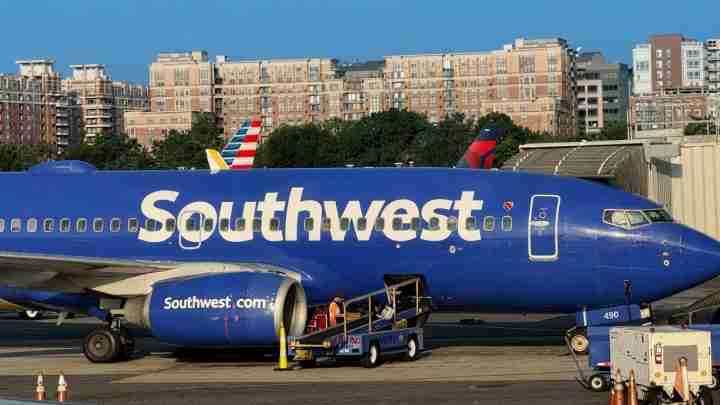
A Southwest Airlines flight from Oakland to San Diego was delayed about an hour April 30, 2026, after handlers discovered a 70-pound humanoid robot’s lithium battery exceeded airline limits and was confiscated, prompting a brief gateside crowd.
- Flight delayed ~1 hour when a 70–75 lb humanoid robot’s battery violated airline lithium rules.
- Handlers purchased an extra seat for the robot, but federal battery limits still applied.
- Battery confiscated per airline request; flight departed after clearance.
- Incident highlights TSA and airline rules on shipping, stowing or removing lithium batteries.
What happened at the Oakland gate
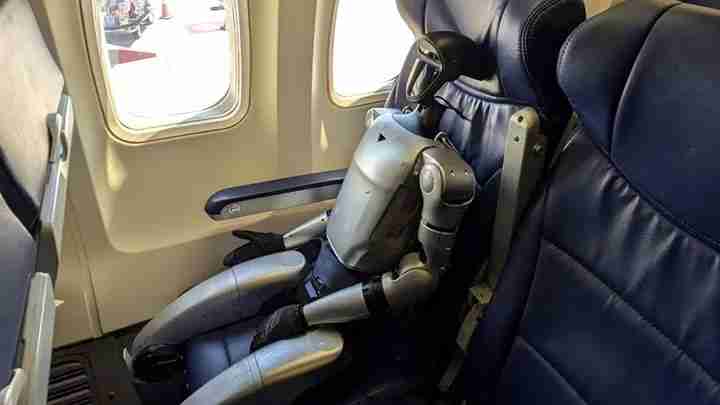
Bebop is a roughly 4-foot-tall, 70–75 pound humanoid robot owned by Elite Event Robotics that had become a gate attraction at Oakland International Airport. Passengers — including children — interacted with the robot, gave it high-fives, recorded videos and gathered as handlers prepared the device for travel.
Because Bebop and its protective case exceeded Southwest’s 100-pound carry-on limit, handlers purchased an extra seat and registered the robot as an inanimate item for that seat. Company employees told reporters that seat purchases for devices are possible when availability allows, but federal hazardous-materials rules remain controlling.
Why the flight was delayed: battery rules and safety
Southwest Airlines said the delay was not caused by the robot’s size or dancing, but because the robot’s lithium battery exceeded the maximum allowable size for passenger-cabin carriage. Crew asked that the battery be removed; it was confiscated and the aircraft was cleared to depart about an hour after the issue was identified.
Federal context: The Transportation Security Administration and federal aviation regulators tightly limit lithium-battery capacity, stowage and transport method because damaged or improperly stored batteries can pose a fire risk. Batteries above certain watt-hour ratings are restricted or must be transported as cargo under hazardous-materials protocols.
For guidance, see TSA guidance on lithium batteries and air travel.
Operational wrinkle for the handlers
Elite Event Robotics said Bebop had flown earlier that day from Dallas to Oakland without issue; the battery problem arose only on the Oakland-to-San Diego leg. Because Bebop was scheduled for another event in Chicago later that weekend, handlers arranged for family members in California to drive more than five hours and then overnight the battery to a Chicago hotel so Bebop could appear as planned.
The company posted on social media that Bebop was “Delayed but worth the wait” and plans to continue flying the robot commercially but will travel without batteries installed when possible.
Passenger reactions and reported consequences
Reactions at the gate and online were mixed. Many passengers enjoyed Bebop’s performance; others were frustrated by the disruption. One traveler reported missing a connection and incurring roughly $400 in additional costs. Social media ranged from amusement to accusations of a publicity stunt, while others argued devices that large should be treated as freight.
“Nothing is more important to Southwest than the safety of our customers and employees,” Southwest said, praising the crew’s handling of the situation.
Rules on extra seats and devices
Airlines often allow extra-seat purchases for bulky items that can safely occupy a passenger seat, but those purchases do not override federal hazardous-materials regulations. Airlines and crew retain discretion; batteries that exceed regulatory watt-hour limits must be removed, specially stowed, or shipped as cargo under the applicable rules.
Southwest’s position: The robot was registered as a seat purchase but remained subject to battery size limits; crew followed established safety procedures when addressing the violation.
Responses from Elite Event Robotics and airline officials
Elite Event Robotics described Bebop as an event entertainment robot and said it trains handlers to travel with its devices. After the incident the company said it will continue air transport of robots but will avoid installed batteries when possible or arrange separate shipping.
Southwest issued a statement emphasizing safety and crew professionalism, noting the battery exceeded allowable limits and that crew members followed procedures.
Implications for Fresno, California
Economic impact
- Event planners in Fresno who rely on rented interactive technology may face higher costs or scheduling risks if devices cannot be transported without advance planning.
- Local vendors and venues should create contingency plans; late-arriving batteries or equipment can cause program losses and reputational harm for small promoters.
Political and regulatory consequences
- The incident highlights federal safety rules affecting local businesses; Fresno officials might coordinate with carriers and the TSA for clearer guidance.
- Business stakeholders may push for practical regulatory guidance to reduce ad-hoc enforcement that disrupts scheduled events.
Social and community impact
- Gate-side interest in Bebop shows demand for family-friendly, tech-driven entertainment; schools and museums should confirm transport rules before booking.
- Public reaction — a mix of amusement and annoyance — underscores how tech spectacle can disrupt travel and the need to factor possible delays into itineraries.
Cultural relevance
The episode resonates with Fresno’s growing tech and creative communities that value robotics demonstrations. It may prompt community discussions about balancing curiosity and entertainment with public-safety protocols, especially for parents and educators.
Practical applications for residents
- Contact the airline well before travel to confirm weight limits and battery rules for large electronic devices.
- Event planners should include backup programming and clarify contractual responsibilities regarding shipment and compliance.
- Travelers should review TSA guidance and keep device battery documentation handy to expedite conversations with airline staff.
Sources
- Fox News Digital reporting on the incident
- Southwest Airlines: company statement and travel policies
- TSA guidance on lithium batteries and air travel
- Elite Event Robotics Instagram post
Reporting for this article relied on company statements to reporters, passenger accounts shared with media, Southwest Airlines’ public statement, and federal guidance on lithium batteries for air travel.