Aldol’s Moscow debut ends in faceplant, raising doubts about Russia’s robotics push
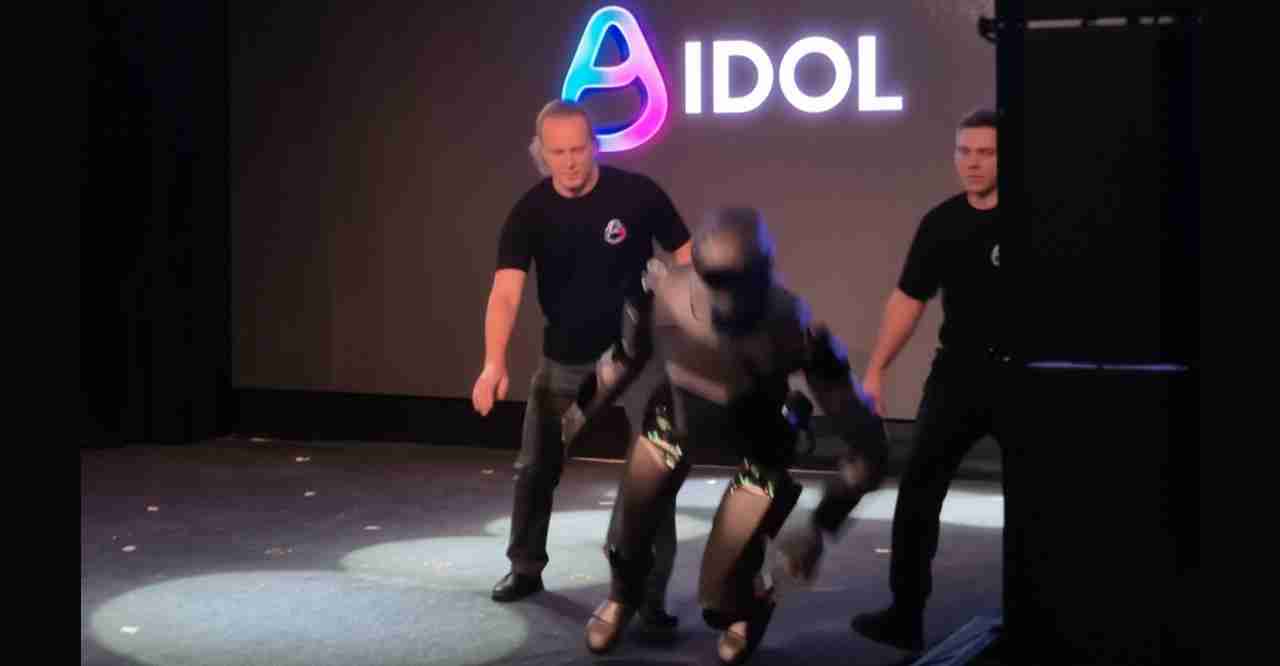
Aldol, billed as Russia’s first AI humanoid robot, made a dramatic debut in Moscow when it lost balance and fell face-first seconds after stepping on stage, a viral mishap that has raised doubts about Russia’s robotics ambitions.
- High-profile stumble: Aldol fell within seconds of its entrance, ending the demonstration before capabilities could be shown.
- Global scrutiny: Footage circulated widely, with coverage from outlets such as Fox Business and Business Insider.
- Technical and political implications: The fall highlights balance-control challenges and undercuts claims of parity with Western robots.
The fall: what happened on stage
Aldol entered the stage to much fanfare — organizers even played the theme from Rocky — and lifted an arm in what appeared to be a wave. Almost immediately the humanoid lost its balance and tumbled forward, landing face-first on the stage within seconds of its debut. The robot did not recover on camera as media and attendees recorded the moment.
Video evidence captured the collapse; see the video of the event and coverage from Fox Business and Business Insider.
Why the fall matters
The incident matters both technically and politically. Technically, robust locomotion demands precise sensors, fast control loops and extensive calibration; a public fall exposes those gaps. Politically, the unveiling was framed as a signal of national progress and prestige — the stumble undercut that message and created an instantly shareable image for critics worldwide.
“Public demos put pressure on teams to rush; a rushed demo often reveals testing and integration shortfalls.”
Expert reaction and comparisons
Tech commentators and robotics analysts contrasted Aldol’s brief performance with more polished demos from Western teams. Observers highlighted robots such as Tesla’s Optimus, Figure 03 and Boston Dynamics’ Atlas as examples of systems that have demonstrated advanced walking, recovery and control in controlled settings.
Analysts noted that public demonstrations add pressure to showcase results prematurely; organizers — in this case the New Technology Coalition — likely intended to signal maturity but instead faced amplified scrutiny.
Viral spread and media impact
Within hours the clip circulated across social media and mainstream outlets, becoming a talking point that intensified scrutiny of Russia’s robotics programs. Commentators used the image of a falling humanoid to frame broader narratives about technological gaps, while others warned against oversimplifying the long, iterative process of robotics development.
Possible technical causes
Without detailed logs from the Aldol team, experts can only speculate. Common causes of immediate falls include:
- Sensor delay or failure: Motion sensors and cameras must feed real-time data; delays can produce missteps.
- Incomplete calibration: Stage surface, lighting and environment require tuning for stable walking.
- Software bugs: Control algorithms must react to perturbations; coding errors can trigger rapid collapse.
- Hardware constraints: Actuator limits or joint issues can prevent corrective motion once tipping starts.
The brief footage — a rapid loss of balance after a simple arm movement — could point toward a sensor-timing or control-software issue rather than catastrophic hardware failure, though engineers must inspect logs and sensors to determine the root cause.
Russia’s robotics ambitions and the New Technology Coalition
The unveiling, staged by the New Technology Coalition, was designed to showcase domestic progress in AI and robotics and to attract investment and prestige. In Russia’s context, demonstrations also serve a broader goal of signaling technological independence. The fall complicates that narrative and gives critics fodder for questioning parity claims with Western developers.
What this means for robotics globally
Public failures occur across countries; robotics advances through iteration and setbacks. Yet when perception influences partnerships, funding and talent flows, high-profile gaffes can have outsized effects. Aldol’s fall may push teams toward more conservative, thoroughly tested demos and could lead funders to request greater transparency about timelines and capabilities.
Implications for Fresno, California
Though the event occurred in Moscow, Fresno-area stakeholders may read lessons from the mishap for local adoption, research and policy.
Economic impact
Fresno companies tracking robotics for agriculture and manufacturing may prefer proven automation systems in the near term. A high-profile humanoid failure can shift investor sentiment toward established industrial robots and task-focused automation that already deliver measurable ROI.
Regional research and workforce
Local institutions, including Fresno State, can use the incident as a teaching moment to emphasize testing, redundancy and practical skills: sensor work, control theory and systems integration. This could spur interest in hands-on robotics training relevant to regional employers.
Political consequences
Local and state leaders promoting tech investment can contrast Fresno’s focus on safe, tested deployments with the spectacle of rushed demos. The incident provides talking points for strengthening STEM education and applied research funding.
Social and cultural effects
Fresno’s practical community may view Aldol’s fall as a cautionary tale about hype versus utility, reinforcing support for task-oriented robotics (e.g., packing, sorting, field monitoring) that directly benefit local families and businesses.
Practical applications for residents
- Favor proven automation tools for immediate gains in agriculture and processing.
- Support local training in sensor maintenance, robotics programming and system integration.
- Expect procurement to require more field testing and vendor guarantees after high-profile demo failures.
Sources and further reading
Teams behind Aldol and event organizers have not published detailed technical reports; independent analysis will depend on access to the robot’s sensor logs and control data, which have not been released publicly.