
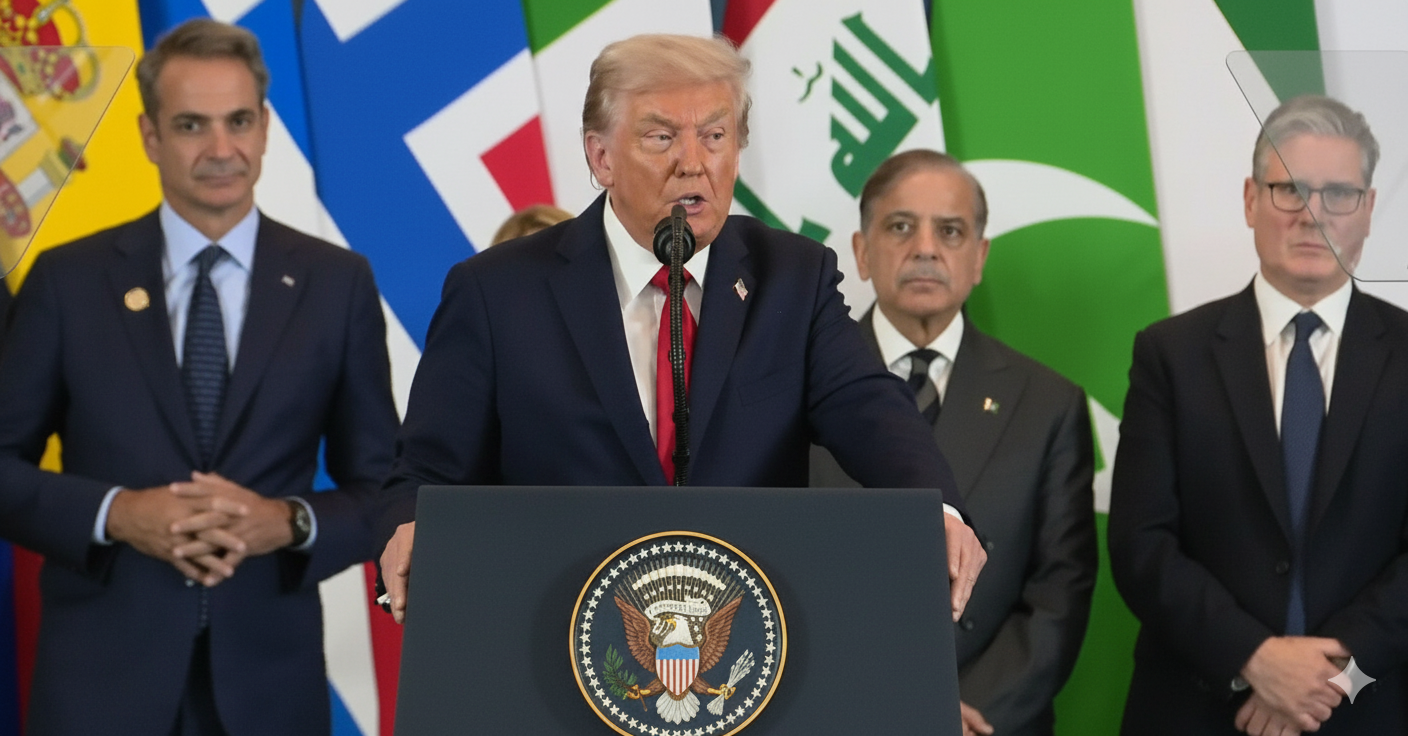
Biden, Blinken Say Their Diplomacy Laid Groundwork for Trump’s Gaza Ceasefire, Sparking Credit Debate
Former President Joe Biden and former Secretary of State Antony Blinken say their administration laid crucial diplomatic groundwork that enabled President Trump’s Israel-Hamas Gaza ceasefire — a claim Trump calls “a joke,” igniting a partisan credit fight.
- Key takeaway: Biden and Blinken assert months of quiet diplomacy and hostage negotiations created the conditions for the ceasefire.
- Key takeaway: Blinken says Trump’s 20-point plan drew from a Biden-era framework; Trump rejects the claim as his sole achievement.
- Key takeaway: The ceasefire earned rare bipartisan praise, raising stakes over diplomatic legacies and campaign messaging.
- Key takeaway: Local implications — including for Fresno, California — touch humanitarian aid, community tensions, and political conversations.
What Biden and Blinken are saying
Former President Joe Biden, currently undergoing cancer treatment, publicly welcomed the ceasefire and described it as a potential end to the Gaza war. He said his administration “worked relentlessly to bring hostages home, get relief to Palestinian civilians, and end the war,” and he praised President Trump for getting the renewed ceasefire “over the finish line.” Sources cited by the Biden team include Fox News (Biden/credit article), Anadolu Agency, and Jerusalem Post.
Antony Blinken said President Trump’s 20-point plan “drew from” a Biden-era framework developed after months of conversations with Arab partners, Israel and the Palestinian Authority. Blinken identified policy foundations advanced under Biden — no platform for terrorism, no annexation, no occupation, no forced population transfers, and a credible path to Palestinian statehood — and pointed to a January brief ceasefire that helped free 135 hostages as part of the continuing diplomatic arc. See Blinken’s remarks reported at Fox News (Blinken claims) and analysis at TRT World.
Trump’s response and the Republican view
President Trump has publicly rejected the notion that the Biden team deserves credit. He called the claim “a joke” and insisted the agreement is his administration’s unilateral achievement, arguing his policies and direct negotiations ended the war. Trump allies and conservative commentators echo this view, emphasizing that implementation — convincing regional actors to sign on and bringing parties to the table — is the decisive diplomatic step. Coverage of the Republican framing is available at Fox News (Republican reaction).
Bipartisan praise and the politics of legacy
The ceasefire drew rare cross-party praise; along with Biden’s congratulations, former President Bill Clinton publicly commended the diplomatic breakthrough, creating an unusual bipartisan moment. That acknowledgement, however, has not resolved the debate over attribution. Democrats highlight months of quiet diplomacy, hostage negotiations and humanitarian channels to argue for continuity toward a two-state outcome; Republicans underscore high‑level persuasion and the final deal’s execution as definitive. Reporting on bipartisan reactions appears at Axios and related outlets.
Regional players and diplomatic dynamics
Blinken noted a regional shift — Arab states and Turkey distancing themselves from Hamas — as a turning point that both administrations claim to have encouraged. The role of Egypt, Qatar, Saudi Arabia and Turkey in mediation, guarantees and political acceptance was central to the deal. Analysts emphasize that Middle East diplomacy often spans administrations, with backchannels and trust-building taking years; that continuity complicates attribution even while it is politically consequential. See regional context in TRT World and follow-up reporting at Anadolu Agency.
Implications for Fresno, California
Economic impact: Fresno’s sizable immigrant and refugee communities with Middle East ties may experience eased humanitarian concerns if the ceasefire holds. Local nonprofits coordinating donations and relief could see shifting demand depending on aid access.
Political consequences: Fresno’s politically mixed electorate could see local debates intensify as candidates and officials are pressed to clarify positions on refugee resettlement, humanitarian aid, and U.S. diplomatic competence.
Social effects: Diverse communities — Palestinian, Arab‑American, and Jewish residents — have organized vigils and town halls; a ceasefire might calm some tensions but also heighten discussions about long‑term justice and accountability.
Cultural relevance & practical applications: Religious leaders and community centers will likely continue humanitarian and interfaith efforts. Local aid groups and public agencies should monitor ceasefire terms to plan logistics, counseling and social services for families with loved ones in the region.
Questions about durability and next steps
Observers warn a ceasefire could be an initial pause rather than a lasting peace. Skeptics note pressures from militant groups, political instability in Gaza and the West Bank, and regional tensions involving Iran‑aligned actors. Key open questions: Will follow-on agreements, reconstruction plans, and international guarantees hold? Will regional players sustain pressure to keep militants contained? And politically, will voters credit diplomatic continuity or reward the leaders who sealed the high-profile deal?



