
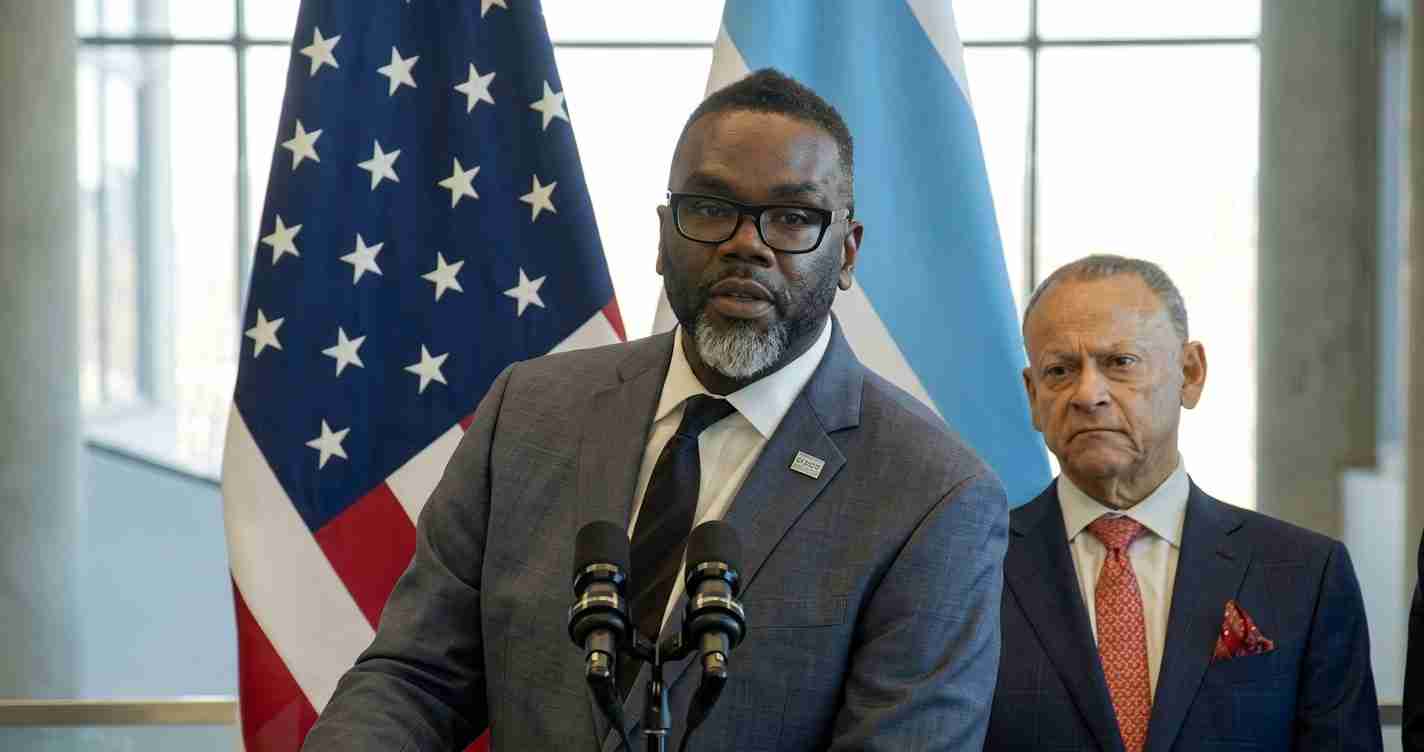
Chicago $1.2 Billion Deficit Forces Tough Choices in Brandon Johnson 2026 Budget Push
Chicago Mayor Brandon Johnson faces a $1.2 billion corporate fund deficit for fiscal year 2026, the largest since 2021, prompting a budget that mixes new corporate and high-earner taxes, spending cuts, TIF draws and borrowing.
- Largest corporate fund shortfall: A projected $1.2 billion gap for FY2026 driven by rising costs and fading one-time federal relief, per Fox 32 Chicago and CBS Chicago.
- Revenue vs. spending imbalance: A decade of expenses rising faster than revenues has created structural stress (analysis by the Illinois Policy Institute).
- Controversial fixes: The mayor’s plan leans on corporate/high-earner taxes, an expanded TIF surplus, cost cuts and borrowing, triggering sharp political pushback and a council showdown.
Key information
Chicago’s proposed Brandon Johnson 2026 Budget centers on closing a roughly $1.2 billion corporate fund deficit. Reporting from Fox 32 Chicago and CBS Chicago anchors most public details.
Key figures and elements:
- Corporate fund gap: Projected $1.2 billion shortfall for FY2026 (Fox 32 Chicago; CBS Chicago).
- Long-term trend: City expenses rose ~64% over the past decade while revenues rose ~54%, per the Illinois Policy Institute.
- Proposed tools: New corporate and high-earner taxes, larger TIF surplus declarations, hiring freezes, targeted cuts and borrowing are central to the mayor’s approach (CBS Chicago; Fox 32 Chicago).
Why the gap widened
The shortfall reflects multiple forces. The city used one-time federal pandemic relief, including about $1.9 billion from the American Rescue Plan Act, to replace lost revenue and cover operations; those funds are expiring, creating a revenue cliff (Fox 32 Chicago).
Meanwhile, recurring costs — salaries and healthcare for ~30,000 employees, police overtime, legal settlements (notably police-related payouts), rising debt service and pension obligations — have steadily pressured the corporate fund. Analysts argue these dynamics produced a structural deficit that short-term fixes cannot easily close (CBS Chicago).
Johnson’s plan: taxes, TIFs, cuts and borrowing
Mayor Johnson unveiled a roughly $16.6 billion spending plan aiming to close the gap without raising property taxes. The administration describes new levies as progressive revenue, and pairs them with spending controls and some borrowing.
- Personal property lease transaction tax: Increase from 11% to 14% targeted at big tech and cloud services, projected to raise about $333 million (Fox 32 Chicago; CBS Chicago).
- Corporate “head tax” / Community Safety Surcharge: $21 per employee per month for firms with 100+ employees, estimated at ~$100 million while exempting roughly 97% of businesses (Fox News; CBS Chicago).
- Social media “amusement” tax: $0.50 per active Chicago user above 100,000 to fund mental health services — roughly $31 million projected (CBS Chicago; Fox News).
- Record TIF surplus declaration: ~$1 billion, nearly double the prior year’s $570 million, with some drafts citing up to $1.16 billion in TIF draws (CBS Chicago; WTTW).
- Cost savings: Targeted ~$200 million from hiring freezes outside public safety, office consolidation, land sales and vendor reductions; a proposed police overtime cap is subject to council approval (Fox 32 Chicago).
- Borrowing: Includes $166 million for salaries and settlements and an $830 million bond issue that delays principal payments for 20 years — critics say this pushes costs into the future (Fox 32 Chicago; Illinois Policy Institute).
Political reaction and council showdown
City Council controls approval. Mayor Johnson needs 26 votes to pass measures; in November 2025 the Finance Committee rejected the head tax and social media tax in a 25–10 vote, blocking key revenue proposals (Illinois Answers; WTTW).
Council alternatives — legalizing video gambling at eateries/airports, raising the shopping-bag tax or an alternate social media tax — were labeled “morally bankrupt” by the mayor, who threatened to veto the council package.
If the mayor vetoes the council package and an override cannot be secured by Dec. 30, the city could face partial service disruptions, critics warn (Fox News).
Critics: borrowing, one-time fixes and the “pay later” culture
Fiscal watchdogs argue the city’s practice of using one-time funds for recurring costs and borrowing for operations has created market concerns. Austin Berg of the Illinois Policy Institute cautioned that markets are reacting with widened debt spreads and urged structural reforms.
The Illinois Policy Institute also criticized the $830 million bond for delaying principal repayment 20 years as extending a “pay later culture.” Analysts warn one-time fixes and borrowing for operations can erode investor confidence and raise future borrowing costs.
What the mayor says
Mayor Johnson framed the city as at a crossroads, urging Chicago to “essentially do more with less” and asking corporations to “put more skin in the game.” He has also cited federal policy changes under a prior administration as complicating the city’s outlook; video remarks were posted publicly (Fox News; video remarks).
Sources and gaps
This article draws on reporting and analysis from Fox 32 Chicago, CBS Chicago, WTTW, the Illinois Policy Institute and other public reporting. Earlier reports cited a roughly $150 million 2025 deficit; recent coverage focuses on the larger 2026 shortfall (Fox 32 Chicago; CBS Chicago).
Implications for Fresno, California
Chicago’s debate has potential ripple effects for Fresno and other U.S. cities:
- Economic: Corporate tax or head tax changes could influence national employer behavior and municipal bond markets that Fresno relies on (Illinois Policy Institute).
- Political: The trade-off between new local revenue and service cuts mirrors choices Fresno leaders could face; Chicago’s experience may be cited in local debates.
- Social and cultural: Slower services, delayed infrastructure or tighter nonprofit budgets in large cities can have secondary impacts on funding flows and public expectations elsewhere.
- Practical guidance: Fresno officials should monitor municipal bond market signals, avoid one-time fixes for recurring costs, pursue multi-year plans addressing pensions and debt, and engage residents on trade-offs early.
Reporting note
This story relies on coverage and analyses from Fox 32 Chicago, CBS Chicago, WTTW, the Illinois Policy Institute, Illinois Answers, Fox News and public remarks available online (video remarks). For updates after December 2025, consult those outlets and additional local and financial reporting.


