Hongqi Bridge Collapse in Sichuan: Newly opened 758-meter span falls after landslide, cracks seen a day earlier
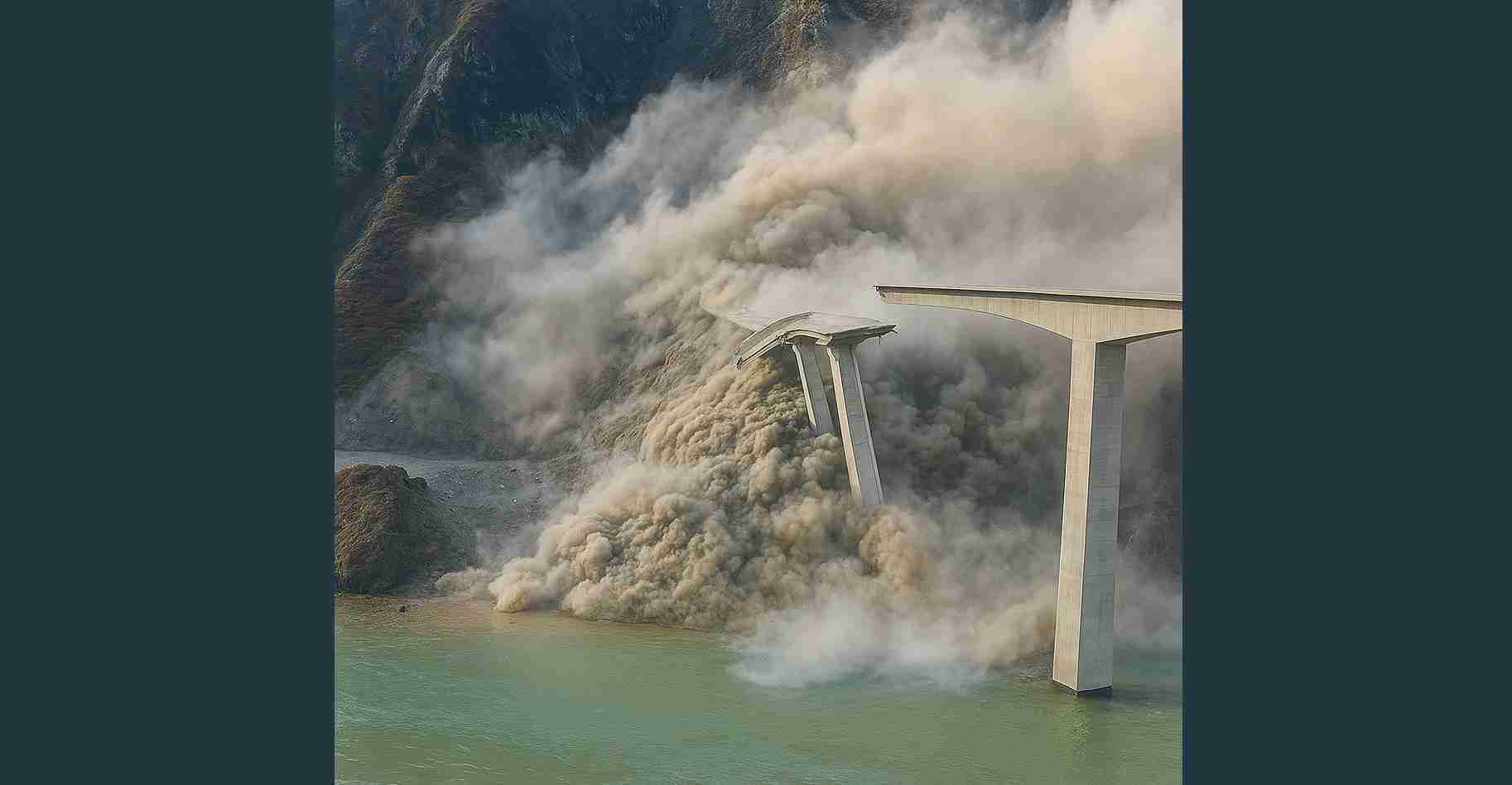
A newly opened 758-meter Hongqi Bridge in Sichuan collapsed into a river in November 2025 after a massive landslide, hours after visible cracks prompted authorities to close the span — fortunately resulting in no reported casualties.
- Landslide-triggered failure: A mountainside landslide struck the 758-meter Hongqi Bridge, causing large sections to snap and plunge into the river (video, video).
- Preceding warning signs: Cracks and shifting terrain were observed the day before; authorities closed the bridge, which is credited with preventing injuries.
- Questions raised: The rapid failure after opening has intensified scrutiny of geological surveys, slope reinforcement and construction timelines in mountainous regions.
- Local lessons: Fresno officials and engineers may draw practical implications for supply chains, inspection regimes and emergency protocols.
What happened
The incident: Video footage and local reports show the 758-meter Hongqi Bridge in Sichuan Province plunging into the gorge after a massive landslide struck the mountainside adjacent to the span. The footage widely shared on social media shows concrete slabs and deck sections snapping and falling with a dust cloud rising from the gorge (video; video).
When and where
Timing: The collapse occurred in November 2025, with some reports identifying the event on November 11–12, 2025, only months after the bridge opened to traffic.
Location: The bridge was part of a newly built highway in Sichuan Province linking central China and the Tibetan plateau region.
What the footage and local reports show
Circulating video and eyewitness accounts show a sudden collapse sequence: large deck pieces snap away from supports, fall into the river and produce thick dust and debris. Local notices and on-the-ground reporting indicate visible fissures and soil movement the day before the failure, prompting police to restrict access and close the bridge (video; video).
“Authorities closed the span after residents and engineers reported shifting and cracks — that precaution likely prevented casualties,” local reports and footage indicate.
Timeline and project background
The Hongqi Bridge was opened earlier in 2025 as a 758-meter component of a larger highway project designed to improve connections between central China and Tibet. The region’s challenging terrain and the pace of recent southwestern infrastructure projects have been noted in coverage of the bridge and similar initiatives (project context).
Warning signs: According to reports and social posts, cracks in the deck and movement on adjacent slopes were observed a day before the collapse; police posted notices and restricted access, but a massive landslide overwhelmed slope supports and the bridge.
Geological and engineering questions
Experts point to a confluence of factors: steep slopes, heavy seasonal rains, seismicity and potentially insufficient slope stabilization or conservative design margins. Observers highlight that visible deck and roadway fissures are critical red flags that typically trigger emergency inspections and closures — steps that, in this case, were taken and likely saved lives.
Key technical issues under scrutiny:
- Quality and scope of geological surveys — Were subsurface risks thoroughly mapped and accounted for?
- Slope reinforcement and monitoring — Did stabilization work match the identified hazards?
- Construction timelines and oversight — Were rapid schedules or cost pressures factors in the final outcome?
- Materials and design margins — Will independent reviews verify compliance and material quality?
Official and public reaction
State and local agencies quickly cordoned off the area, limited river and slope access, and dispatched engineering investigators and rescue teams to assess debris and remaining roadway integrity. Social media circulation of video footage intensified public scrutiny and debate over infrastructure safety in mountainous areas.
Public sentiment: Online commenters and local residents questioned whether rapid completion targets for high-profile links may have led to overlooked hazards, while others praised the swift police response and the decision to close the bridge when cracks were observed.
Broader context: China bridge landslide risks and infrastructure safety
China’s major investments in bridges, tunnels and highways have transformed access to remote areas but also confront severe geological challenges. The Hongqi Bridge collapse underlines concerns about how geological risks are surveyed, how construction is supervised and how post-construction monitoring is managed in landslide-prone terrain.
Analyst recommendations include independent geotechnical reviews, continuous slope monitoring and conservative engineering margins to reduce the risk of similar failures.
Implications for Fresno, California
Economic impact: Although geographically distant, the collapse highlights how transportation failures can ripple through supply chains. Fresno businesses dependent on international logistics may reassess vulnerabilities and contingency routes.
Political consequences: For Fresno’s politically moderate audience, the event underscores the importance of balanced investment, transparency and independent review for major infrastructure projects funded with public dollars.
Social effects and preparedness: The lack of casualties due to preemptive closure is a clear lesson: early warning systems, clear evacuation procedures and public safety protocols are essential. Local officials should use this incident to bolster drills and education.
Cultural relevance: Fresno’s identity around resilience and essential infrastructure for agriculture and distribution makes rigorous engineering and oversight a community priority.
Practical applications for local officials
- Review inspection schedules and early-warning monitoring for critical spans and slopes.
- Consider investments in redundant routes and continuous geotechnical monitoring.
- Run emergency drills and public education campaigns on bridge or road closures.
Sources and reporting notes
This article draws on widely shared video footage and regional reporting of the collapse. Primary publicly available video sources include video and video. The Times Media Service reported on the bridge’s role in a larger highway project and on pre-collapse observations of cracks and slope movement (project context).
Note: Investigations into geological surveys, engineering practices and oversight procedures are expected to follow as authorities and independent experts assess causes and implications for future projects.