Catastrophic high-speed train collision near Adamuz kills at least 39, injures about 245
A catastrophic collision near Adamuz, Córdoba province on January 18, 2026, left at least 39 people dead and about 245 injured after an Iryo high-speed train derailed and struck a Renfe train, prompting a major investigation.
- At least 39 dead and roughly 245 injured; figures remained provisional as rescue and identification work continued.
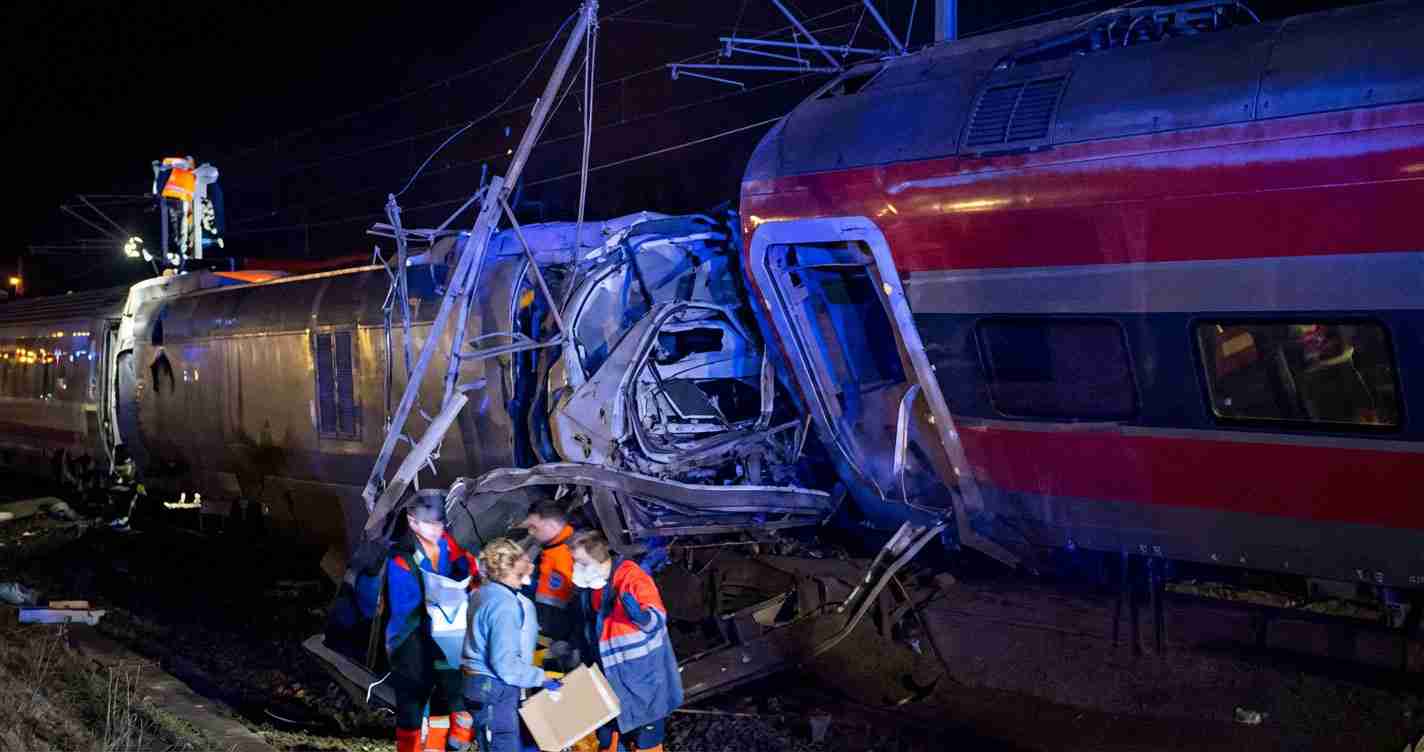
- The crash involved the Iryo 6189 Málaga–Madrid and a Renfe Madrid–Huelva train; the Renfe train’s first two carriages fell down a 4‑metre embankment.
- Investigators are examining track work from May 2025 (a renovation costing about €700 million), train recorders, signals, maintenance logs and possible human or technical error.
What happened
Overview: On January 18, 2026, an Iryo high-speed train derailed near Adamuz in Córdoba province and its derailed carriages struck a Renfe train running on a parallel track. The collision halted rail service and prompted an immediate large-scale emergency response.
Trains involved and timeline
Trains: The services involved were Iryo 6189, Málaga-to-Madrid, and a Renfe Madrid-to-Huelva train. About 317 passengers were aboard the two trains combined.
Damage and speeds: Early reconstructions indicate the Renfe train was traveling near 200 km/h at impact; the Renfe train suffered the worst damage, with its first two carriages tumbling down a 4‑metre (13‑foot) embankment.
Timing: Initial reports varied — some cited about 6:40 p.m. while later official reconstructions put the collision at roughly 7:45 p.m.. Authorities stressed times and casualty totals were provisional.
Crash scene and rescue operations
Rescuers worked through the night amid overturned carriages and twisted metal. Local emergency services, the Spanish Red Cross and the Military Emergencies Unit were dispatched. The defense ministry sent 15 vehicles and 40 personnel from the Military Emergencies Unit to the scene, and the Red Cross set up a help centre in Adamuz.
Spain’s Civil Guard managed on-scene coordination and traffic control. High-speed rail service between Madrid and Andalusia was suspended the following day to allow recovery and preliminary inspections.
Victims and survivors
Authorities reported at least 39 people killed and roughly 245 injured. Around 170 people received treatment for minor injuries at the scene and approximately 75 were admitted to hospitals, including about 15 in critical condition. Officials warned the death toll could rise as search teams continued examining wreckage.
Among the dead was the 27‑year‑old driver of the Madrid‑to‑Huelva Renfe train, who died when his train struck the derailed Iryo carriages head‑on. Injuries ranged from cuts and broken bones to severe trauma.
What investigators are looking into
As of early Monday, investigators had not identified a clear cause. Transport Minister Óscar Puente described the derailment as “really strange” because it occurred on a straight section of track that had been renovated in May 2025 as part of upgrades costing about €700 million. The Iryo train was described as roughly four years old.
Investigators will analyse track signals and switch positions, onboard data recorders, maintenance records and possible human error or technical failure.
Planned steps include recovering and analysing train data recorders (the rail equivalent of flight recorders), interviewing surviving crew and passengers, reviewing maintenance logs and studying surveillance and signal logs. Independent safety experts may be called in. Transport Minister Puente estimated preliminary work could take about one month.
Conflicting early reports and evolving numbers
Initial, early reports varied on casualty figures and timing. Local officials emphasised that counts were provisional while rescue, identification and forensic work continued. Multiple outlets and emergency services later consolidated figures at at least 39 dead and 245 injured, but numbers may be updated as authorities confirm findings.
Official response and national reaction
Prime Minister Pedro Sánchez cleared his schedule to address the tragedy and offer condolences. Regional and national leaders ordered reviews of rail safety procedures. Authorities called for restraint from speculation until forensic analysis and vehicle data review were complete.
Why the location matters
The derailment occurred on a newly refurbished straight stretch of track near Adamuz, raising immediate questions about the implementation and testing of upgrades, signalling and maintenance. Because the Renfe train was running at high speed on a parallel track, the dynamics of derailed cars striking it head‑on produced catastrophic damage.
Implications for Fresno, California
Although this crash occurred in Spain, it may reverberate in places debating high‑speed rail projects. Possible local effects in Fresno include:
- Economic: The crash could slow public support and complicate funding debates for California high‑speed rail projects.
- Political: Calls for stronger contractor oversight, clearer inspection timelines and greater accountability may intensify.
- Social and cultural: Fresno’s Spanish‑speaking communities and families with ties to Spain may experience heightened anxiety and seek updates and consular guidance.
- Practical lessons: Emergency managers and hospitals can review mass‑casualty protocols, mutual‑aid plans and coordination lessons from the rapid deployment of military emergency units and Red Cross support.
Reporting note and sources
This report compiles initial international coverage and public sources. Key reporting and investigatory details are drawn from The Independent, the Wikipedia summary of the incident (Wikipedia) and public broadcaster WGLT.
Note: Readers should be aware casualty and injury figures were evolving as rescue teams completed searches and official counts were confirmed. Ongoing coverage will follow statements from Spain’s transport ministry, Adif, Iryo, Renfe and Córdoba authorities as investigators release findings.