
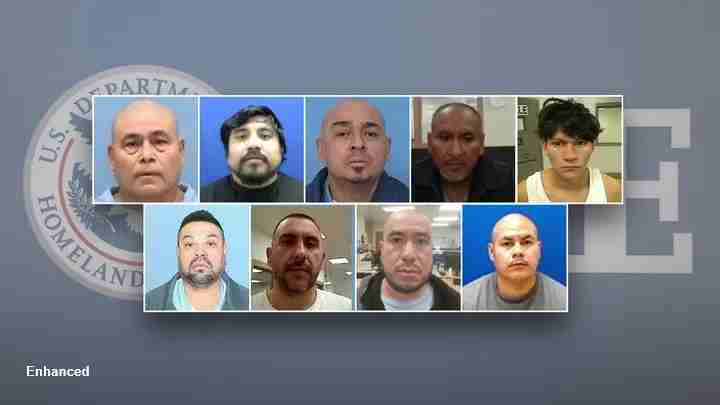
Illinois ICE detainer claims: Agency says 1,768 criminal non‑citizens released despite detainers — figure not independently verified
Illinois ICE officials say 1,768 non‑citizens with active detainers were released since January 2025, a claim not independently verified in public ICE, DHS or Illinois records; the dispute spotlights sanctuary policy conflicts and federal enforcement.
- Federal claim: ICE leaders assert 1,768 releases in Illinois since January 2025; that number is not found in public ICE, DHS or state documents as of publication.
- Policy context: Illinois and Chicago limits on detainer cooperation help explain repeated clashes between ICE and local officials.
- Verification gap: The exact figure and a quoted “Lyons” statement were not located in official press releases or major national reporting.
- Local implications: Fresno and other jurisdictions may face heightened political and operational pressure if national rhetoric spreads.
What the claim says — and what can be verified
Illinois ICE leadership has publicly accused state and local jurisdictions of repeatedly releasing people who had ICE detainers. The circulated claim includes:
- Numeric claim: A total of 1,768 non‑citizens with active detainers were released in Illinois since January 2025.
- Characterization: Many are described as serious or violent offenders in agency statements and allied commentary.
- Attributed quote: An official named “Lyons” is reported urging swift removal and warning these people should not be returned “to wreak havoc on law‑abiding citizens.”
What is verifiable:
- ICE has for years issued public statements criticizing jurisdictions that refuse to hold people solely on administrative immigration detainers; that pattern continued in 2025. See ICE news.
- Illinois and Chicago maintain policies that limit honoring some ICE detainers, a point long noted in reporting and advocacy summaries (see example summary).
What is not independently verified:
- The specific figure of 1,768 releases in Illinois since January 2025 does not appear in any publicly available ICE or DHS statistical release, Illinois state document, or major national news outlet as of this writing.
- The exact wording and context of the quoted “Lyons” statement were not found in official press releases or identifiable transcripts.
Immigration detainers and legal limits
An ICE detainer (Form I‑247 or similar) asks a local jail to hold an individual for up to 48 extra hours beyond scheduled release so ICE can assume custody. Detainers are administrative, not criminal warrants, and numerous courts have found that holding someone solely on a detainer without a judicial warrant can raise Fourth Amendment concerns.
Because of these legal issues, several states and cities — including Illinois and the City of Chicago — have adopted laws or policies restricting when local authorities will honor ICE detainer requests. Restrictions often require a judicial warrant, a qualifying offense, or other conditions before a local agency will hold someone for ICE. That legal framework helps explain repeated public disputes over allegations that jurisdictions are “releasing” people ICE seeks to detain. See Source background.
Wider enforcement backdrop in 2025
Federal interior immigration enforcement expanded sharply in 2025, with public summaries and advocacy reports noting rises in arrests and detention capacity under the new federal administration. ICE has focused on expanding detention infrastructure and interior arrests; facilities such as Broadview in Illinois have been central to the agency’s operations and related litigation. For additional context see the background reporting and data summary and ICE news.
Public‑safety claims and the limits of the evidence
How claims are framed: ICE and allied officials often argue that non‑cooperation presents a public‑safety threat, citing individual cases where people subject to detainers later committed serious crimes. Those narratives can be persuasive in public debate but do not by themselves establish a systemic pattern.
Key empirical limits:
- Immigrants generally have equal or lower rates of serious crime than native‑born populations, though risk varies by individual history.
- Because the 1,768 number and its underlying dataset have not been released, important questions remain unanswered: the mix of felony vs. lesser offenses, re‑arrest rates, and whether detainers reflected outstanding removal orders or pending inquiries.
- Until ICE or the state publishes a transparent breakdown, the public‑safety assertion remains an enforcement claim rather than an independently proven fact.
About the “Lyons” statement
The language attributed to “Lyons” — urging swift removal and warning offenders should not be returned to “wreak havoc on law‑abiding citizens” — is consistent with rhetoric sometimes used by ICE field leaders or allied politicians. However, searches of press releases and public records did not locate an official ICE or DHS release in 2025 from an identifiable “Lyons” using that exact phrasing in connection with the Illinois claim. Treat the quote as unverified until a primary source (press release, transcript, or filing) is produced.
How independent verification could be obtained
To move the claim from assertion to documented account, reporters and watchdogs should seek:
- An ICE Chicago field office press release or statistical report that lists the 1,768 figure and explains the methodology.
- A DHS or ICE national data file or FOIA release showing statewide detainer outcomes for Illinois, including dates, charges, and whether a detainer was honored.
- Illinois county jail records documenting releases where an ICE detainer was active, or court filings in litigation where such figures might appear.
- Testimony from ICE officials in congressional or state hearings with specific numbers and supporting records.
Sources
- “ICE Detainee Population Record — 2025” (background reporting and data summary)
- ICE official news and press releases
Implications for Fresno, California
Public safety and trust: Fresno law enforcement and county jails will be watching this dispute because similar tensions exist in California. If federal officials publicize unverified Illinois numbers, local leaders may face pressure to either cooperate more with ICE or publicly defend non‑cooperation policies to preserve community trust.
Local policy choices: California law and many county policies already limit cooperation with certain ICE detainers. Fresno County must weigh whether to change procedures in response to national rhetoric or rely on local prosecutors and sheriffs’ assessments of risk.
Political consequences: The Illinois dispute could be used in political messaging during local and statewide campaigns, pressing officials to balance calls for stricter cooperation with protections for due process and civil liberties.
Social and cultural effects: Fresno’s large immigrant population could experience increased anxiety if national enforcement rhetoric escalates without transparent data, prompting demand for outreach, legal help, and services.
Practical applications: Local jails and public defenders should review how they log and respond to ICE detainer requests, ensure compliance with California law, and consider proactive transparency — for example, publishing local detainer data or protocols — to counter misinformation and inform residents.



