
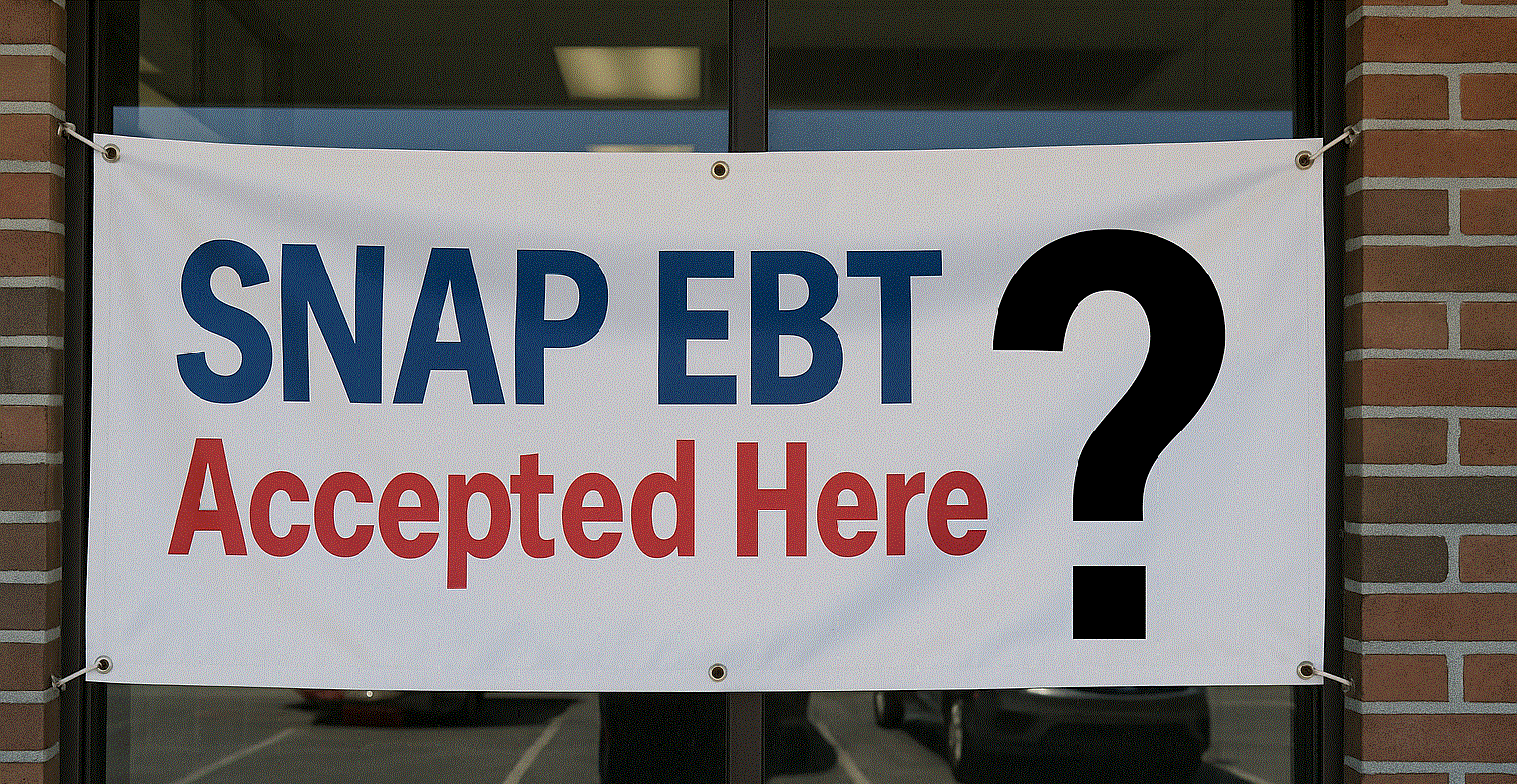
Two federal judges order SNAP benefits kept in place as government shutdown drags on
WASHINGTON (Times Media Service) — Two federal judges, including Judge Indira Talwani, ordered the Trump administration to maintain SNAP benefits during the government shutdown, granting temporary relief to millions while courts consider longer-term legal and statutory challenges to benefit continuity.
- Emergency orders: Judge Indira Talwani and a second federal judge directed that Supplemental Nutrition Assistance Program (SNAP) payments not be interrupted while litigation proceeds.
- States’ arguments: A coalition of 25 Democratic attorneys general argued that withholding benefits would cause irreparable harm to children, seniors and people with disabilities.
- Temporary relief only: The rulings preserve benefits during court review but do not resolve the underlying statutory and constitutional disputes.
- Legislative context: Changes from the One Big Beautiful Bill Act of 2025 are being implemented separately by the USDA; see the U.S. Department of Agriculture implementation notes.
What the judges ordered and why
Two federal judges concluded that, amid the funding lapse, the potential harm to people who rely on food assistance outweighed arguments for pausing SNAP payments. In Massachusetts, Judge Indira Talwani held an emergency hearing after 25 Democratic state attorneys general and other state leaders sought a court order to block any disruption.
State filings stressed that a lapse in SNAP would lead to immediate food insecurity for millions — including children, seniors and people with disabilities — and that withholding benefits would amount to irreparable harm. At the hearing, Talwani “appeared sympathetic” to those concerns and ordered the administration to take necessary steps to maintain benefits at least temporarily while the legal fight continues. A second federal judge issued a similar directive, reinforcing a judicial view that essential safety-net programs should not be interrupted by a funding impasse.
“Withholding benefits would lead to immediate food insecurity for millions,” the state filings argued, stressing both statutory duties and constitutional protections.
Legal basis used by states
The states’ emergency filings emphasized three core legal points:
- Irreparable harm: Courts are likelier to grant emergency relief when plaintiffs demonstrate harms that money cannot fix quickly — immediate food insecurity qualifies.
- Statutory obligations: States argued federal agencies administering SNAP have duties under existing statutes and regulations that do not automatically lapse because of a funding gap.
- Constitutional concerns: Some filings raised due process and equal protection issues, arguing that singling out low-income residents for hardship may be unlawful.
Context: shutdown pressures on food assistance
The rulings arrived amid concern about the human cost of a protracted shutdown. SNAP is among the largest federal nutrition programs. A pause in benefits would affect grocery purchases, school meal operations tied to federal reimbursements, and the work of food banks and pantries that coordinate with SNAP.
The One Big Beautiful Bill Act of 2025 introduced later policy changes — including adjustments to eligibility and work requirements — that are being phased in under USDA guidance. Those legislative changes did not address immediate funding interruptions caused by the shutdown; see the U.S. Department of Agriculture implementation notes for implementation details.
Why this matters: the role of courts in shutdowns
Legally, the orders show how federal courts can act to protect essential services when political branches are deadlocked. Multiple judges in different districts reached similar temporary outcomes, signaling a judicial consensus that basic food assistance merits protection during a funding lapse.
The orders do not answer broader questions: whether budgetary decisions in a shutdown may lawfully interrupt programs like SNAP or whether statutory language compels agencies to continue benefits absent new appropriations. Those complex issues are likely to be litigated at length.
Reactions from states and advocates
State attorneys general and anti-hunger groups welcomed the rulings as a necessary safeguard. Food banks and advocacy organizations warned a shutdown would push more families into hunger; the orders reduced immediate pressure on those networks.
Administration officials contested the emergency relief in filings and hearings, arguing that appropriations law constrains spending during a lapse. The emergency orders require the administration to identify steps it can lawfully take to keep benefits flowing while preserving its legal positions for court review.
Implications for Fresno, California
Economic impact
Many Fresno-area families rely on CalFresh, California’s SNAP program, to buy groceries. Interruptions would reduce household buying power and likely depress sales at local grocery stores, farmers markets and produce vendors across the Central Valley. Keeping benefits flowing helps stabilize demand for basic goods.
Political consequences
Local elected officials and county social services leaders may face increased pressure to respond — through state-level protections or emergency county measures — even if federal policy is the root cause. Central Valley congressional delegations could see constituent complaints intensify and adjust messaging or negotiation priorities accordingly.
Social effects and cultural relevance
SNAP continuity is closely tied to child nutrition. Disruptions could force families to skip meals or reduce food quality, affecting school performance and child health in Fresno Unified and other districts. Nonprofit food banks may face surges in demand if benefits were interrupted. Keeping benefits flowing also protects cultural practices around family meals and community food traditions.
Practical applications for residents
- Stay informed: Recipients in Fresno should check official CalFresh and Fresno County Department of Social Services channels for guidance and procedural updates.
- Coordination: Food distribution organizations should coordinate with county officials to ensure outreach continues and prepare contingency plans.
- Apply if eligible: Residents eligible but not enrolled in CalFresh can still apply; county offices and nonprofit partners can assist with applications and documentation.
Source notes and further reading
Reporting drew on court filings, statements from state attorneys general, emergency motions, and agency guidance. For implementation guidance relating to the One Big Beautiful Bill Act of 2025, see the U.S. Department of Agriculture — SNAP implementation notes for the One Big Beautiful Bill Act of 2025.
Note: Legal proceedings are ongoing. The temporary orders preserve SNAP benefits while courts continue to weigh broader legal and budget questions tied to the shutdown and to how agencies must operate during lapses in appropriations.



