
Treasury moves to cut tax credits for undocumented immigrants; FinCEN issues alert as part of broader immigration push
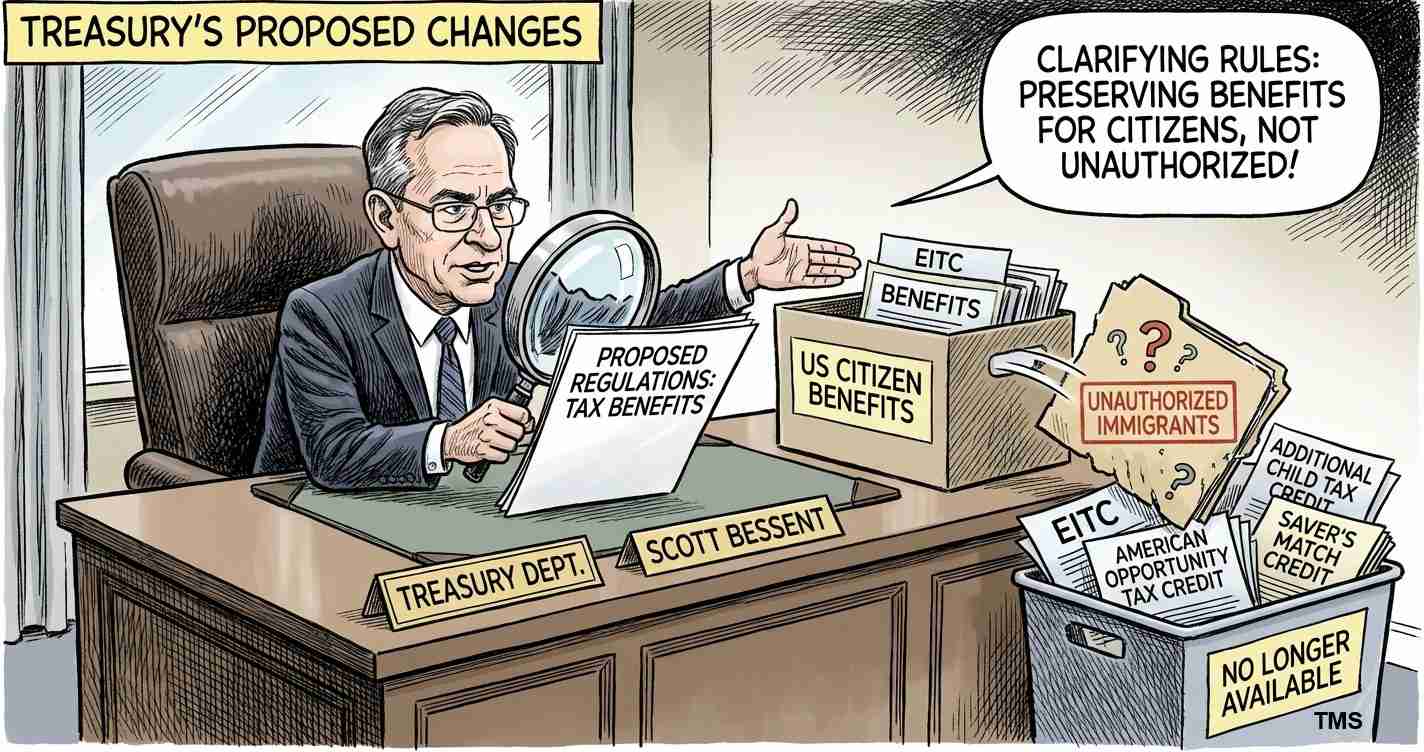
The U.S. Treasury announced proposed rules to bar refunded portions of several tax credits for undocumented immigrants, reclassifying them as “federal public benefits,” while FinCEN issued an alert to banks amid a broader immigration enforcement push.
Key takeaways
- Treasury action: Secretary Scott Bessent said the department is working to cut federal tax benefits to undocumented immigrants and “preserve them for U.S. Citizens.” (Fox Business)
- Credits affected: Proposed regulations would treat refunded portions of the EITC, ACTC, American Opportunity Tax Credit and Saver’s Match as unavailable to non‑qualified aliens. (ABC News)
- FinCEN alert: A Financial System Alert asks banks and money services businesses to watch for suspicious transactions tied to unlawful employment and illicit activity. (Fox Business)
- Timing: Treasury officials told lawmakers the rules would likely begin for tax year 2026 if finalized, with a public notice-and-comment rulemaking process. (ABC News)
What the Treasury announced
Treasury Secretary Scott Bessent said the department will publish proposed regulations redefining the refunded portions of certain individual income tax credits as “federal public benefits.” Under the proposal, those refunded amounts would no longer be available to undocumented and other non‑qualified aliens. Bessent said the change is being advanced at President Donald Trump’s direction. (Fox Business)
Credits listed by Treasury
- Earned Income Tax Credit (EITC)
- Additional Child Tax Credit (ACTC)
- American Opportunity Tax Credit
- Saver’s Match Credit
Legal basis and federal enforcement steps
Treasury’s proposal builds on an opinion from the Justice Department’s Office of Legal Counsel that interprets statute to allow these benefits to be treated as federal public benefits. That legal view provides a foundation for the Treasury and IRS to proceed with regulatory change, subject to the public notice-and-comment process. (Fox Business)
At the same time, the Treasury’s Financial Crimes Enforcement Network (FinCEN) issued a Financial System Alert urging banks and money services businesses to monitor and report suspicious transactions involving at least $2,000 that may be tied to unlawful employment or illicit activity. The alert aims to prevent misuse of the U.S. financial system and is described by Treasury officials as part of the push to bar unauthorized immigrants from exploiting financial services. (Fox Business)
Official statements and responses
“We are working to cut off federal benefits to illegal aliens and preserve them for U.S. Citizens,” Bessent said, adding, “If you’re here illegally, there’s no place for you in our financial system. Illegal aliens that use our financial institutions to move their illicitly obtained funds is exploitation, and it will end.” (Fox Business)
Critics — including immigrant advocacy groups, some tax experts and Democratic lawmakers — warn the changes could reduce access to credits for mixed‑status families, create confusion at tax time, and push people away from formal banking. Supporters say the measures protect taxpayer dollars and reinforce immigration rules. (ABC News; Fox Business)
How the proposed rules would work in practice
The proposed regulations focus on refundable portions of credits — amounts refunded to taxpayers even when tax liability is zero. Treasury’s position is to treat the refunded portion as a public benefit unavailable to non‑qualified aliens, which may affect filers using an Individual Taxpayer Identification Number (ITIN) rather than a Social Security number.
Treasury and the IRS say the rulemaking will clarify eligibility. Tax preparers, low‑income families and mixed‑status households could see practical changes in refund availability and filing processes. (ABC News; Fox Business)
Timing and next steps
Treasury plans to publish proposed regulations and open them for public comment before finalizing any rule. Officials indicated the reinterpretation could take effect for tax year 2026 if the rulemaking proceeds without major delays. Stakeholders — tax‑preparer groups, immigrant advocates and financial institutions — are expected to participate in the comment period. (ABC News; Fox Business)
Context within broader Trump Administration immigration policy
Officials linked the Treasury action to a suite of immigration measures pursued by the administration, including public statements by President Trump about stricter migration limits and a proposed “permanent pause” on migration from certain countries. Treasury leaders say the tax‑credit changes and FinCEN guidance are components of broader enforcement and policy steps. (Fox Business)
Implications for Fresno, California
Economic impact
Fresno has a large immigrant population and many working families rely on refundable credits like the EITC and ACTC. Restricting refunded portions could reduce sizeable refunds that cover housing, food and education, increasing demand for local tax‑preparation help and straining nonprofit assistance programs.
Political consequences
The policy may shape local politics across the San Joaquin Valley, with elected leaders facing pressure from constituents and advocacy groups. The issue could influence local and state races as voters weigh concerns about fairness and administrative burden.
Social effects
Limiting refundable credits could push some families deeper into poverty or informal economic activity. If FinCEN scrutiny deters banking, affected residents may turn to cash‑based systems that are less safe and harder to track, increasing demand for community services.
Cultural relevance
Immigrant communities are integral to Fresno’s cultural life and economy, especially in agriculture and small business. Tax policy changes that affect immigrant families could erode trust in institutions and prompt increased outreach by faith groups and community leaders.
Practical applications for residents
- Tax filing: Fresno residents using ITINs or in mixed‑status households should seek certified tax preparers and free local tax clinics to understand eligibility and avoid filing errors. Local nonprofits and United Way chapters often provide help.
- Banking: Financial institutions should review FinCEN guidance and train staff to spot and report suspicious activity while communicating clearly to avoid deterring lawful customers.
- Community services: Local agencies should prepare for possible increases in demand for emergency aid, rent assistance and food programs and coordinate with state and nonprofit partners.
Sources and further reading
- Fox Business: Treasury’s Bessent says department working to cut off federal tax benefits to illegal immigrants
- ABC News: Treasury plans change to tax credit eligibility; move draws critics
The rulemaking process will include public comment, and Fresno residents, tax professionals and local leaders have opportunities to weigh in as the Treasury and IRS move forward on these proposed changes.



