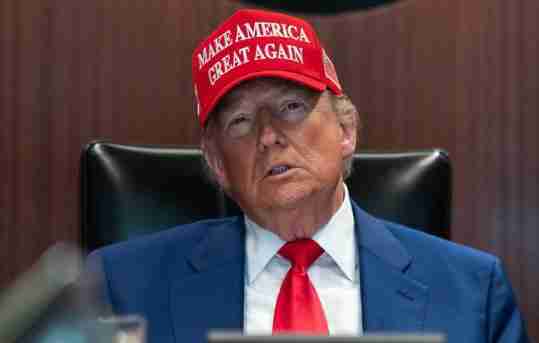
President Trump declares a “complete and total ceasefire” to end the 12-day conflict, as both nations tentatively halt hostilities under U.S. mediation
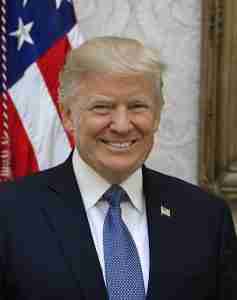 Donald Trump / complete and total ceasefire (Courtesy Wikipedia)
Washington, DC (Times Media Service) – In a surprise address from the White House on June 23, President Trump announced a complete and total ceasefire between Israel and Iran, declaring that both nations had agreed to halt military operations after 12 days of intense strikes.
Context of the 12-Day Conflict
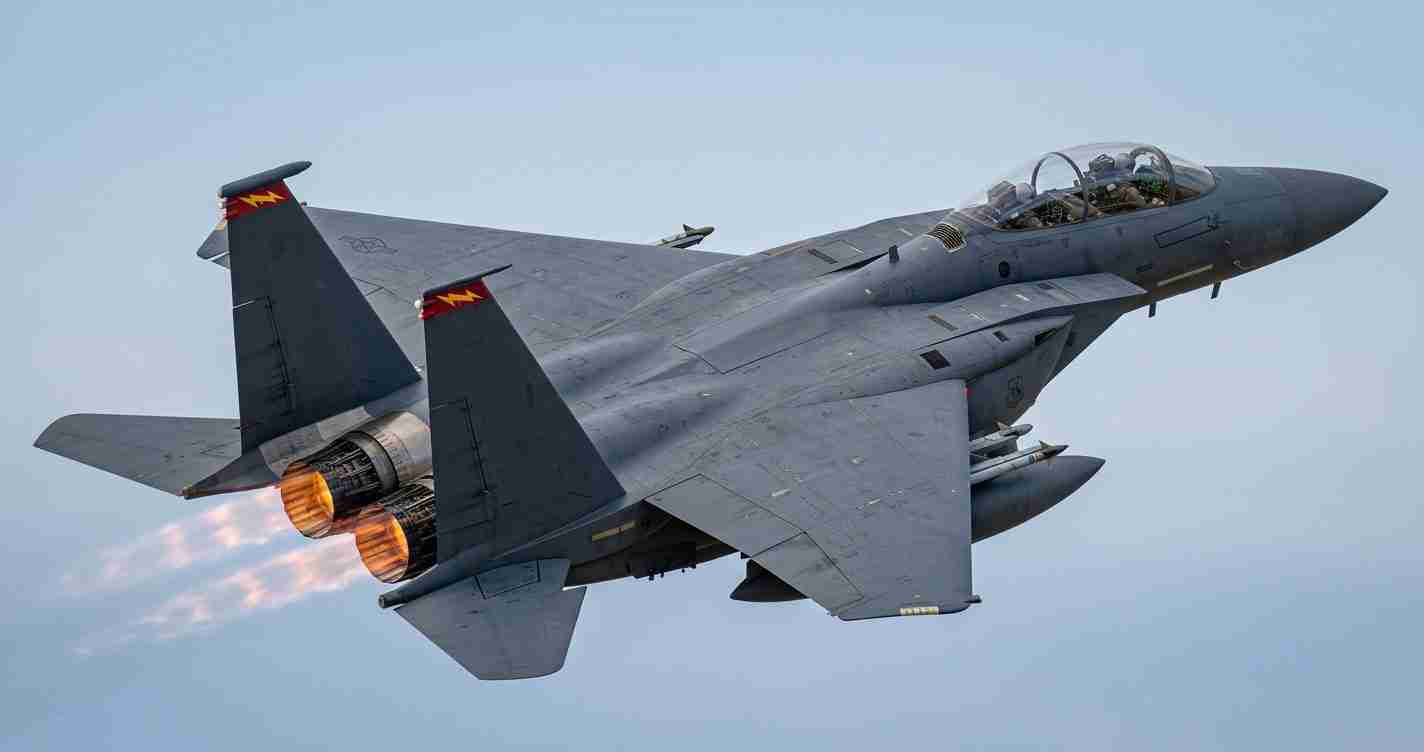
Israel and Iran engaged in reciprocal airstrikes beginning June 11, when Iran fired missiles at Israeli military targets in retaliation for a suspected Israeli drone strike at a Tehran military site. Over the next days, Israel responded with heavy bombardment of Iranian air defense facilities and underground nuclear sites. President Trump ordered U.S. air support on June 20, including 30,000-pound bunker-busting bombs against Iran’s Fordow enrichment plant. The U.S. involvement escalated the conflict to the brink of a wider Middle East war.
International actors, including Gulf states and European allies, pressed both sides to step back. Behind the scenes, Qatar and Oman facilitated back-channel talks, while the United Nations Security Council convened emergency sessions to demand an immediate cessation of hostilities. On June 23, following direct calls between President Trump and Israeli Prime Minister Netanyahu, Israel agreed to stand down, prompting Iran to reciprocate—leading to the unprecedented complete and total ceasefire announcement.
Terms of the Complete and Total Ceasefire
According to Trump’s statement, the complete and total ceasefire would take effect over a phased 24-hour period, allowing each side to wind down operations. Israel committed to cease air and missile strikes “no later than 4:00 a.m. Tehran time” on June 24, while Iran pledged to halt launches in tandem. Both nations agreed to release detained civilians and reopen humanitarian corridors in Gaza and southern Iran.
The U.S. will monitor compliance via satellite imagery and unmanned aerial surveillance. Trump stressed that any violations would prompt immediate U.S. retaliation against the offending party. He stated, “This agreement is binding; any breach of this complete and total ceasefire will be met with force.”
Early Signs and Challenges of the Israel Iran Ceasefire
Initial reports signaled a fragile calm: within hours of the complete and total ceasefire, Israel claimed Iran fired two short-range rockets toward Beersheba, which Iranian officials denied, insisting their last launch preceded the ceasefire start. Israel’s Defense Minister temporarily suspended the truce to investigate, but after a direct call from President Trump, he stood the order down, allowing the ceasefire to resume.
Despite these early teething issues, civilian life cautiously resumed. Schools in northern Israel reopened, and markets in Tehran saw light crowds. Humanitarian agencies delivered food and medical aid across border regions. Observers warn, however, that deep mutual distrust and unresolved nuclear tensions mean the ceasefire may only hold if both sides commit to further diplomatic talks.
Regional and Global Reactions
United Nations: Secretary-General António Guterres welcomed the ceasefire, calling it “a vital first step toward lasting stability in the Middle East.” UN special envoy Geir Pedersen urged the parties to transition quickly to negotiations on long-term security measures.
European Union: Brussels expressed relief, with EU High Representative Josep Borrell stating that the deal showed “diplomacy can prevail over guns,” and announcing plans to send observers to monitor the ceasefire zones.
Gulf States: Saudi Arabia and the United Arab Emirates offered to host a broader peace summit, while Qatar highlighted its role as mediator.
Domestic U.S. Politics: President Trump’s announcement drew mixed responses. Congressional leaders praised the halt in violence but questioned the durability of Trump’s unilateral approach. Some critics argue the President overpromised by claiming he had “obliterated” Iran’s nuclear program—an assertion challenged by U.S. intelligence assessments.
What Comes Next for the Ceasefire?
The immediate priority is ensuring both Israel and Iran adhere to the complete and total ceasefire through independent verification. The White House plans to convene a virtual summit next week with regional leaders to discuss confidence-building measures, including prisoner exchanges, humanitarian relief corridors, and a framework for addressing Iran’s nuclear ambitions.
Analysts say that while the ceasefire ended active hostilities, it stops short of a durable peace. Middle East experts urge parallel talks under UN auspices to address core issues: Iran’s nuclear enrichment, Hezbollah’s arms supply, and Israel’s security guarantees. Without such broader diplomacy, the ceasefire could unravel as quickly as it formed.
Reaction in Fresno, California
The Fresno community has deep ties to both Israeli and Iranian diasporas, making the ceasefire announcement resonate locally. At the Jewish Community Center, director Sarah Cohen called the news “a hopeful respite that families on both sides so desperately need.” Meanwhile, the Iranian Cultural Association in Clovis organized a solidarity vigil at Fresno City Hall, where members urged U.S. leaders to support “long-term justice and human rights.”
Local political leaders weighed in: Mayor Jerry Dyer praised President Trump’s decisive action in “stepping into the breach” and hailed the ceasefire as a stabilizing moment for global security. Councilmember Miguel Arias, however, cautioned that “the real test is sustainable dialogue—let us not celebrate too early.”
Fresno’s universities are holding panel discussions this week. California State University, Fresno, will host experts on international law to examine the legal implications of the ceasefire terms, while Fresno Pacific University’s peace studies program invites students to debate the prospects for lasting peace in the Middle East.
Hanna Crosby / Economic and Political Strategist Writer (Times Media Service)
SoCal economic & political strategist, business consultant, and journalist covering fiscal policy and community impact.
hcrosby@timesmediaservice.com