Girl Pulls One Coaster; 63,000-Piece Beer-Coaster Tower in Cologne Collapses in Viral Clip
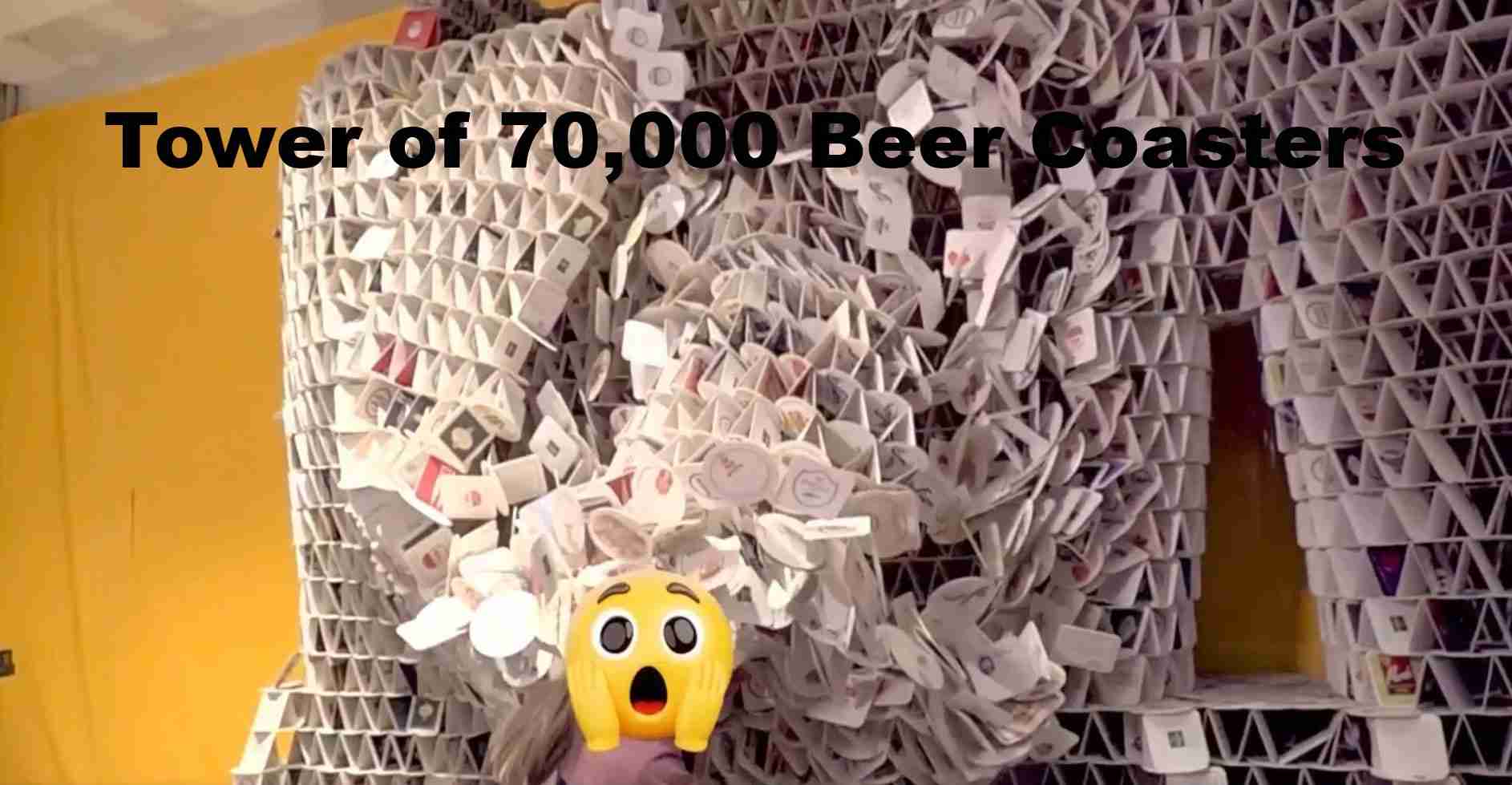
A viral January 10, 2026 video shows a young girl pull a single coaster and topple German artist Benjamin Klapper’s roughly 63,000-piece beer-coaster sculpture “Inside” at Cologne’s Rhein-Center, after a prior partial collapse in December 2025.
- What happened: A public demonstration ended when a child removed one coaster and the entire 63,000-piece installation collapsed, a clip that drew millions of views.
- Artist and aim: Benjamin Klapper built the piece as an attempt to beat the drink-coaster Guinness benchmark after about 120 hours of work.
- Record context: The standing record is 70,000 coasters (Sven Goebel, 2004); Klapper’s structure was disqualified after a December partial failure.
- Local lessons: The episode highlights crowd-drawing potential and the safety, permitting and documentation considerations for interactive public art.
The collapse, the video and immediate reaction
On Jan. 10, 2026 shoppers and onlookers at Cologne’s Rhein-Center gathered around Benjamin Klapper’s towering installation titled Inside. Social posts and news items show a small girl reaching up and pulling a horizontally placed coaster; the structure shuddered and then collapsed in a sweeping, cascading fall that viewers likened to a house of cards.
The moment was captured and distributed widely — Fox News video coverage and the original clip circulated on video platforms such as Newsflare footage, accumulating millions of views and sparking broad online debate.
“Gasps and surprised laughter are audible in the clip as the mats slide away,” observers wrote when sharing the footage; responses ranged from delight to criticism of the apparent destruction of painstaking work.
Construction timeline and technique
Klapper, 49, who runs MuVi 3D GmbH, told reporters he began assembling the project on Oct. 31 and completed the main build on Dec. 8, 2025, totaling roughly 120 hours of work. He used interlocking and balanced arrangements of drink coasters to create a freestanding sculpture intended to challenge the Guinness World Record for the largest drink-coaster construction.
Multiple accounts note that the tower had partially collapsed under its own weight in early December, which prevented official Guinness verification. Following that failure, Klapper opened the remaining structure to visitors, inviting them to remove coasters until it fell.
For additional detail on the build timeline, see the Tribune detailed report.
Why the record attempt failed
Disqualification: Because the installation suffered a partial collapse before a Guinness official could measure and verify the build, the attempt was not eligible for certification. Large, fragile constructions assembled from many loose elements are vulnerable to cumulative stresses and minor misalignments that create critical weak points as height increases.
After the December incident Klapper deliberately chose to make the remaining structure interactive, inviting public pulls rather than rebuilding for certification.
Public reaction and questions about authenticity
The clip produced mixed online responses: some viewers celebrated the spectacle, others saw it as the undoing of painstaking effort. A minority raised skeptical questions about whether the footage had been altered or produced with artificial-intelligence techniques.
Local reporting and Klapper’s own comments clarified that the public pull-down was intentional after the disqualification; initial social posts, however, sometimes framed the Jan. 10 moment as accidental. Coverage from outlets such as Fox News, Tribune and commentary posts weighed authenticity concerns against on-the-ground reporting.
Who toppled it: the human-interest angle
After the December partial collapse Klapper invited visitors to try removing coasters until the work came down. The child who caused the Jan. 10 tumble was the daughter of one of Klapper’s helpers; she reportedly pulled a horizontally placed coaster on her first try and the entire assemblage collapsed. Klapper described the project as a personal milestone despite the absence of an official world record.
Record context: how big is the benchmark?
The standing Guinness World Record for the largest drink-coaster construction was set in 2004 by Sven Goebel, who stacked 70,000 coasters into a 9-foot-6-inch tower. Klapper’s effort, reported at roughly 63,000 (some accounts say ~64,000), was one of the largest recent attempts but ultimately fell short after the December collapse.
Implications for Fresno, California
Economic and cultural ties: Fresno’s arts community could draw lessons about interactive installations that drive foot traffic and social-media attention. A bold public display at a mall or festival can produce earned publicity similar to Klapper’s exhibition, which traveled far beyond Germany.
Political and regulatory considerations: Organizers in Fresno should emphasize safety, insurance, permitting and crowd control when staging interactive public art. Clear rules and contingencies reduce liability and reassure the public.
Social and community effects: Family-friendly, supervised participation can create memorable moments; local nonprofits could adopt interactive formats with guardrails to boost engagement while protecting participants.
Practical lessons: Document processes thoroughly, seek third-party verification for record attempts, and prepare contingency plans to address structural failure and allegations of inauthenticity.
Source list for verification and follow-up
Reporting note: This article synthesizes available reporting and viral footage to trace the timeline, technical context and local lessons from Benjamin Klapper’s 2025–26 beer-coaster installation and its Jan. 10, 2026 collapse.