Court fight continues as Trump sends California, Texas National Guard troops to Oregon
President Trump ordered federalized California and Texas National Guard troops to Oregon after a judge blocked use of Oregon’s Guard, setting up a legal battle with Democratic governors over presidential power and interstate troop movements.
- Federal judge temporarily blocked the federalization and ordered the Guard returned to state control — returned to state control
- White House reassigned roughly 300 federalized California Guard members and activated up to 400 Texas Guard members — including Oregon
- Governors Newsom and Kotek criticized the move and announced legal challenges — legal challenges
What happened, step by step
Federal judge blocks Oregon Guard
Last week a federal court issued an order that temporarily stopped the Trump administration from federalizing the Oregon National Guard and using those troops in Portland. The judge said the administration had shown “no legal basis” to take command of Oregon’s Guard and ordered the force returned to state control — returned to state control.
Trump orders cross-state deployments
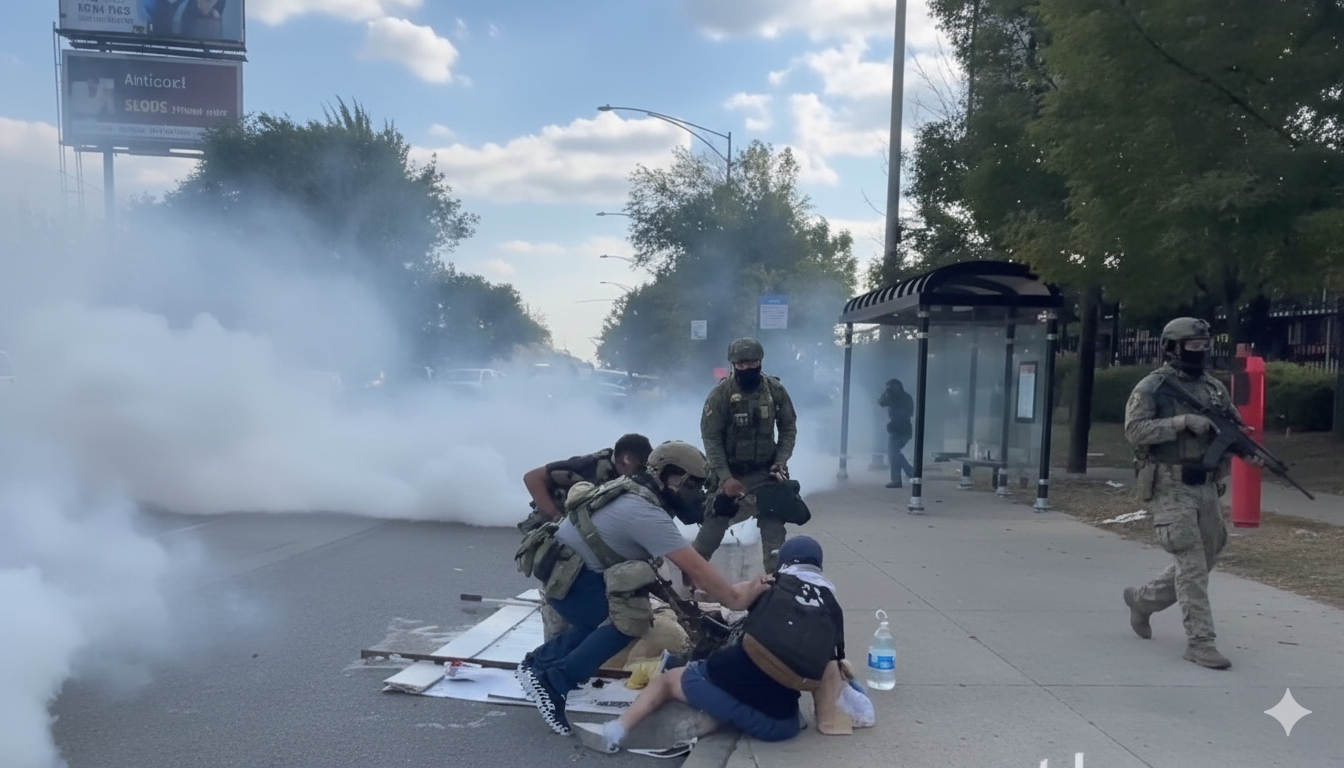
Within hours of the ruling, the White House announced a new plan: federalized National Guard troops already serving under federal authority in other states would be reassigned to Oregon. About 300 California Guard members who were federalized and had been serving in Los Angeles were ordered to go to Oregon, and up to 400 Texas Guard members were activated for possible deployment to Oregon, Illinois and other locations — other locations (additional coverage).
Arrivals and official communication
Oregon Governor Tina Kotek confirmed that at least 101 California National Guard personnel arrived Saturday night, with more expected. Both Governors Kotek and Newsom said they received no formal notification from the federal government about the movements. Kotek said the lack of communication appeared to be an effort to “circumvent yesterday’s [court] ruling” — circumvent yesterday’s ruling (additional coverage).
Governors push back legally and politically
California Governor Gavin Newsom called the deployment a “breathtaking abuse of the law and power” and said he would sue. In a statement, Newsom urged Americans to speak out against what he described as an “authoritarian, lawless use of military force” against domestic opposition.
Oregon Governor Tina Kotek also condemned the move, telling reporters there was “no need for military intervention in Oregon” and stressing “there was no insurrection in Portland. No threat to national security. Oregon is our home, not a military target.” — military target (additional coverage).
Pentagon and Texas responses
The Defense Department, through Secretary Pete Hegseth, told the court that the troops being moved were already federalized. Hegseth argued that the Pentagon had authority to reassign forces it already controlled. Texas Governor Greg Abbott backed the move publicly, saying he had authorized the call-up and urging federal officials to either “fully enforce protection for federal employees or get out of the way and let Texas Guard do it.” — backed the move.
The legal and constitutional questions
At the center of the dispute is the president’s power to federalize and move National Guard forces across state lines without the governor’s consent. Traditionally, governors control their state National Guard units unless the president federalizes them for national service. Courts will now weigh in on whether the White House exceeded its authority by moving federalized Guard members into another state after a judge had blocked use of the host state’s Guard — exceeded its authority.
Legal observers say the case will test competing doctrines: presidential emergency power, the Insurrection Act, and state sovereignty. The federal court’s earlier order warned against blurring the line between civil and military authority, noting that the United States is “a nation of Constitutional law, not martial law” — a nation of Constitutional law, not martial law.
Political context and stakes
The deployment comes after months of strained relations between the Trump administration and Democratic governors over the use of federal forces during protests. Critics argue that deploying National Guard troops to handle civil unrest inside a state where they lack state consent is unprecedented and risks normalizing domestic military deployments for political ends — political ends. Supporters of the president say federal control of troops already federalized allows timely protection for federal property and personnel.
Timeline and what to watch next
- Legal filings: California and Oregon have said they will press their challenge in federal court. Watch for emergency hearings and additional rulings.
- Federal response: The Pentagon’s statements and any new orders from the White House could clarify the legal basis for the reassignments — Pentagon’s statements (additional coverage).
- State coordination: Whether governors receive formal notifications and how state law enforcers interact with arriving Guard troops will shape next steps — state coordination.
Implications for Fresno, California
Economic impact
Fresno is home to many National Guard members and families. Any extended deployment of California Guard units could affect local businesses that rely on paychecks and spending of Guard families. If troops are away for extended periods, Fresno employers may face staffing gaps, and local economies near bases could see lower activity. Local suppliers and service providers could also see short-term changes if troop housing or logistics shift — could affect local businesses.
Political consequences
Fresno voters tend to be politically moderate. A high-profile fight over federal authority and the use of Guard troops may sharpen opinions about executive power and state rights. Local elected officials may face pressure to state their positions. California’s legal challenge could influence how Fresno’s leaders frame federal-state relations in future campaigns and public meetings — legal challenge.
Social effects
Families of Guard members in Fresno may experience stress and disruption from unexpected deployments. Community groups and schools that depend on Guard members for volunteer work or local programs could see shortfalls. Nonprofit organizations providing support to military families may need to prepare for increased demand for services, counseling and financial assistance — increased demand for services.
Cultural relevance
Fresno has a strong civic culture around public safety and veterans’ service. The image of Guard members being moved between states for domestic security operations could prompt community conversations about the role of the military at home. This debate may touch on Fresno’s values around civil liberties, public order and trust in institutions — public order and trust in institutions.
Practical applications for residents
- Plan for changes in volunteer schedules, school activities and employer staffing if local Guard units are activated or reassigned.
- Families of service members should contact county military and veterans affairs offices for information on benefits and support.
- Community leaders and first responders should coordinate with state Guard liaisons to understand capabilities and timelines if mutual aid or state-level assets are affected.
Sources and further reading
– California Governor’s office statement and legal announcement
– Reporting on troop movement and arrivals (ClickOnDetroit)
– National coverage of federalized California Guard deployment (CBS News)
(Reporting by Times Media Service)