
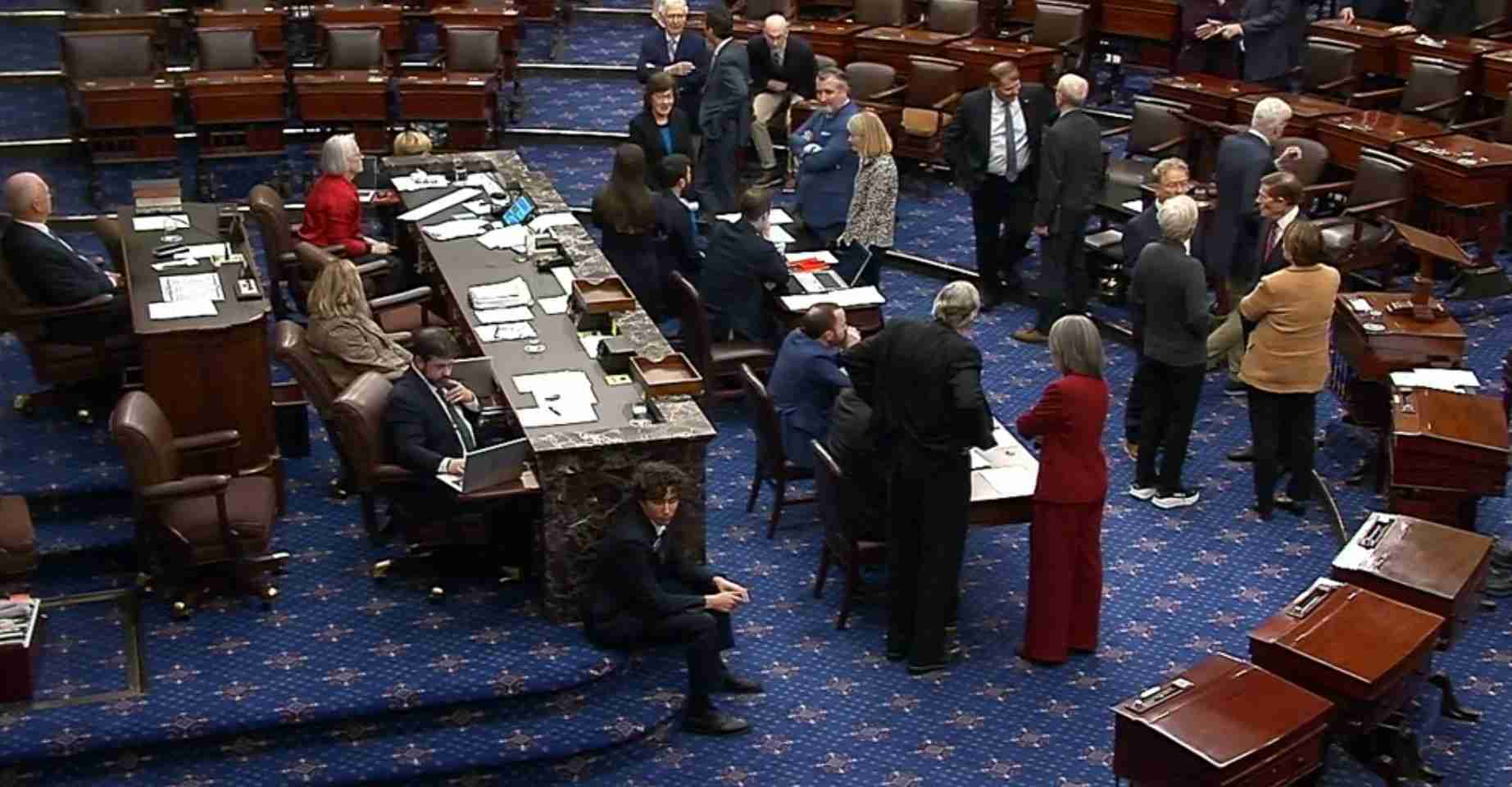
Senate advances stopgap funding, reopening government while deferring fight over Obamacare subsidies
The U.S. Senate voted 60-40 to advance H.R. 5371, averting a shutdown by reopening agencies while deferring a decision on extending Affordable Care Act premium subsidies until December, prompting bipartisan praise and progressive backlash.
Key takeaways
- Cloture passed 60-40: The Senate invoked cloture on the Motion to Proceed on H.R. 5371, allowing debate to begin and averting an immediate government shutdown; reporting by Politico.
- Eight Democrats crossed: Eight Senate Democrats joined Republicans to reach the 60-vote threshold, a procedural step to reopen most federal agencies; coverage includes Fox News.
- No binding extension of ACA subsidies: Leaders promised a December vote on extending Affordable Care Act premium subsidies but offered no guarantee of passage, per Politico.
Main content
What the vote means and how it unfolded
The cloture vote on H.R. 5371 was a procedural yet decisive step. Under Senate rules, a motion to proceed can be blocked by a filibuster unless 60 senators vote to end debate. Reaching that threshold allowed the chamber to take up the funding measure and avoid a government shutdown that would have closed many federal offices and halted services.
Eight Democrats broke with their party to join Republicans in the 60-vote margin, clearing the way for the bill to reach the floor. Supporters argued advancing the measure was necessary to restore government functions quickly and to protect federal workers already furloughed.
The immediate package funds certain agencies for the full fiscal year — including Agriculture, the Food and Drug Administration, Veterans Affairs, military construction and Congress — while keeping most other agencies under a continuing resolution through Jan. 30, giving lawmakers more time to negotiate long-term appropriations (Politico).
No binding deal on Obamacare subsidies
Despite the bipartisan vote to proceed, Senate Democrats did not secure a binding extension of ACA premium subsidies — commonly called Obamacare subsidies — which help many Americans afford marketplace coverage. Those enhanced subsidies are scheduled to expire at year’s end unless Congress acts.
Senate leaders agreed to take up a vote on legislation to extend the subsidies in December. That commitment came as a promise from Senate leadership to allow a vote, not as a binding agreement that would ensure passage of a subsidy extension (Politico).
Progressive backlash and health risks
Progressive senators warned of real harm. Sen. Bernie Sanders criticized the eight Democrats who voted to advance the bill, calling it “a very, very bad vote,” according to Fox News.
Critics pointed to estimates suggesting that letting enhanced ACA subsidies lapse could raise premiums for more than 20 million people and might trigger Medicaid reductions affecting up to 15 million, citing analyses by the Congressional Budget Office and other sources. Progressives warned of increased out-of-pocket costs, more uninsured people, and worse health outcomes — and used those risks to pressure Democrats to withhold support without healthcare guarantees.
Arguments for advancing funding now
Supporters emphasized immediate benefits: reopening government restores services, rehiring federal employees and providing backpay to furloughed workers. Proponents argued that a swift resolution protects the public, reduces economic disruption and gives lawmakers time to negotiate a longer-term solution for subsidies and other priorities.
Senate leaders framed the December vote on ACA premium subsidies as a reasonable timetable that preserves leverage for further negotiations and allows time to draft a targeted, durable fix without leaving the government closed.
Other provisions in the package
The funding package secures full-year funding for specific departments — Agriculture, FDA, VA, military construction and Congress — and keeps most other agencies running under a continuing resolution through Jan. 30 (Politico).
The bill also includes language ensuring furloughed federal workers will receive backpay for missed time, a key political and practical concession intended to ease short-term hardship.
Political context and stakes
The vote underscores a central tension in Washington: the trade-off between ending a painful shutdown quickly and preserving bargaining leverage on high-priority policy goals. For Democrats, ACA premium subsidies remain a top priority. For Republicans and some moderates, reopening government without immediately enshrining new healthcare spending limited disruption.
Progressive critics framed the move as a failure to protect working families; supporters countered that the public interest in a functioning government justified the choice and pointed to the promised December vote as the next opportunity to secure continued coverage support.
Where the subsidies stand next
The central question now is whether Congress will enact a lasting extension of ACA premium subsidies in December. Without action, enhanced subsidies could end, driving premiums up for many Americans. The December timetable sets up a high-stakes round of negotiations that will determine whether subsidies and marketplace protections continue into next year.
Implications for Fresno, California
Economic impact: Fresno households and small businesses may feel direct and indirect effects. With federal agencies resuming normal operations, local farmers and agribusinesses that rely on USDA services can expect fewer delays in loans, inspections and disaster assistance. Restored FDA funding supports food safety checks that underpin the Central Valley’s produce sector. However, if ACA premium subsidies are not extended in December, many Fresno residents who purchase coverage on the exchange could face higher premiums and out-of-pocket costs, potentially reducing local consumer spending.
Political consequences: The vote may influence local political conversations across Fresno and the San Joaquin Valley. Moderate voters who favored a quick end to the shutdown may view the bipartisan move as pragmatic, while progressive activists and some Democratic voters may be frustrated that subsidy extensions were not locked in before the procedural vote. That tension could shape turnout and messaging in upcoming races.
Social effects: Fresno has higher-than-average uninsured and underinsured rates compared with many parts of California. A lapse in ACA premium subsidies could disproportionately affect exchange enrollees and low-income residents who do not qualify for Medi-Cal, leading to delayed care, worsening chronic conditions, and increased strain on community clinics and hospitals.
Practical advice for residents: Fresno residents should check their coverage status and monitor developments in December. Those on the ACA marketplace should review plan options during open enrollment and seek assistance from local community health centers and enrollment counselors. Federal employees who were furloughed will see pay restored, easing short-term financial strain.
Local preparedness: County health departments, hospital systems and agricultural organizations should watch December’s calendar closely and plan for scenarios where subsidies are extended — and where they are not — to ensure continuity of care and support for vulnerable residents.
Sources and further reading
- Politico reporting on the government funding action and provisions.
- Fox News coverage of progressive objections and Sen. Sanders’ comments.
Parent Publication: Times Media Service



