
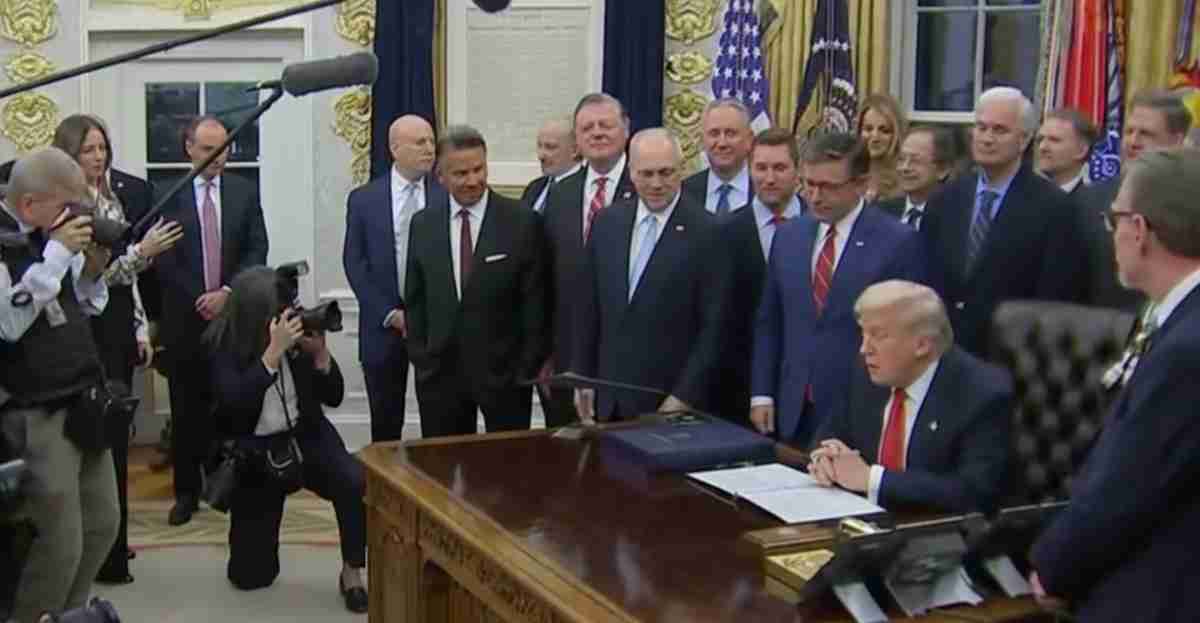
Trump signs stopgap bill, ending 43-day government shutdown and restoring pay and services
President Donald Trump signed a stopgap funding bill Thursday, ending a 43-day government shutdown and restoring operations. The measure guarantees back pay for federal workers and funds most agencies through Jan. 30 while Congress negotiates longer-term spending.
- Vote in the House: 222 Yea, 209 Nay — the measure had cleared the Senate earlier.
- Funding window — three appropriations bills funded now and the rest extended through Jan. 30.
- Federal workers rehired and back-paid — furloughed employees will be rehired and receive back pay for the shutdown period.
- Next steps — Congress must act by Jan. 30 to prevent a return to shutdown conditions.
What the bill does and how it ended the 43-day shutdown
The stopgap measure immediately restores funding and reopens federal agencies that had been closed or operating at reduced capacity. It directly funds three annual appropriations bills and extends temporary funding for the remaining agencies through Jan. 30, giving lawmakers about seven weeks to negotiate longer-term spending (Times Leader).
After months of stalemate, the Senate approved the compromise and the House followed with a 222–209 vote. The president signed the measure the same day, saying it was necessary to restore services and help workers (PBS Wisconsin; ABC News).
Federal worker back pay and rehiring
A concrete result is guaranteed back pay for furloughed employees. The bill reverses recent firings, requires agencies to rehire furloughed staff, and directs agencies to restore pay for the period workers were off the job. Agencies warned that payroll processing may be staggered by each agency’s systems, so back-pay disbursements could arrive over several pay cycles (Times Leader; The News & Sentinel).
Officials said agencies will avoid imminent layoffs through January, allowing staff to return to normal operations. However, the longer-term employment outlook depends on whether Congress and the White House can agree on a full-year budget before Jan. 30 (ABC News).
Services restored, but some delays will linger
Critical services — including travel safety operations, food assistance programs, and economic data collection — began resuming as agencies reopened. Airports and transportation agencies that ran with reduced staff will return toward normal staffing as rehired workers come back, easing delays for travelers and shippers (YouTube report; PBS Wisconsin).
Some backlogs — permits, grants and certain benefits — may take weeks to clear. Agencies plan to prioritize critical work first, then address accumulated workloads as operations normalize (Times Leader).
Political dynamics behind the deal
The shutdown exposed partisan divides, centered on an extension of an enhanced health care tax credit tied to Affordable Care Act subsidies. Democrats pushed to include the subsidy extension; Republicans resisted. Negotiators agreed to postpone that fight to a separate vote to secure enough support to reopen the government (Times Leader; ABC News).
Key dynamics: a small bipartisan group of senators broke with leaders to prioritize reopening over continued shutdown leverage, a move that helped the bill pass (PBS Wisconsin; Times Leader).
What happens next in Congress
Lawmakers face a compressed schedule: the stopgap funding runs through Jan. 30, so Congress must pass full-year appropriations or another continuing resolution before that date. Republicans have pledged a separate mid-December vote on the enhanced health-care subsidies Democrats sought, but the outcome remains uncertain (Times Leader; The News & Sentinel).
Financial and human costs that linger
The bill ends the immediate crisis, but costs remain. Federal employees endured lost income and stress; private contractors and local businesses lost revenue. Community services such as food banks experienced surges in demand that will not vanish instantly with reopened federal programs (YouTube; The News & Sentinel).
Implications for Fresno, California
Economic impact: Fresno’s agriculture-dependent economy relies on federal permitting, inspections and trade services. The shutdown interrupted some processing and inspections, creating shipment and trade delays; reopening restores services but backlogs may linger (Times Leader; YouTube).
Federal worker back pay and local jobs: Rehiring and back pay will return income to local households and help businesses that lost traffic during the shutdown (ABC News).
Social services and food assistance: The bill’s funding for nutrition programs helps ease pressure on Fresno County food banks and social service providers, though outreach and time will be needed to address needs that emerged during the shutdown (The News & Sentinel).
Travel and transportation: Fresno Yosemite International Airport and regional operators should see reduced delays as transportation and safety personnel return to normal roles (YouTube).
What local leaders can watch for
- Timing of federal worker back-pay disbursements and rehiring schedules at local federal offices (ABC News).
- Continuing delays in permits, inspections or grant payments affecting agriculture and small business (Times Leader).
- Mid-December congressional movement on health-care subsidies and potential impacts on premiums and coverage for local residents (Times Leader).
Sources and reporting links
Original reporting and source material:
- https://www.youtube.com/watch?v=D9vcebTZRh0
- https://www.timesleaderonline.com/news/local-news/2025/11/trump-signs-bill-ending-government-shutdown/
- https://pbswisconsin.org/news-item/trump-signs-a-funding-bill-that-ends-the-record-2025-federal-government-shutdown/
- https://power1053.iheart.com/content/2025-11-12-trump-signs-funding-bill-officially-ending-government-shutdown/
- https://abcnews.go.com/US/wireStory/president-trump-signs-government-funding-bill-ending-shutdown-127445929
- https://www.youtube.com/watch?v=q8S6dq8FMD0
- https://www.newsandsentinel.com/news/local-news/2025/11/president-trump-signs-government-funding-bill-ending-shutdown-after-a-record-43-day-disruption/
“The bill restores government operations and guarantees back pay for federal workers through Jan. 30,” helping many employees and restoring services across the country.



