Giant yellow cedar cut near Gold River despite size threshold, prompting Ministry of Forests investigation
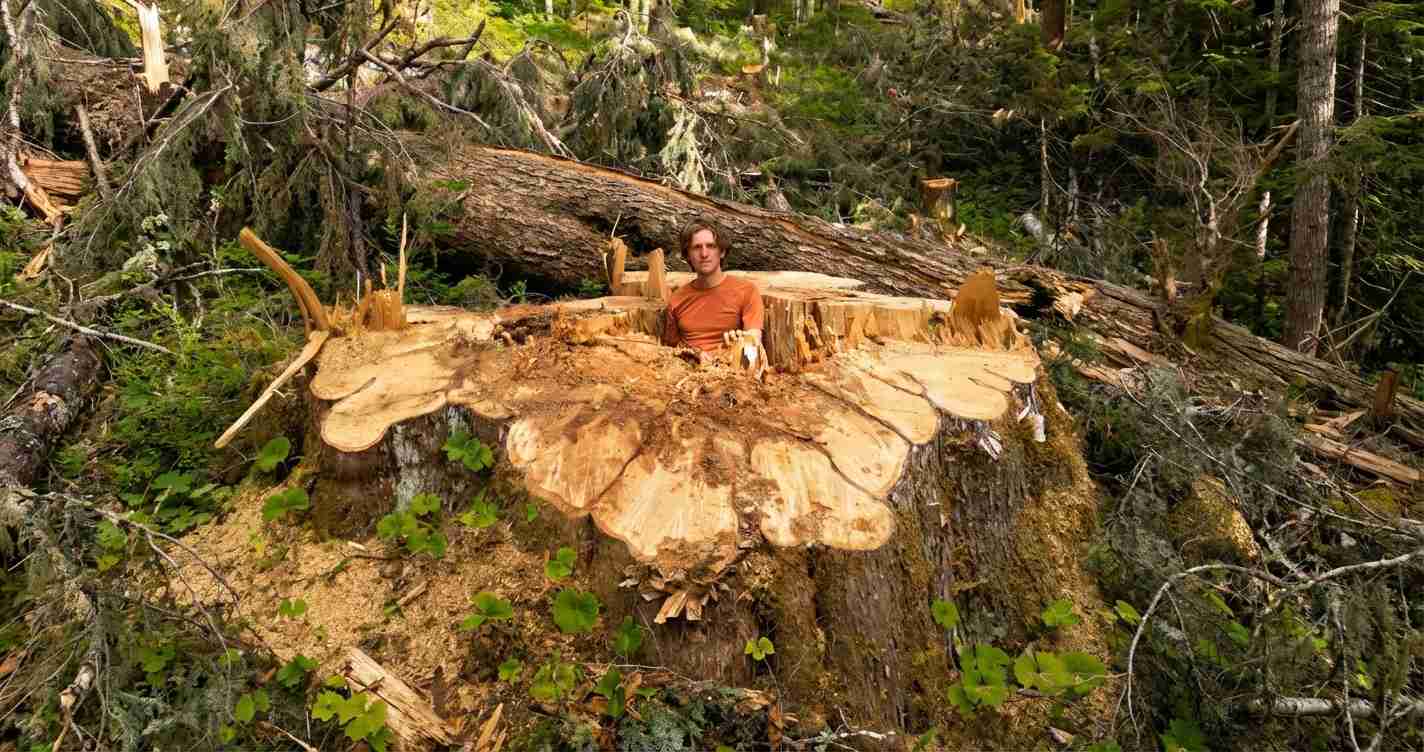
A monumental yellow cedar south of Gold River, Vancouver Island — measured at 2.79 m DBH — was felled in late 2023 or early 2024, prompting a formal complaint and an investigation by the B.C. Ministry of Forests.
Key takeaways
- Protected size exceeded: The yellow cedar measured 2.79 m DBH, above the 2.65 m threshold that would classify it as a protected “specified tree.”
- Reporting and enforcement questions: The tree’s removal triggered a complaint from tree hunter Joshua Wright and an investigation by the Global News-reported provincial ministry.
- System vulnerability: Critics say reliance on operators to find, measure and report big trees creates conflicts of interest and gaps in protection.
- Broader implications: The case has cross-border relevance for timber buyers, regulators and communities — including Fresno — that monitor sustainable sourcing and old-growth safeguards.
What happened
A giant coastal yellow cedar located south of Gold River on Vancouver Island was found felled in late 2023 or early 2024 after being measured at 2.79 metres diameter at breast height (DBH). The measurement and subsequent complaint were submitted by tree hunter and conservationist Joshua Wright, prompting the B.C. Ministry of Forests to confirm it has opened an investigation. Reporting on the incident appeared in Global News and in Town & Country Today.
What the law requires
Under B.C.’s Special Tree Protection Regulation (enacted 2020 under the Forest and Range Practices Act), certain species and trees meeting diameter thresholds are designated “specified trees.” On Crown land and some private-tenure areas, responsible operators must:
- Identify and leave specified trees standing;
- Protect supporting trees within a 56‑metre radius;
- Report any specified tree they become aware of to the Minister within 30 days;
- Seek a ministerial exemption only when narrowly justified (e.g., safety or access) and ensure any exemption is recorded and reported.
For the full text of the regulation, see the B.C. regulation.
How the law should have applied to the Gold River cedar
The measured DBH of 2.79 m exceeds the coastal yellow cedar threshold of 2.65 m, which would have classified the tree as a specified tree under the regulation. If the tree was on Crown land within a forest tenure, the operator should have:
- Noted the tree as specified and left it standing;
- Protected supporting trees within 56 m;
- Reported the find to the Minister within 30 days;
- Documented any exemption sought or granted.
These points are summarized in reporting by Global News and in the text of the Special Tree Protection Regulation.
Why it was cut despite the law
The regulation depends on licensees and logging operators — the very parties that harvest timber — to find, measure and report qualifying trees. That creates a potential conflict of interest: companies that stand to lose volume if they report big trees are tasked with discovering them.
“The tree was clearly above the threshold for what the government is supposed to be protecting and what industry is supposed to be protecting.” — Joshua Wright
Observers noted spray paint on the tree when it was standing, a common operational mark, yet the tree was felled. The case highlights three failure points: field identification, measurement and reporting by operators; weak internal compliance checks; and limited independent verification or enforcement by government bodies. Reporting is detailed by Global News and Town & Country Today.
Government response and Ministry of Forests investigation
After Wright’s complaint, the B.C. Ministry of Forests confirmed an investigation is underway. Officials have not released details while the probe continues but have reminded the public the regulation includes enforcement tools and penalties if breaches are found. The ministry has also noted the regulation was intended to protect roughly 1,500 of B.C.’s largest trees, including yellow cedars, but has not publicly explained how this specimen was missed in practice. Coverage appears in Global News and Town & Country Today.
Broader context: limits of a self-reporting system
Prior to 2020, B.C. lacked size-based legal protection for individual large trees on Crown land. The Special Tree Protection Regulation raised thresholds to capture only the most exceptional specimens. Critics argue the high thresholds leave many old trees unprotected and that the regulation’s reliance on tenure holders to self-report weakens practical protection. Suggested remedies include independent monitoring, stricter audits, and third-party surveys to reduce conflicts of interest; advocacy and background analysis appear on the B.C. Tree Hunter blog.
Local voices and documentation
Joshua Wright documented the tree standing in the cutblock and later found it felled, measuring and reporting it to prompt a public complaint. Local reporters, conservation blogs and tree-tracking groups have used the Gold River example to question the regulation’s on-the-ground effectiveness, especially when harvest planning moves faster than oversight. See reporting by Global News and analysis on the Tree Hunter blog.
Implications for Fresno, California
Although Fresno and the Central Valley are geographically distant from Vancouver Island, stakeholders there — mills, distributors, regulators, voters and conservation groups — should watch the case because it affects public trust in forest rules and sustainable sourcing standards.
- Economic: Loss of confidence in provincial protections can shift demand and prompt buyers to require stronger proof of sustainable sourcing.
- Political: The incident underscores risks of self-reporting systems and may be cited in local debates over independent oversight and enforcement.
- Social & cultural: Large trees have cultural and spiritual importance to Indigenous communities and residents across the Pacific Coast; Fresno groups may see renewed interest in protecting old trees.
- Practical: Lessons for Fresno land managers include funding third-party surveys, independent audits of operator reporting, and requiring timestamped documentation of any specified-tree findings.
Reporting sources and further reading
- Special Tree Protection Regulation (B.C. laws)
- Global News — “B.C. cedar cut despite big-tree protection law”
- Town & Country Today — coverage of the incident
- B.C. Tree Hunter — background on big-tree protections and advocacy
Conclusion
The Ministry of Forests’ ongoing probe will determine whether the Gold River cedar’s felling violated the Special Tree Protection Regulation and whether penalties or corrective actions are warranted. For communities and buyers in regions such as Fresno, the case serves as a practical reminder to demand independent verification and stronger chain-of-custody assurances when relying on rules that depend on operator self-reporting.