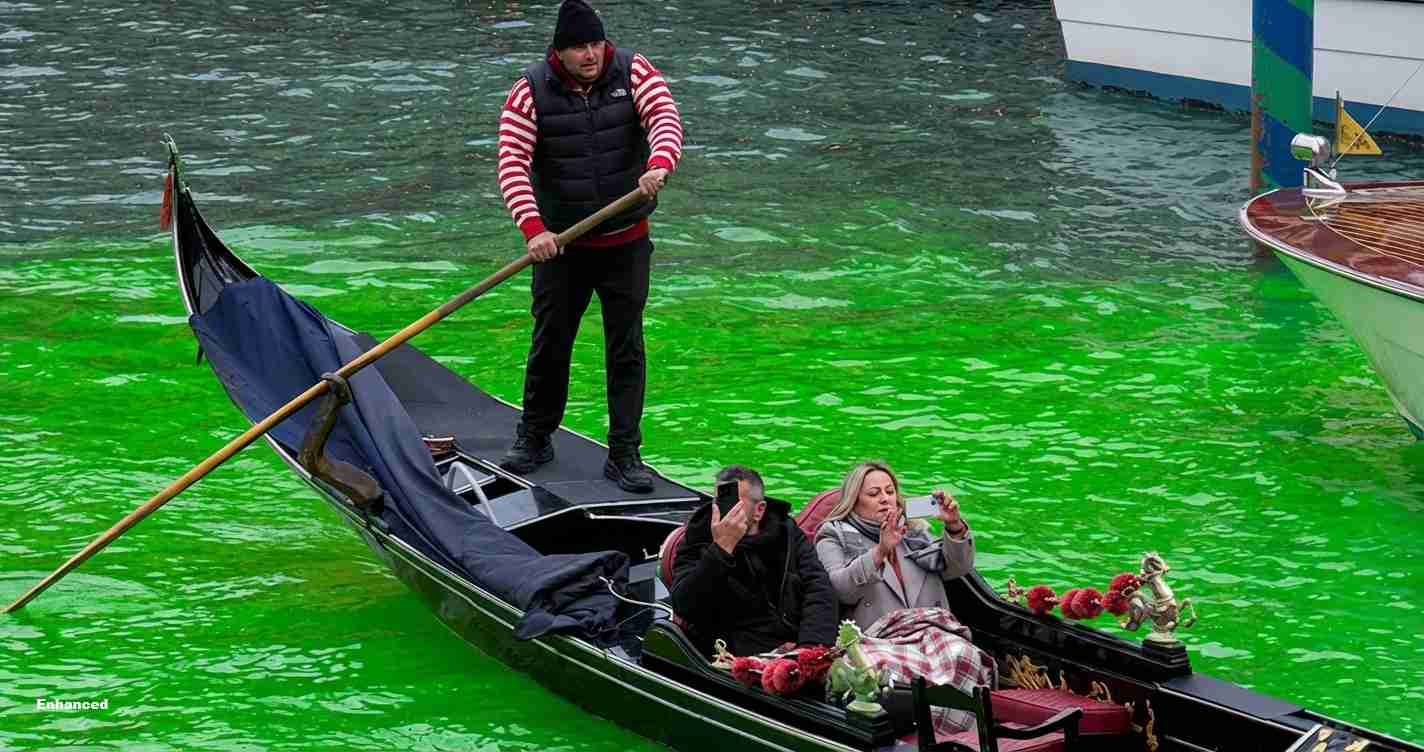
Greta Thunberg fined, banned after Extinction Rebellion dyes Venice’s Grand Canal bright green
On November 24, 2025, Greta Thunberg and Extinction Rebellion activists dyed Venice’s Grand Canal bright green to dramatize sea‑level risks and protest COP30’s lack of a fossil‑fuel phaseout; authorities fined participants €150 each and imposed 48‑hour bans from the city shortly.
Key takeaways
- Action: Activists released a fluorescent, non‑toxic tracer dye into the Grand Canal and displayed a “Stop Ecocide” banner.
- Penalties: 36 people fined €150 each and given 48‑hour bans from Venice; penalties treated as administrative public‑order sanctions.
- Scale: Greta Thunberg joined roughly 35 other activists; similar dye actions took place in nine other Italian cities.
- Context: The protests were timed with the end of COP30 in Belém to spotlight the absence of a clear fossil‑fuel phaseout commitment.
The protest: what happened on the Grand Canal
On a busy November morning, campaigners from Extinction Rebellion moved onto banks and into small boats on the Grand Canal. They released a bright fluorescent dye that quickly tinted the water vivid green, visible from bridges and shorelines, and dropped a large banner reading “Stop Ecocide” from the Rialto Bridge. A silent, slow procession of people in red cloaks and veils evoked a climate funeral; video and images circulated widely across social media and news outlets.
Extinction Rebellion said the dye is a tracer commonly used in environmental studies and is non‑toxic; the organizers framed the visual stunt as a way to dramatize how rising seas threaten Venice and to express frustration at slow international action. See reporting from The Independent and Fox News for visual coverage and statements.
Legal consequences and official reaction
Local authorities intervened quickly. Several activists were detained and later 36 participants were issued fines of €150 each along with 48‑hour bans from entering Venice; officials characterized the measures as administrative public‑order sanctions rather than criminal charges (Fox News (Spanish), The Daily Telegraph).
“Stunts like this could harm the city’s image and tourism industry,” said regional governor Luca Zaia, while activists argued the dye posed no known ecological risk.
Extinction Rebellion’s wider Italian campaign
Venice was a focal point in a coordinated national effort: XR staged dyeing actions in fountains and rivers across nine Italian cities, including Genoa, Padova, Turin, Bologna and Taranto. The goal was to pressure Italy’s leaders and the international community to adopt stronger commitments—most notably an explicit phaseout of fossil fuels. Reporting on the broader campaign is available via The Independent and Illuminem.
COP30 context: why activists timed the action
COP30 concluded in Belém, Brazil, without a clear, binding commitment to a fossil‑fuel phaseout—an outcome that disappointed many climate advocates. Activists said their demonstrations were a direct response to that perceived failure and intended to make abstract diplomatic shortcomings tangible by targeting cultural heritage sites and public waterways.
Public reaction and visuals
Images of the green canal backed by Venice’s ornate bridges spread quickly. Reactions were mixed: some tourists applauded and posed for photos, while local shop owners and officials worried about tourism and reputation. Media debate centered on whether dramatic stunts aid the climate movement or alienate potential supporters; visual coverage appears in Independent bulletin and Independent TV.
Implications for Fresno, California
Economic and tourism connections: Though Fresno is not a global tourism hub like Venice, iconic protests targeting heritage sites can shift travel sentiment and perceptions of safety or respect for cultural places. Local tourism operators and small businesses in Fresno could see ripple effects if the debate alters visitor behavior.
Political and policy conversations: The Venice protest highlights global frustration over COP30 outcomes. In Fresno and the Central Valley—where water, air quality and agriculture are daily concerns—local leaders may face renewed calls to strengthen climate planning, adaptation, and water management strategies (Illuminem).
Community and social effects: The action could energize local climate groups and younger voters, while sparking debate among moderates about protest tactics versus respect for public spaces.
How local officials might respond
Fresno city and county leaders could emphasize practical, non‑polarizing steps: update flood and heat action plans, boost public outreach on resilience programs, and create forums for balanced discussion about both protest tactics and policy priorities—an approach aimed at pragmatic residents and businesses.
Sources and reporting notes
This article draws on reporting from multiple outlets that covered the November 24, 2025 demonstrations. Key source links:
- The Independent
- Fox News (U.S.)
- Fox News (Spanish)
- The Daily Telegraph
- Wanted in Milan
- GB News
- Illuminem
- Independent bulletin (video)
- Independent TV (video)
- WHMI report
Reporting note: Authorities described fines and temporary bans as administrative penalties; activists and organizers said the dye was a non‑toxic tracer used in environmental work. Local officials expressed concern about respect and tourism impacts. Follow‑up reporting may include environmental testing, legal appeals, or related demonstrations.