Ivanpah’s Glow and the Cost of Clean Power: Dead Birds, Natural Gas and a Contested Future for a Mojave Desert Solar Plant
The Ivanpah Solar Electric Generating System, a 392 MW concentrated solar thermal plant in the Mojave Desert, has faced environmental, performance and cost controversies since 2014 even as California regulators keep it online for grid reliability.
- Wildlife impact: Federal monitoring and observers report thousands of bird deaths from intense solar flux around the towers.
- Fossil fuel reliance: Ivanpah uses natural gas for daily startups, producing substantial CO2—public reporting cites emissions in the tens of thousands of metric tons annually.
- Public money and performance: Built with major federal support (including large DOE loan guarantees and Treasury grants), the plant underperformed early expectations and remains costly versus newer renewables.
- Regulatory trade-offs: California regulators reversed a planned 2026 closure, prioritizing grid reliability despite environmental and cost concerns.
Key information
Facility: Ivanpah Solar Electric Generating System (ISEGS), a 392 MW concentrated solar thermal plant using heliostats and three central towers. Source: U.S. Department of Energy.
Size and hardware: About 173,500 heliostats and roughly 350,000 mirrors focused on three towers 450–459 feet tall across 3,500–4,000 acres of Mojave Desert. Sources: DOE; Bechtel.
Environmental concerns: Federal monitoring and reports document thousands of birds killed after encountering concentrated solar beams (solar flux). See monitoring and reporting summarized in public sources.
Fuel and emissions: The plant uses natural gas for daily startups, producing carbon dioxide; independent summaries estimate startup CO2 on the order of tens of thousands of metric tons annually. Analysis: Energy Monitor.
Financing: Built with major federal support, including $1.6 billion in U.S. Department of Energy loan guarantees and reports of a roughly $539 million U.S. Department of the Treasury grant.
Regulatory status: Slated to close in 2026 after contract losses, then kept open after state regulators said the plant remains needed for grid reliability. See California Energy Commission and industry reporting at Renewable Energy World.
How Ivanpah works — and where problems begin
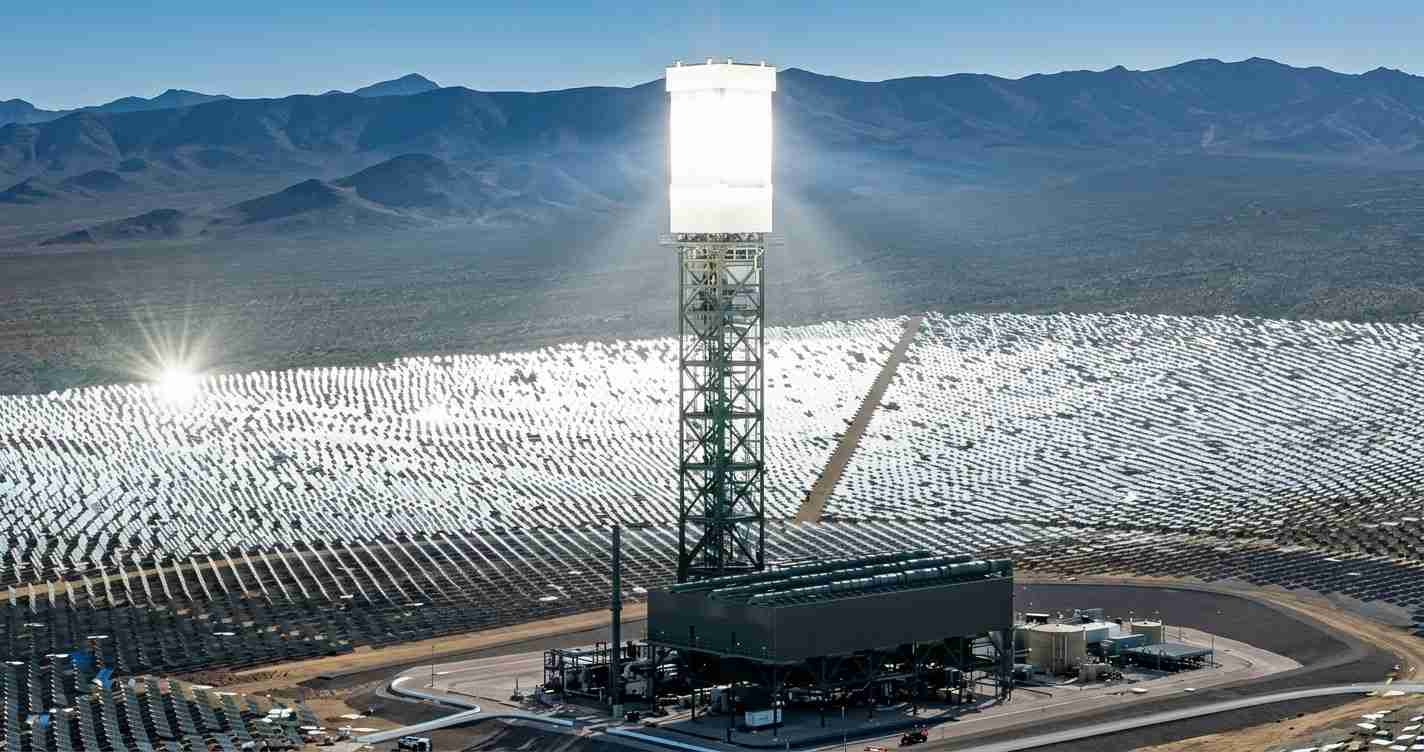
Ivanpah is a concentrated solar power project. More than 170,000 heliostats — mirrors that track the sun — tilt and aim sunlight at receivers on three towering boilers. The concentrated light heats water to high temperatures, creating steam that spins turbines to make electricity. The design intent was to deliver large-scale renewable baseload power without battery storage. Sources: DOE; Bechtel.
But the same concentrated beams that power turbines create an intense, visible column of light around each tower. That brightness attracts insects, which in turn draw birds. When birds fly into the towers’ solar flux, they can be burned or killed instantly. Federal monitoring and independent observers have documented thousands of bird deaths at Ivanpah since it opened in 2014, prompting regulatory scrutiny and public outcry. See public summaries.
Environmental trade-offs and emissions questions
Ivanpah was pitched as a clean alternative to fossil fuels, but it depends on natural gas for daily startup and to maintain steam during low-sun periods. That use of gas generates carbon dioxide; published summaries and analysts note this results in greenhouse gas emissions, with estimates described in public reporting placing startup CO2 in the tens of thousands of metric tons per year. See analysis at Energy Monitor and permitting notes at California Energy Commission.
The environmental concern is twofold: local ecological damage in the Mojave Desert and the broader question of how “clean” energy is evaluated when generation still relies on fossil fuels at some stages. Critics argue that labeling a facility green has in practice lowered regulatory scrutiny — a point emphasized by conservation groups and some policymakers. See public summaries.
Performance, costs and public money
Ivanpah’s initial performance fell short of original output targets. Designed to produce roughly 940,000 MWh a year, early years saw much lower generation. Operators later reported meeting some contracted levels after adjustments, but the plant’s electricity costs remained high compared with newer, cheaper solar-plus-storage projects.
The project was built with major federal support including $1.6 billion in DOE loan guarantees and a reported roughly $539 million Treasury grant — covering about 30% of early estimated construction costs. Critics say long-term subsidies and remaining federal exposure warrant scrutiny; supporters say the plant supplied needed capacity and advanced solar-thermal technology. See reporting at Renewable Energy World and the DOE overview.
Regulatory and political debate
Market forces and regulation shaped Ivanpah’s path. Two power purchase agreements were canceled after a utility withdrew, prompting plans to shut down two-thirds of the facility. State regulators later reversed a 2026 closure plan, saying the plant remains needed for grid reliability as the state integrates more intermittent renewables. Federal officials have at times supported shuttering the plant over cost concerns; California regulators prioritized steady capacity. See California Energy Commission and industry coverage at Renewable Energy World.
The plant’s continued operation, despite documented wildlife impacts, highlights tensions between state-level grid planning and federal wildlife protections. Regulators and operators cite mitigation measures and monitoring; conservation groups and some scientists say monitoring shows persistent, unacceptable harm.
On-the-ground scale and visibility
Stand near Ivanpah and the footprint is unmistakable: towers glow as mirrors converge sunlight at their tops. The facility covers roughly 3,500–4,000 acres near Ivanpah Dry Lake and Clark Mountain, across from the Nevada border near Primm — a large swath of public land transformed into industrial-scale energy. See NASA imagery at NASA JPL and the DOE overview.
Monitoring and data gaps
Federal and independent studies have tracked bird mortality and insect attraction, but public reports stop short of a single agreed tally of total bird deaths or a fully settled accounting of startup CO2. Records describe patterns — insects attracted to towers, predators and birds drawn to prey, birds injured or killed in solar flux — but point to data gaps and the need for continued monitoring. See public summaries.
Implications for Fresno, California
Economic impact: Fresno, with its large agricultural economy and growing clean-energy workforce, could see procurement and investment effects based on whether regulators keep older, costly plants online or accelerate cheaper photovoltaic and battery projects. State planning context: California Energy Commission.
Political consequences: The decision to keep Ivanpah operating may influence debates in Fresno about balancing reliability, cost and conservation and could shape pressure on state regulators and utility procurement affecting local ratepayers.
Social and cultural effects: Conservation groups in the Central Valley watch Ivanpah as a test case. For residents who use nearby public lands or worry about migratory birds, mortality reports are immediate and troubling — raising questions about how large-scale renewable projects fit into California’s environmental values.
Reporting and sources
This article draws on public records and reporting by federal agencies, developers and industry coverage, including the U.S. Department of Energy (Ivanpah overview); project and construction details from Bechtel; state energy permitting information at the California Energy Commission; industry reporting on contracts and closure developments at Renewable Energy World; technology and impact summaries on Wikipedia; imagery from NASA JPL; and analysis of emissions and operational issues at Energy Monitor.
“Further reporting will be needed to reconcile differing tallies of bird mortality and precise startup-related CO2 emissions, and to track evolving regulatory and market decisions.”
Note: Further independent study and disclosure are required to reconcile different tallies of bird deaths and to arrive at a single, transparent accounting of startup-related CO2 emissions.