
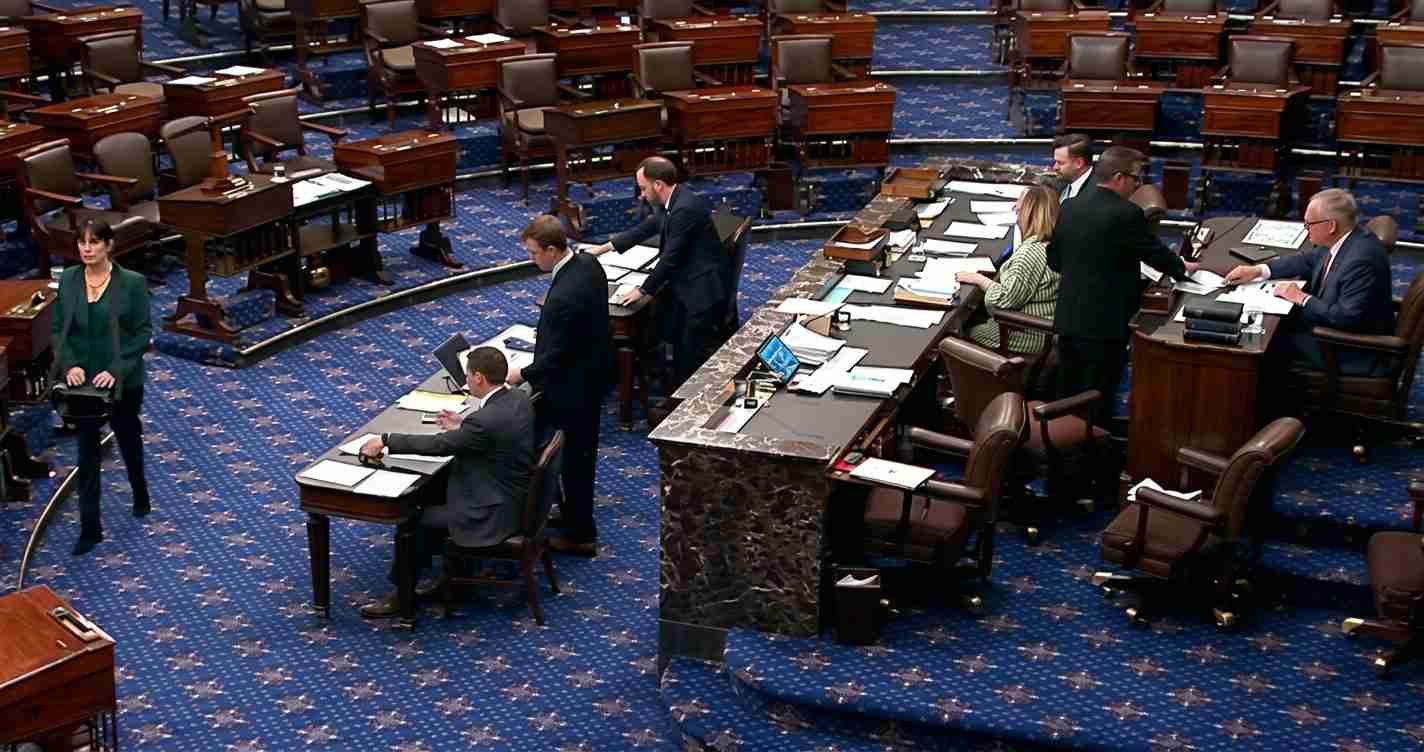
Senate to Withhold Senators’ Pay During Future Government Shutdowns in Bid to Share the Pain
The U.S. Senate has adopted a standing order to place senators’ pay in escrow during government shutdowns that begin after the next federal election, delaying access to salaries until appropriations are restored to encourage faster resolution of funding lapses.
- Rule adopted by unanimous consent after a prior 99–0 procedural vote; directs the Secretary of the Senate to escrow pay during funding lapses.
- Timing matters: the change applies only to shutdowns beginning after the upcoming midterm election because of the 27th Amendment.
- It delays pay, it does not cut salaries — rank-and-file senators earn about $174,000; leaders earn more than $193,000.
- The measure affects the Senate only; the House would need to adopt a similar rule to match the effect.
Key details
The Senate adopted a standing order instructing the Secretary of the Senate to withhold senators’ paychecks in the event of any future lapse in appropriations that begins after the next federal election. Funds will be held in escrow and released once funding is restored.
How it passed: the change, sponsored by Sen. John Kennedy (R‑La.), won unanimous consent on final adoption after an earlier 99–0 procedural vote. The rule is an internal Senate change and does not require presidential approval.
What the Senate did and how it works
Using its authority to set internal rules, the upper chamber directed the Secretary of the Senate to put paychecks into escrow during any lapse in appropriations that starts after the upcoming midterm election. That timing reflects the 27th Amendment, which prevents changes in congressional pay from taking effect until after an intervening election.
“It’s got to stop,” Sen. John Kennedy said on the Senate floor, urging senators to feel the same immediate consequences as federal workers.
The rule delays access to pay; it does not permanently reduce compensation and applies only to the Senate unless the House adopts a similar rule.
Why Kennedy and others pushed this change
Supporters, led by Sen. Kennedy, framed the rule as a way to force shared sacrifice so that lawmakers have incentive to resolve funding disputes quickly. Recent shutdowns left FBI agents, national park rangers, CDC scientists, congressional staff and TSA workers unpaid, a reality Kennedy and colleagues said must be addressed.
Advocates argue withholding pay removes a layer of insulation that made shutdowns politically tolerable for some lawmakers, while critics call the move partly symbolic because it only delays pay and takes effect after the next election.
Other proposals on the table
- Sen. Ron Johnson (R‑Wis.) has proposed legislation, supported by some federal unions, to guarantee federal employees continue to receive pay during shutdowns instead of relying on retroactive back pay.
- Sen. James Lankford (R‑Okla.) proposed an automatic short-term extension of funding if appropriations lapse, giving Congress more time to negotiate without furloughing workers.
Those options reflect different approaches: protect workers immediately, remove shutdown leverage, or make lawmakers share in the pain so shutdowns become less attractive.
Context: the shutdowns that pushed lawmakers to act
Lawmakers cited two major lapses in the prior year — one lasting 43 days over health insurance subsidies and another 76‑day lapse tied to the Department of Homeland Security — that led to unpaid federal workers, strained airport operations and widespread public criticism.
Those events sharpened perceptions that senators were insulated from immediate consequences while rank‑and‑file workers and contractors bore the brunt. The new rule aims to match senators’ pay timing to what many workers experienced.
Limitations and legal points
- The rule applies only to the Senate because each chamber controls its internal rules.
- It delays pay; it does not reduce annual salaries and will not affect shutdowns that start before the next midterm election due to the 27th Amendment.
- Wealthier senators or those with outside income may feel less pressure from temporary withheld pay; contractors and many private-sector partners remain unprotected.
Political impact and reactions
The change passed unanimously, reflecting broad political frustration with prior shutdowns. Republicans and Democrats still blame each other for past impasses, but few senators wanted to be seen opposing a rule that withholds their own pay.
Critics say the rule is largely symbolic due to its delayed effect and limited scope. Supporters maintain it meaningfully alters incentives and could reduce the frequency or duration of future shutdowns.
Reporting and source notes
Coverage and official records on the rule and floor debate can be found via U.S. Senate, CBS News coverage, and Government Executive. Broader reporting on shutdowns and related legislative proposals appears at Reuters and The Associated Press.
Implications for Fresno, California
The new Senate rule could have local economic and practical effects for Fresno residents if it helps deter future shutdowns. Below are the primary areas of impact.
Economic impact
- Fresno employs federal workers in agencies such as the USDA, Social Security, Veterans Affairs and TSA at Fresno Yosemite International Airport; those workers faced strain during past shutdowns.
- Local businesses that serve federal employees — restaurants, gas stations, grocers — could see fewer swings in customer spending if shutdowns are avoided.
Travel and transportation
Fresno Yosemite International Airport depends on TSA staff to keep security lanes open. Preventing shutdowns or minimizing their duration would reduce travel disruptions and protect the region’s tourism to Yosemite and other destinations.
Local government and social services
Delays in federal program processing during shutdowns can ripple into local social services and non-profits. A rule that discourages shutdowns could mean steadier federal support for local programs.
Political consequences
Fresno voters, generally moderate, may use the rule to pressure representatives to avoid brinkmanship. Because the House has not matched the Senate rule, local House members remain pivotal in preventing funding lapses.
Practical effects for Fresno families
- Household finances could be less vulnerable if federal workers and contractors avoid missed paychecks.
- Local contractors working on federal grants may face fewer payment delays if shutdowns are deterred.
What to watch next in Fresno
- Whether the House adopts a similar pay-withholding rule or passes companion measures such as guaranteed pay for federal workers or automatic short-term funding extensions.
- Statements from Fresno’s congressional delegation regarding the Senate rule and proposals from senators like Ron Johnson and James Lankford.
- Any federal guidance for agencies operating in Fresno addressing preparedness for potential funding lapses.
Selected sources
For full context, review Senate floor records and the linked news coverage above for direct quotes, roll-call details and legislative texts related to the pay-withholding rule and companion proposals.



