What Does “6-7” Mean? How a TikTok Slang Phrase From Skrilla and Basketball Became Gen Z’s Latest Meme
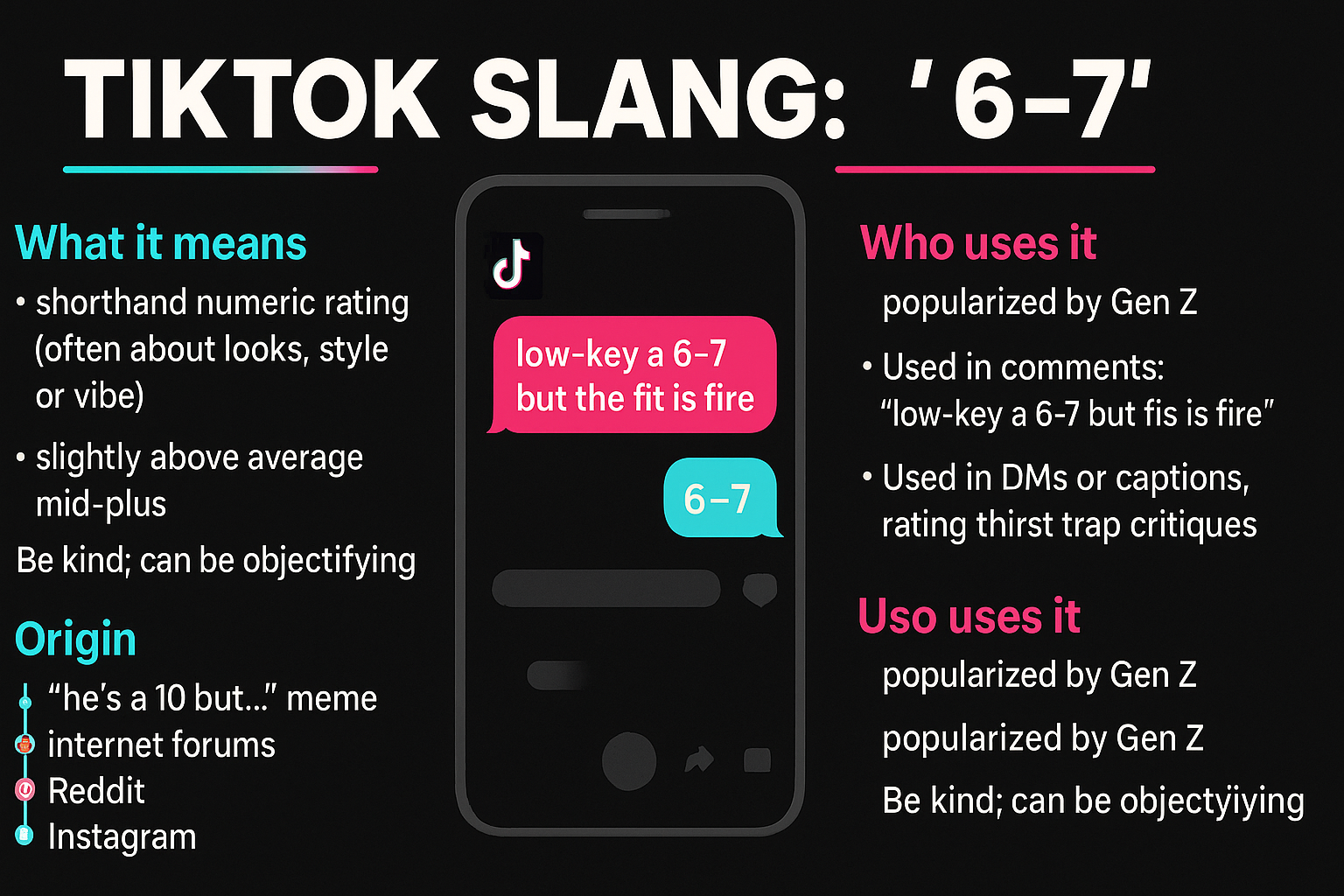
The ‘6-7’ meme is a viral slang phrase sweeping Gen Z and Gen Alpha on TikTok and beyond. Born from Skrilla’s late‑2024 track and basketball edits, it moved from lyric to inside joke across short‑form platforms.
- Origin: Repeated lyric in Skrilla’s song and possible nod to local geography.
- Spread: Short‑form edits and sports footage amplified the phrase into a meme.
- Usage: Ironic shout, literal height reference, or context‑free meme used by younger users.
- Local impact: Harmless trend but usable by local creators and schools for engagement or guidance.
From a lyric to a meme: the origin story
The short answer is simple: it began as a lyric and became an inside joke. Rapper Skrilla released the track Doot Doot (6 7) in late 2024; the recording repeats “6‑7” in a catchy, rhythmic way. Observers linked the phrase to Wikipedia and reporting from AZ Central that noted ties to 67th Street and Skrilla’s Chicago background, though the lyric itself remains open to interpretation.
How it spread — music meets basketball
Creators began splicing the lyric over sports highlights, especially footage of tall players. The audible “6‑7” paired with images of athletes who look like they could be 6 feet 7 inches tall created an amusing visual-audio match that rapidly circulated on TikTok, Instagram Reels and YouTube edits (Wikipedia).
The “6-7 Kid” and the March 2025 viral moment
A breakout moment came when a young boy, dubbed the “6‑7 Kid,” shouted the phrase at an AAU basketball game; the clip’s loud, earnest delivery made it a viral staple. That transition—from polished edits to candid youth behavior—helped the phrase enter everyday speech among kids and teens (Wikipedia | Parade).
How Gen Z uses “6-7” and what it means
“6‑7” functions more as shared behavior than a dictionary term. Common uses include:
- Playful shout: A quick exclamation for energy, shock or irony (Parade).
- Height reference: Occasionally literal — pointing to someone who is roughly 6 feet 7 inches tall, often in basketball contexts (Wikipedia).
- Context‑free meme: Used because it’s funny, short and repeatable — a social signal of belonging.
- Ironic or awkward reaction: Fits Gen Z’s taste for short, strange or deliberately awkward humor.
The language of gestures and voice
Beyond audio, creators developed gestures and delivery styles. Some users alternate palms while saying “6‑7”, others adopt a sing‑song cadence or shout it for emphasis. These mimicable traits accelerate spread — the more reproducible a meme, the faster it propagates (Wikipedia | Parade).
Variations and darker edits
The phrase has been adapted into many genres. Lighthearted uses sit alongside eerie “analog horror” and SCP‑style parodies — for example, the “SCP‑067 Kid” edits that reframe the sound as uncanny. These offshoots show how memetic audio can be remixed into comedy or horror alike (Wikipedia).
Who is using it — and why it spreads so fast
Primary users are middle and high school students and younger social‑media natives. Teachers, parents and community workers report hearing it in hallways and playgrounds. Experts on youth culture note that short, repeatable audio coupled with remixability fuels rapid adoption — and the “if you know, you know” quality provides social belonging (Parade).
Why “6-7” resonates with young people
Gen Z humor prizes irony, awkwardness and rapid tonal shifts. 6‑7 is versatile — absurd, boastful, or nonsensical depending on usage — and it layers cleanly over images and clips, which helps creators discover surprising pairings that attract attention.
Sources and fact checks
This report draws on community reporting and contemporary coverage. Key write‑ups include Wikipedia, an explainer from Parade, and reporting from AZ Central.
Implications for Fresno, California
While the meme has limited direct economic or political impact, local stakeholders can use it strategically. Below are practical considerations for Fresno leaders, educators and creators.
Economic impact
The trend itself won’t move markets, but Fresno content creators and small businesses can adopt the sound to engage younger audiences. Local high school and AAU game clips that gain traction may increase visibility for teams, venues and sponsors.
Political consequences
As a mostly harmless slang phrase, “6‑7” is unlikely to shape policy. Still, school boards and local officials should be aware that viral youth trends can surface in community conversations and sometimes prompt parent inquiries.
Social effects
Teachers and parents may hear “6‑7” in hallways or see it used to gain attention. Counselors and educators can use such trends as teaching moments about digital citizenship and online safety, focusing responses on any disruptive behavior rather than the phrase itself.
Cultural relevance
Fresno’s active youth sports scene and social‑media communities make it likely the meme will appear around local games, bars and community events. Because the meme ties to basketball, it can easily become part of athletic conversations and highlight reels.
Practical applications
Parents and teachers should treat the phrase as generally benign. Local media and school messaging can be calm and clear if questions arise. Student journalists and community groups might harness the meme for outreach — keeping content age‑appropriate and avoiding amplification of disruptive uses.
Quote: “Short, repeatable audio that’s easy to imitate is the perfect fuel for Gen Z memetic culture.”
Preserved links: Wikipedia ; Parade ; AZ Central