
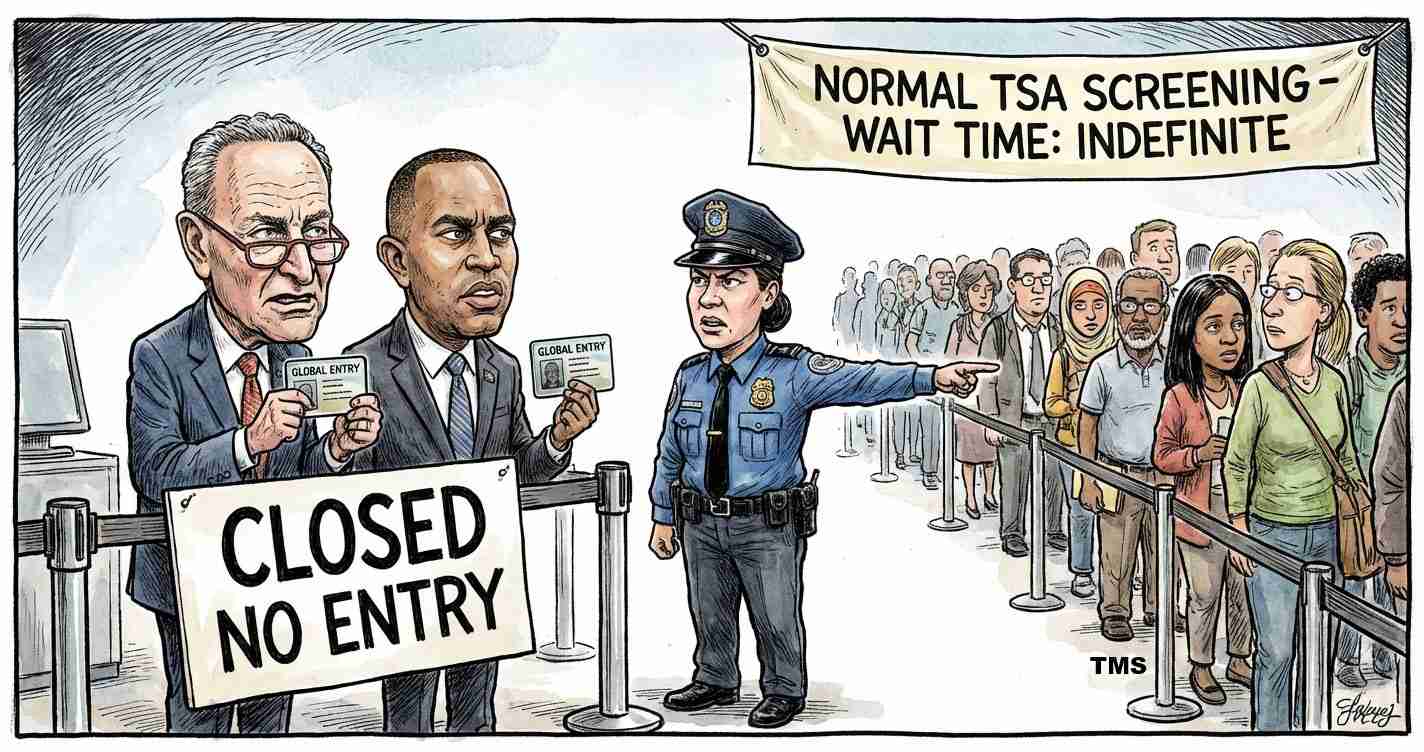
Senate Democrats Block GOP Push to Fund DHS, DHS Shutdown Extends into 12th Day Ahead of Trump State of the Union
Senate Democrats on Feb. 24, 2026, blocked a Republican effort to advance a full-year Department of Homeland Security funding bill in a 50-45 procedural vote, extending a partial DHS shutdown into its twelfth day as the State of the Union approaches.
Key takeaways
- Procedural vote failed: A 50-45 procedural motion to advance a full-year DHS funding bill fell short of the 60 votes needed to overcome a filibuster; reporting on the vote is available from The Washington Times.
- ICE reforms at center: Senate Democrats insist on sweeping ICE and CBP reforms as a precondition for funding, a position detailed by CBS News.
- Operational impacts: Nonessential DHS functions and some traveler and disaster services have been affected; local effects and operational details are reported by Fox News.
What happened on the Senate floor
Senate Majority Leader John Thune (R-S.D.) forced the vote as lawmakers returned from a weeklong break, saying putting a full-year bill on the floor would prompt negotiation and a definitive vote to reopen the agency. The motion failed when Democrats held firm; coverage of the vote and floor dynamics is available from The Washington Times.
Notable votes: Only one Democrat, Sen. John Fetterman of Pennsylvania, crossed to advance the bill, citing opposition to any shutdown. Senators Mike Lee and John Curtis of Utah also voted yes; those vote details are reported by Deseret News.
Democrats’ demands: ICE reforms at the center
Senate Democrats, led by Minority Leader Chuck Schumer (D-N.Y.), have made clear they will not approve funding without major reforms to ICE and CBP. Their demands include bans on masks for agents, judicial warrants for entering private property, and increased state oversight of excessive force probes — a list detailed in reporting from The Washington Times and Deseret News.
Context: Democrats point to recent high-profile incidents and public concern about ICE tactics — including fatal shootings and civilian complaints — as justification for pressing for change. House Democratic Leader Hakeem Jeffries called for “dramatic, meaningful, bold, transformational reform” to the agency; commentary and analysis appear at CBS News. Civil liberties groups such as the ACLU publicly supported withholding funds pending reforms.
Republicans’ response and negotiation posture
GOP leaders insist ICE and CBP funding is “covered under other legislation” they have proposed, arguing enforcement continues while other DHS functions suffer. Republicans criticized Democrats for using shutdown leverage for political aims rather than negotiating in good faith; coverage from The Washington Times and CBS News outlines the GOP posture.
Senate negotiators exchanged offers and counteroffers with the White House before the break, but talks largely stalled; Politico and Fox News reported negotiations had seen little progress and were expected to resume next week (Politico, Fox News).
How the shutdown is affecting DHS operations
The partial shutdown leaves many critical staff working without pay while nonessential functions pause. About 95% of TSA functions remain staffed, but employees face missed paychecks if the stalemate continues; details are reported by The Washington Times.
Customs and Border Protection has suspended courtesy congressional escorts and paused Global Entry processing at some airports as agents are diverted to traveler processing. Fox News describes operational adjustments at CBP and FEMA, where public assistance for ongoing disasters has been paused and non-emergency work restricted.
Other impacts: Coast Guard civilians and other nonessential DHS employees are seeing delayed pay and canceled non-disaster activities. DHS Secretary Kristi Noem announced emergency measures amid reported Iran-related threats and the approaching State of the Union, underscoring concern inside the department (Fox News).
Politics and pressure ahead of the State of the Union
The vote occurred as President Donald Trump prepared for his State of the Union address. Democrats said they would withhold a deal to press for ICE reforms and suggested they wanted to see whether the White House would offer concessions during the speech. The White House has ramped up messaging aimed at Senate Democrats; Schumer pushed back, saying the White House had not engaged meaningfully (The Washington Times, Fox News).
House Republicans also said Democrats made last-minute changes to the bill, complicating talks, according to a House Appropriations Committee statement (House Appropriations Committee).
Coverage and public reaction
The impasse has drawn attention from civil liberties groups and the public. The ACLU released a statement supporting the Senate block as a step toward addressing ICE “abuses,” citing polling that showed roughly half the public favored withholding funding until reforms were enacted. Media across the spectrum reported on traveler impacts, disaster relief disruptions and federal employee strain (CBS News, Politico).
Implications for Fresno, California
Economic impact
- Travel and airports: Suspension of Global Entry and diversion of CBP staff could raise wait times at Fresno Yosemite International Airport, affecting business and tourism travel (Fox News).
- Federal grants and disaster aid: With FEMA pausing public assistance and non-emergency programs, Fresno County budgets could be strained if federal disaster help is delayed; local governments should prepare for slower federal responses (Fox News).
Political consequences
Local representatives and organizers in Fresno will face pressure to take positions as the stalemate continues. The competing priorities of constituents who favor stricter enforcement and those who support ICE reforms make this a politically sensitive issue with possible effects on turnout and trust in federal responsiveness (CBS News).
Social effects
Fresno’s large immigrant population may experience heightened fear and reduced cooperation with public services if enforcement rhetoric intensifies or if policy changes occur. Local law enforcement cooperation and community trust could be affected by any reforms or enforcement shifts (Deseret News, ACLU).
Cultural relevance
Agriculture and seasonal labor are central to Fresno’s economy; any national changes to immigration enforcement or enforcement uncertainty could affect growers, migrant workers and labor availability — a concern highlighted by regional reporting and national analysis (The Washington Times).
Practical applications for everyday life
- Travel planning: Residents should plan for longer airport lines, allow extra time for trips and check Global Entry status if they rely on the program (Fox News).
- Emergency preparedness: Local agencies and nonprofits should review contingency plans in case FEMA assistance is delayed; mutual aid agreements and state resources may be needed (Fox News).
- Local advocacy and voting: Citizens who care about ICE reforms or border security should contact members of Congress to express priorities; public pressure may shape negotiations (CBS News, Politico).
Sources and reporting notes
This article draws on contemporaneous coverage and official statements from multiple outlets and organizations:
- The Washington Times
- Fox News
- Deseret News
- CBS News
- Politico
- ACLU statement
- House Appropriations Committee statement
Looking ahead
The situation remains fluid. Lawmakers from both parties say negotiations could resume next week, and the President’s State of the Union address may alter the bargaining landscape. Expect continued reporting and possible rapid developments as both sides react to public and political pressure.
“Talks had largely stalled during the break,” sources told reporters, suggesting a return to negotiations in the coming days as pressure mounts from across the political spectrum.



