Scientists Identify New Deep-Sea Octopus, Microeledone galapagensis, in Galápagos Marine Reserve
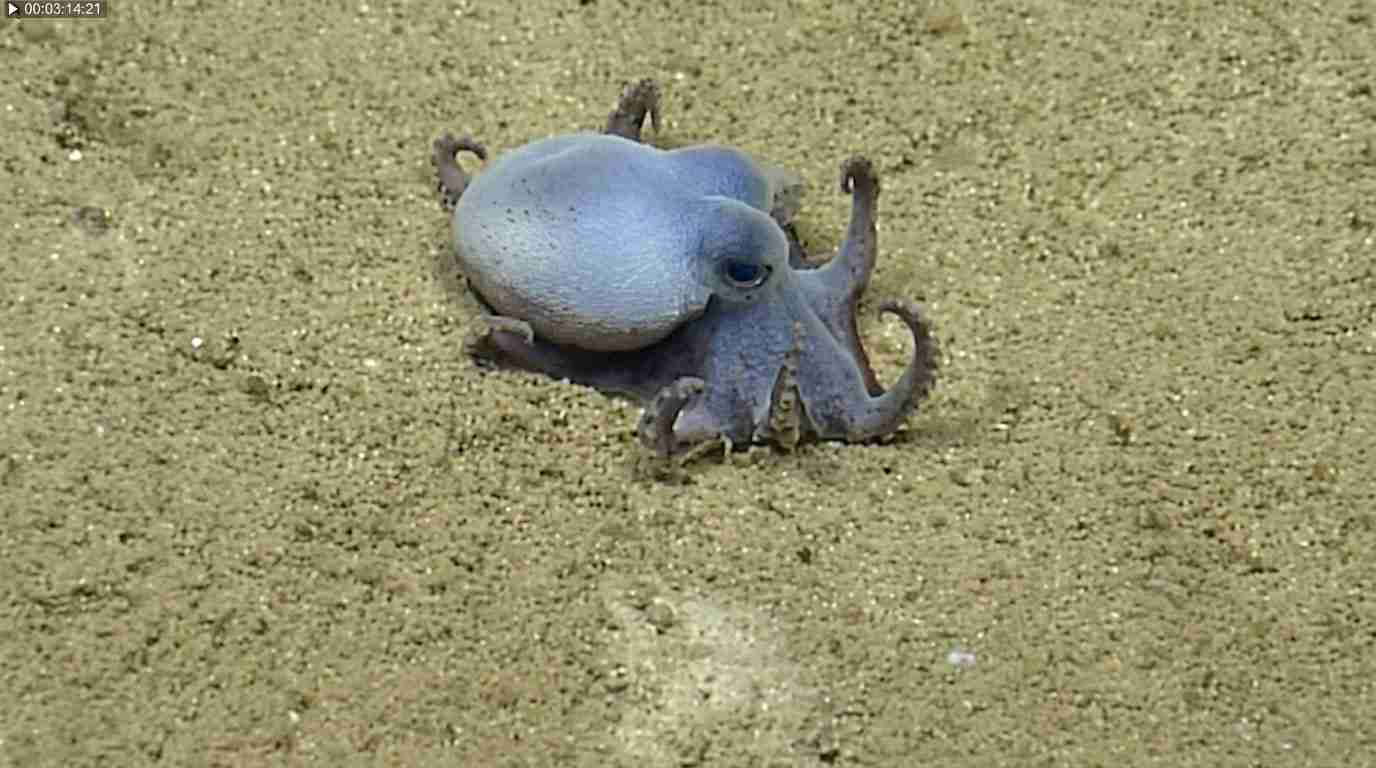
Microeledone galapagensis was collected at roughly 5,800 feet (about 1,768 meters) on the Galápagos seafloor, studied at the Charles Darwin Research Station and confirmed through micro‑CT imaging at the Field Museum, revealing anatomy that supports a new species designation.
- New species: Microeledone galapagensis recovered from deep seafloor within the Galápagos Marine Reserve.
- Collection method: Specimens were retrieved by a remotely operated vehicle (ROV) from ~5,800 ft (~1,768 m).
- Imaging confirmation: Micro‑CT scans at the Field Museum produced 3D internal anatomy images without dissection, enabling diagnostic comparisons.
- Context: Discovery is part of recent deep‑sea surveys that have yielded multiple new invertebrate finds in the Galápagos.
How the octopus was found
During a deep‑sea expedition in the Galápagos Marine Reserve, researchers used a remotely operated vehicle to survey the ocean floor more than a mile below the surface. The ROV traversed a sandy seafloor at about 5,800 feet (≈1,768 meters) and encountered small octopus‑like animals. Dozens of specimens were collected and returned to shore for further study at the Charles Darwin Research Station on Santa Cruz Island.
Initial identification challenges
At first glance the animals were clearly octopod relatives, but their precise identity was unclear. Deep‑sea cephalopods often exhibit unusual morphologies and reduced structures that complicate rapid identification. To resolve uncertainty, specimens were sent to external specialists, including octopus expert Janet Voight at the Field Museum.
Advanced imaging confirmed a new species
Rather than perform traditional dissection, researchers used micro‑computed tomography (micro‑CT) at the Field Museum’s X‑ray laboratory to non‑invasively image internal anatomy. Micro‑CT produced high‑resolution, three‑dimensional images that revealed organs, beak structure, mouthparts and other diagnostic features.
These 3D images allowed precise anatomical comparisons with known octopus taxa and showed a combination of features distinct enough to justify naming a previously undescribed species: Microeledone galapagensis. The species description and classification were prepared by Janet Voight and colleagues and announced through institutional and public research channels.
Why micro‑CT matters for deep‑sea discoveries
Micro‑CT is increasingly important in modern taxonomy, especially for small or fragile deep‑sea animals. Traditional dissection risks damaging delicate structures or destroying rare specimens; micro‑CT preserves the specimen while providing measurable, shareable internal anatomical data. In this case, the technique was critical for isolating diagnostic traits that supported the new species designation.
Broader context: Galápagos deep‑sea biodiversity
The Galápagos Marine Reserve remains a global hotspot for marine life and continues to yield surprises. Recent deep‑sea surveys have produced dozens of new marine invertebrate records, demonstrating how much remains unknown even within protected areas. The discovery of Microeledone galapagensis underscores how ROV exploration combined with modern imaging reveals hidden biodiversity.
Caveats and sources
Some public summaries of the discovery appeared via science distribution services such as EurekAlert. Note that EurekAlert is a news release distribution platform rather than a peer‑reviewed journal. The formal species description was prepared by the researchers involved; readers should consult detailed taxonomic papers and institutional releases for the complete scientific record.
Primary institutional sources include the Charles Darwin Research Station and the Field Museum. A video summary of recent Galápagos deep‑sea discoveries is available here.
Implications for Fresno, California
Although the discovery occurred in Ecuador, it has local relevance for Fresno in several domains:
Economic and educational connections
- University and research partnerships: Fresno colleges with biology or marine programs can model training on ROV sampling and micro‑CT imaging for grants, curriculum and outreach.
- Workforce and industry ties: Local companies in imaging, 3D visualization or robotics may find market or research niches as these technologies expand in biology and health sectors.
Environmental stewardship and public interest
- Conservation awareness: Stories about deep‑sea discoveries help build public support for marine protection and sustainable fisheries that benefit Pacific communities.
- Educational outreach: Museums, libraries and schools in Fresno can use ROV footage and micro‑CT visuals to teach biodiversity and scientific methods to inland audiences.
Policy and funding considerations
- Research funding: Local leaders can cite such discoveries when advocating for state and federal research grants that bring expertise and resources to California institutions.
- Conservation policy: Global biodiversity findings support broader arguments for protecting marine habitats and funding monitoring programs relevant to California’s coastal management.
Cultural and community relevance
- Inspiring curiosity: Linking inland and coastal communities to global science can broaden engagement and encourage underrepresented students to pursue STEM.
- Public programming: Partnerships that use digital micro‑CT scans and ROV footage can bring deep‑sea exhibits to Fresno audiences unable to travel to the ocean.
Source links for further reading and verification
- Field Museum
- Charles Darwin Research Station / Galápagos Foundation
- EurekAlert science news distribution
- Video summary of recent Galápagos deep‑sea discoveries
Reporting for this story relied on research summaries and institutional communications from organizations involved in Galápagos deep‑sea work, and on expert taxonomic analysis using methods such as micro‑CT scanning.