
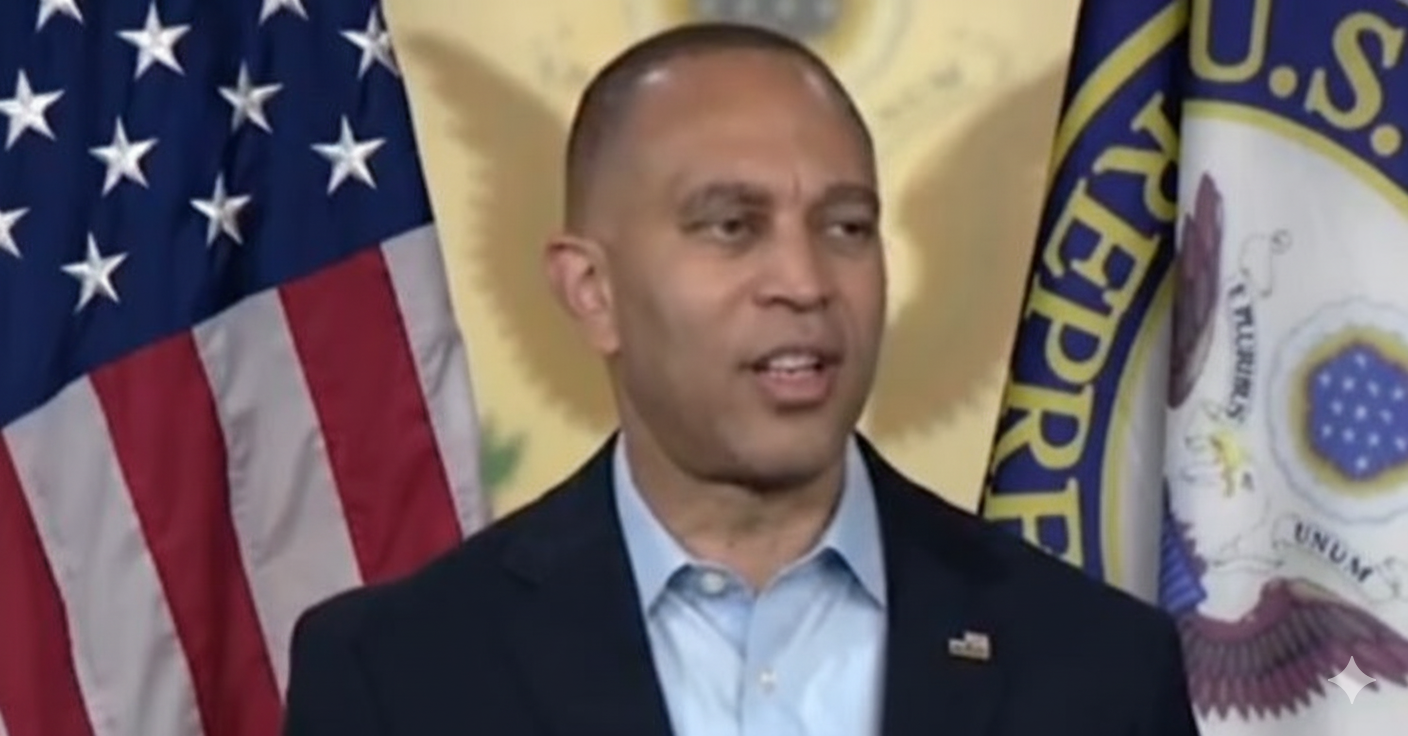
Jeffries lashes out at Karoline Leavitt, calls her “sick,” “demented” and a “stone-cold liar” as partisan tensions flare during shutdown
House Minority Leader Hakeem Jeffries at a press conference condemned White House Press Secretary Karoline Leavitt as “sick,” “demented,” and a “stone-cold liar,” escalating partisan tensions this week over budget fights amid a federal government shutdown.
Key takeaways
- Jeffries publicly rebuked Leavitt after her Fox News remarks that accused Democrats of catering to “Hamas terrorists, illegal aliens, and violent criminals” (AOL News report).
- Escalating rhetoric: Jeffries used sharply personal language — calling Leavitt “sick,” “demented,” “ignorant,” “out of control” and a “stone-cold liar” — while Leavitt countered by calling Jeffries “an America Last, stone-cold loser” (video of the exchange).
- Policy context: The confrontation unfolded amid fights over funding, including Affordable Care Act subsidies and a blocked defense spending bill that fed the ongoing government shutdown (AOL; video).
- Local impact: Fresno-area officials and residents may face practical effects from the shutdown, including delayed federal payments, program disruptions, and heightened political tensions.
What Jeffries said and why it mattered
At a podium during a briefing tied to the government shutdown, House Minority Leader Hakeem Jeffries directly attacked White House Press Secretary Karoline Leavitt after her appearance on Fox News. Jeffries framed her remarks as unacceptable and harmful to public confidence while federal services were disrupted.
“She’s out of control, and I’m not sure whether she’s just demented, ignorant, a stone-cold liar or all of the above,” Jeffries told reporters at the briefing, according to video and reports.
Jeffries tied his criticism to timing: the nation was in the middle of a shutdown and needed focused leadership for funding negotiations. He said the rhetoric from the White House press office undermined public confidence and distracted from urgent negotiations. (Source: AOL News report; video.)
Leavitt’s original remarks and response
Leavitt’s on-air comments on Fox News were unusually blunt: she said the Democratic Party’s “main constituency is made up of Hamas terrorists, illegal aliens, and violent criminals,” a sweeping claim that prompted immediate backlash. (Source: AOL.)
After Jeffries’s public condemnation, Leavitt pushed back and doubled down, calling Jeffries “an America Last, stone-cold loser” and reiterating that Democrats “do NOT serve the interests of the American people,” keeping the dispute in the headlines.
Video, soundbites and public reaction
The back-and-forth unfolded on camera and circulated quickly online. Visuals — both Jeffries’s remarks and Leavitt’s Fox News segment — helped fuel widespread coverage across traditional and social media, amplifying debates about tone and strategy.
Watch the source video: Full video of Jeffries’s remarks; additional coverage: Times of India video.
Commentators on both sides dissected whether the personal attacks were strategic or damaging — some argued a forceful rebuke was warranted, while others warned the rhetoric could further degrade public discourse and complicate budget negotiations.
Context: Government shutdown tensions and policy fights
The confrontation took place amid larger disagreements over spending bills. Reports cited clashes over defense spending and Affordable Care Act subsidy language that contributed to the shutdown. Senate Democrats blocked a broader funding proposal that included defense spending, and President Trump criticized Democratic demands, intensifying partisan gridlock. (Sources: AOL; video.)
Analysts warned that incendiary claims accusing a party of aligning with violent groups or criminals increase polarization and make compromise harder — a serious concern while negotiations over funding and services remain unresolved.
Reactions from colleagues and political operatives
Members of Congress and political operatives quickly weighed in. Jeffries’s supporters viewed his remarks as necessary pushback to protect Democrats; Leavitt’s supporters framed her comments as a defense of law-and-order priorities and dismissed criticism as partisan. The exchange prompted debate about whether personal attacks by leaders and spokespeople help or hurt political aims.
Implications for Fresno, California
Local leaders in Fresno and the San Joaquin Valley may feel the national exchange in practical ways. Below are several potential local impacts and considerations:
Economic impact
A prolonged federal shutdown can delay federal contracts and payments important to central California. Fresno-area hospitals, schools, and agricultural programs rely on federal funding and subsidies tied to the Affordable Care Act; disruptions could slow projects, delay reimbursements, or affect seasonal workers.
Political consequences
Fresno’s politically diverse electorate could react to sharp national rhetoric with increased turnout, donations, or activism. Candidates emphasizing pragmatic problem-solving over heated rhetoric might appeal to moderates uneasy about extreme language.
Social effects
Accusations that national parties cater to violent groups or criminals risk stoking fear and mistrust. Community leaders focused on public safety and immigrant integration may face increased requests for information and support.
Practical applications
Residents who rely on federal services should monitor announcements about shutdown impacts and follow guidance from local officials. Those awaiting federal permits, disaster relief, or health program benefits may need to prepare for delays; nonprofits and clinics should brace for potential increased demand. (Context sources: AOL; video.)
Sources and video
- AOL News report on the exchange
- Times of India video coverage of the exchange
- Full video of Jeffries’s remarks
Political leaders, local officials and residents in Fresno who want more detail should watch the available video and follow official guidance about any local effects of federal funding disruptions. The Jeffries–Leavitt exchange is part of a broader story about how rhetoric and policy collide when federal budgets and services are at stake.



