
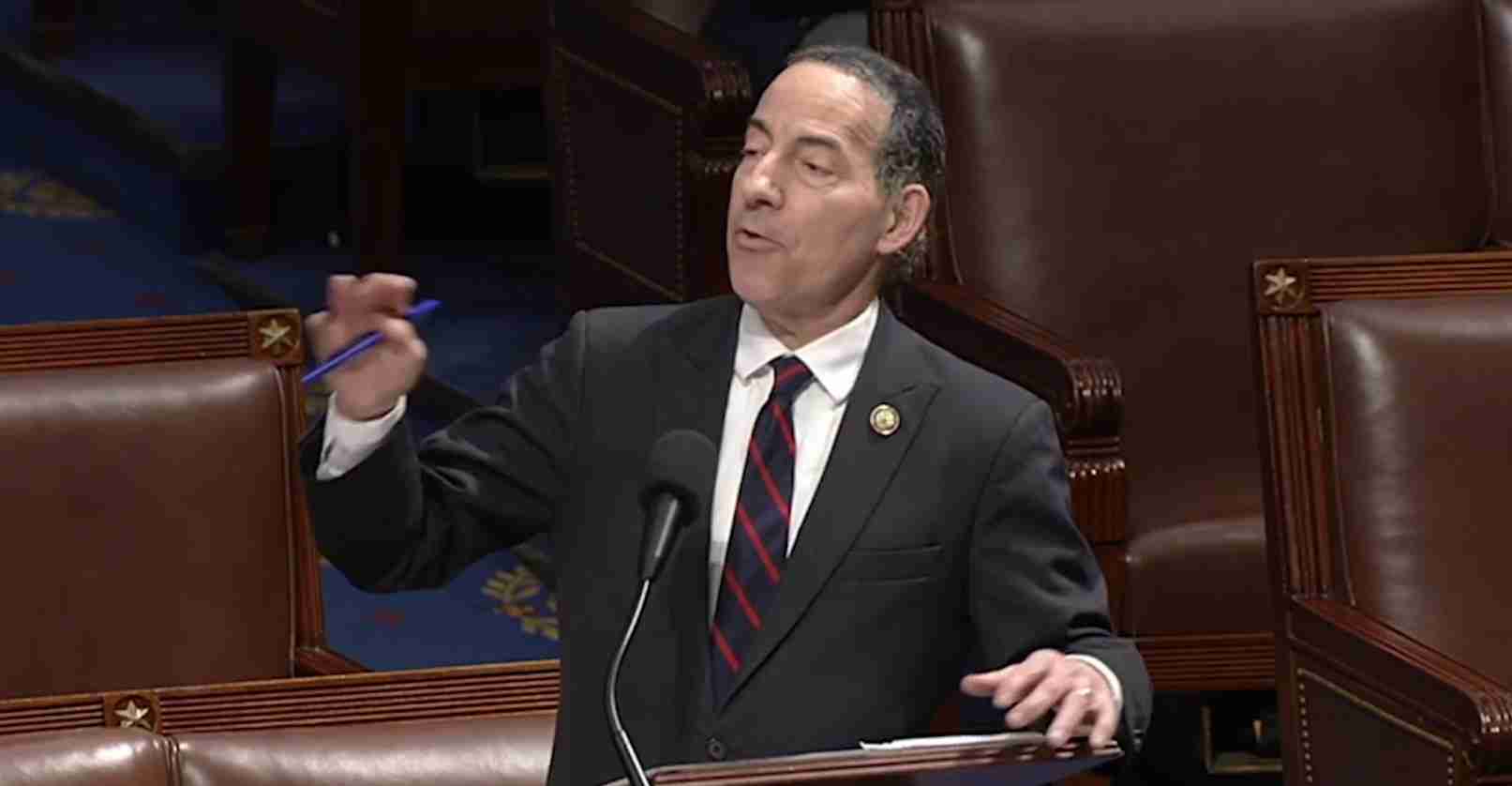
Raskin Faces Backlash for Defending Plaskett After New Documents Show Texts With Jeffrey Epstein During 2019 Hearing
Rep. Jamie Raskin (D-Md.) drew sharp criticism after defending Delegate Stacey Plaskett (D‑V.I.) when newly released House documents reportedly show she exchanged texts with Jeffrey Epstein during a Feb. 27, 2019, House Oversight Committee hearing.
- House records released by Republicans include texts showing Plaskett messaging Jeffrey Epstein during the Feb. 27, 2019, hearing (Fox News).
- Messages reportedly show Plaskett asking Epstein for input on questioning and discussing wardrobe; critics call Raskin’s defense a cover-up and “dishonest” (Fox News).
- Republicans introduced a censure resolution that failed after some GOP members joined Democrats to oppose it; leaders urged an ethics review instead (Notus, Axios).
What the documents show
Newly released committee records include short exchanges during a 2019 hearing in which Rep. Stacey Plaskett appears to be in contact with Jeffrey Epstein while Michael Cohen testified. The texts were published as part of a broader Republican document release and reportedly show Plaskett seeking input about questioning strategy and sharing casual comments — even about what she planned to wear that day (Fox News; Notus).
Observers note Epstein’s primary residence in the U.S. Virgin Islands — Plaskett’s constituency — as context for judging the relationship. Past investigative reporting summarized in recent coverage indicates Plaskett’s official roles sometimes intersected with interests tied to Epstein, which critics say suggests contacts may have gone beyond routine constituent outreach (Fox News).
Raskin’s defense and reactions
On the House floor, Rep. Jamie Raskin defended Plaskett, describing the exchange as routine constituent contact and arguing there is “no rule against taking phone calls in a hearing.” He urged that the proper course is an ethics committee review rather than immediate censure (YouTube; Notus).
“There is no rule against taking phone calls in a hearing,” Raskin said, calling for calm and a formal ethics review rather than immediate punishment.
Conservative commentators and several Republican lawmakers sharply criticized Raskin’s remarks, labeling the defense “dishonest” and “sick” and arguing the language minimizes serious concerns about communication with a convicted sex offender (Fox News).
Republican response and censure attempt
Republican Rep. Ralph Norman introduced a censure resolution accusing Plaskett of “inappropriate coordination” with Epstein, citing the released texts as evidence of ongoing contact and an appearance of impropriety (Notus; Fox News).
The censure resolution failed when some Republicans joined Democrats in voting against it. House leaders on both sides emphasized an ethics review over immediate punitive action, highlighting partisan divides and caution about using censure in this instance (Notus; Axios).
Context: Epstein files and past reporting
This release is part of broader document disclosures about Epstein from House Republicans, renewing scrutiny of many public figures’ past connections. Independent reporting previously documented occasions where Plaskett’s work in the Virgin Islands intersected with Epstein’s interests — such as assistance related to tax credits and local jobs — raising questions about the nature of their interactions (Fox News).
Plaskett has said the texts reflected routine engagement with a constituent and that, at the time, the broader public was not fully aware of federal investigations into Epstein. Supporters stress context and caution against assuming technical rule violations without a formal ethics finding (Fox News).
Ethics and the larger debate
The central question is when constituent contact crosses ethical lines. Raskin framed the matter as appropriate for the House Ethics Committee, which handles in-depth inquiry. Critics contend that given Epstein’s crimes and influence, the contacts warrant swift action to preserve public trust (Notus).
Partisan dynamics are clear: Republicans used the document release to press accountability, while some Democrats defended Plaskett and warned against politically motivated punishment absent a formal ethics determination (Axios).
Raskin Plaskett Epstein texts and public reaction
Social media searches amplified the story after outlets published the messages. The phrases “Raskin Plaskett Epstein texts” and “Jamie Raskin criticism” trended in conservative coverage, raising wider questions about how lawmakers handle constituents with notorious histories and fueling partisan coverage of the episode (Fox News).
Implications for Fresno, California
Economic impact
- Federal trust and grant scrutiny: Fresno organizations receiving federal grants may face calls for greater transparency; groups should review and clarify federal reporting.
- Tourism and reputation: National scandals can briefly dent public confidence in institutions that support local tourism and federal development programs.
Political consequences
- Voter skepticism: Moderate Fresno voters may view the episode as evidence for stronger ethics rules in Washington.
- Campaign messaging: Local operatives might reference the controversy in ads or debates to press opponents on transparency and accountability.
Social effects
- Civic engagement: Stories about congressional ethics often spur civic interest; community groups and schools could use the episode for education on oversight.
- Public discourse: Fresno’s moderate electorate may push for measured, fact-based local leadership responses rather than partisan attacks.
Cultural relevance & practical applications
- Trust in institutions: Residents who value accountable institutions may call for stronger local standards in government and nonprofits.
- Constituent expectations: Voters may demand clearer boundaries between outreach and inappropriate relationships.
- What residents can do: Contact representatives about the ethics process, check local grant transparency, and support civic education forums on oversight.
Sources and reporting notes
Reporting for this article relied on published coverage and document releases, including Fox News, video coverage (Fox News video), Notus reporting on the censure effort and document releases, an Axios report on intelligence files, and Raskin’s remarks on the House floor as recorded in video (YouTube).
This account aims to present competing claims and source material so Fresno readers can understand how national oversight questions may touch local civic life and expectations of elected officials.



