Emergency Potomac Interceptor sewer repairs finished; officials warn Potomac River sewage spill remains a public-health threat
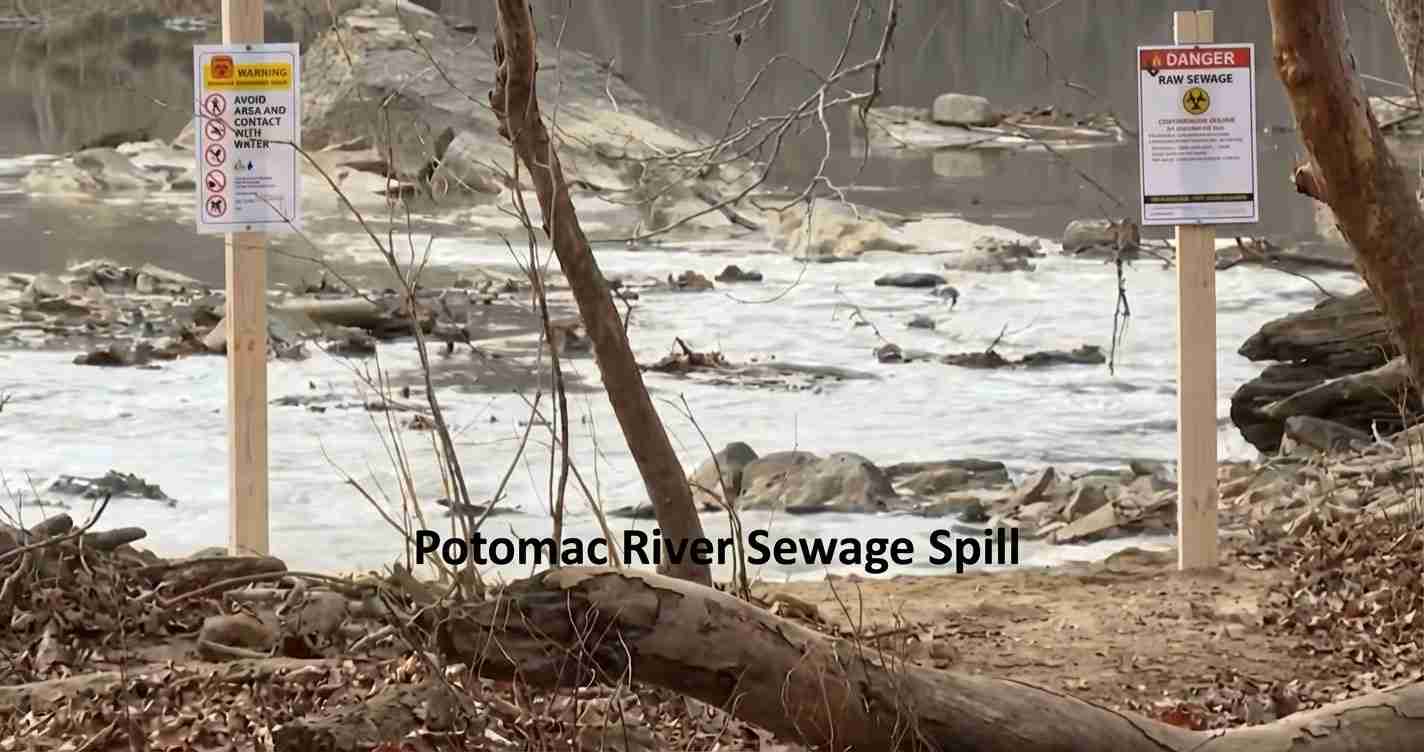
DC Water has finished emergency repairs on the Potomac Interceptor and restored full flow, but officials warn high E. coli levels and other contaminants persist — the environmental and public‑health threat from the Potomac River sewage spill remains significant.
- Emergency repairs complete: DC Water says the Potomac Interceptor is back in service and the C&O Canal was fully drained as part of site restoration.
- Massive spill: The interceptor rupture released an estimated 240–300 million gallons of raw sewage into the Potomac on Jan. 19.
- Health risks remain: High E. coli and other contaminants have spiked and may persist despite repairs; advisories remain in place.
- Federal response and costs: FEMA, EPA and the U.S. Army Corps of Engineers joined recovery work after a federal disaster declaration; long‑term reconstruction could cost hundreds of millions.
Key sources and reporting
Coverage and monitoring compiled from World Socialist Web Site, the Wikipedia entry on the 2026 Potomac River sewage spill, KOMO News reporting and related national coverage including WSBTTV.
What happened: the failure and its scale
Incident summary: On Jan. 19 a section of the Potomac Interceptor — a roughly 72‑inch‑diameter reinforced concrete sewer line built around 1962 — collapsed near the Clara Barton Parkway about five miles upstream of Washington, D.C. The line carries wastewater from parts of Maryland and Virginia toward D.C.’s Blue Plains Treatment Plant.
The collapse discharged between about 240 million and 300 million gallons of untreated sewage into the Potomac, making it one of the largest sewage spills in modern U.S. history. Sources documenting the scale include the World Socialist Web Site and the Wikipedia entry.
Emergency response and bypass operations
DC Water said crews worked around the clock to stabilize the site, protect the river and install an emergency bypass. The temporary bypass routed flow using the C&O Canal and was installed by Jan. 24 in coordination with the National Park Service, allowing flow to bypass the collapsed segment while permanent repairs were planned and executed.
Repairs and federal response
Repairs finished: DC Water announced emergency repairs were complete and that the line is back in service; the C&O Canal was fully drained as part of site restoration. Federal agencies — the EPA, FEMA and the U.S. Army Corps of Engineers — have participated in assessment and recovery after a federal disaster declaration was approved in late February. The declaration, signed by President Trump, enabled FEMA assistance.
The event also drew public political comment: President Trump criticized local officials’ responses, saying he feared the river “would still stink” for summer events. Maryland Gov. Wes Moore pushed back, noting the pipe sits on federal land and is managed by DC Water; Moore said Maryland provided personnel to assist neighbors and told Fox News Digital “This is a Washington, D.C., pipe on federal land.”
Costs and longer-term fixes
Officials emphasize that emergency repairs restored immediate function but are not a substitute for full reconstruction. Early estimates for permanent replacement commonly cited in reporting start in the $600 million range or more and could take years. Shorter-term emergency measures and cleanup have already cost agencies and contractors millions, and environmental groups warn the plan may be inadequate given deferred maintenance on aging wastewater infrastructure.
Environmental and public‑health impacts
Post‑rupture tests showed E. coli levels hundreds of times above EPA safety limits in parts of the river. Officials warned of bacterial, viral and parasitic risks associated with raw sewage. Cold weather and ice initially limited downstream movement, but contamination still traveled more than 30 miles, prompting advisories against swimming, boating and fishing in many Potomac segments and closures on shellfish harvesting in affected Maryland waters.
Drinking‑water intakes were largely protected because they draw upstream or have treatment barriers; officials said public drinking supplies were not affected. Monitoring continues: agencies caution that pathogens and contaminants can persist in sediments and aquatic life even after visible flows resume.
Legal fallout and community response
A lawsuit by recreational boater Nicholas Lailas seeks compensation for impaired use of the river. Conservation groups, including the Potomac Riverkeeper Network, and residents demand stronger accountability and a more robust cleanup plan. Local governments declared emergencies, waived procurement rules and coordinated with federal partners to accelerate response efforts.
Sources and ongoing monitoring
Local, state and federal agencies continue sampling water and posting advisories. Agencies updating the public include DC Water, the Maryland Department of the Environment and the D.C. Department of Energy and Environment. Independent reporting and environmental groups are tracking water quality and long‑term repair progress; coverage used in this article includes reporting compiled from the World Socialist Web Site, the Wikipedia entry, KOMO News, and related national coverage including WSBTTV.
Implications for Fresno, California
Though Fresno businesses are not directly affected by the Potomac spill, the episode serves as a cautionary example about aging wastewater systems and the costs, political fallout and public‑health challenges that can follow an infrastructure failure.
Economic impact
- Short term: Fresno businesses tied to recreation or seafood are not directly impacted, but local agencies may face pressure to inspect and accelerate upgrades to older sewer lines to avoid sudden costs and tourism impacts.
- Long term: The Potomac response shows how a federal disaster declaration can unlock FEMA resources; Fresno leaders may consider similar avenues if local infrastructure failures overwhelm near‑term funds.
Political consequences
Infrastructure failures quickly become politicized. Fresno officials and voters may watch how responsibilities are parsed between local, state and federal actors and use the episode to refine oversight and communication plans to limit friction and speed repairs.
Social effects
Clear public‑health messaging matters. The Potomac incident involved advisories similar to boil‑water warnings for recreational users and anglers; Fresno health departments can review communication strategies to reach diverse communities and ensure timely river, lake and canal warnings.
Cultural relevance
Rivers and waterways are central to local life. The Potomac spill is a cautionary tale underscoring the need to preserve clean water for recreation and family activities and may boost support for habitat protection and pollution prevention locally.
Practical applications for local officials and residents
- Review infrastructure risk: Inventory pipes built in the mid‑20th century and prioritize inspections, similar to the Potomac Interceptor case.
- Emergency planning: Test mutual aid agreements so crews and equipment can move quickly in a crisis.
- Public communication: Maintain clear, frequent advisories and live water‑quality maps to prevent illness and confusion.
- Funding strategies: Explore state and federal grant programs for resilience and document impacts in case a disaster declaration becomes necessary.
Attribution
This article preserves facts and reporting compiled from World Socialist Web Site, the Wikipedia entry, KOMO News and related national coverage including WSBTTV.