
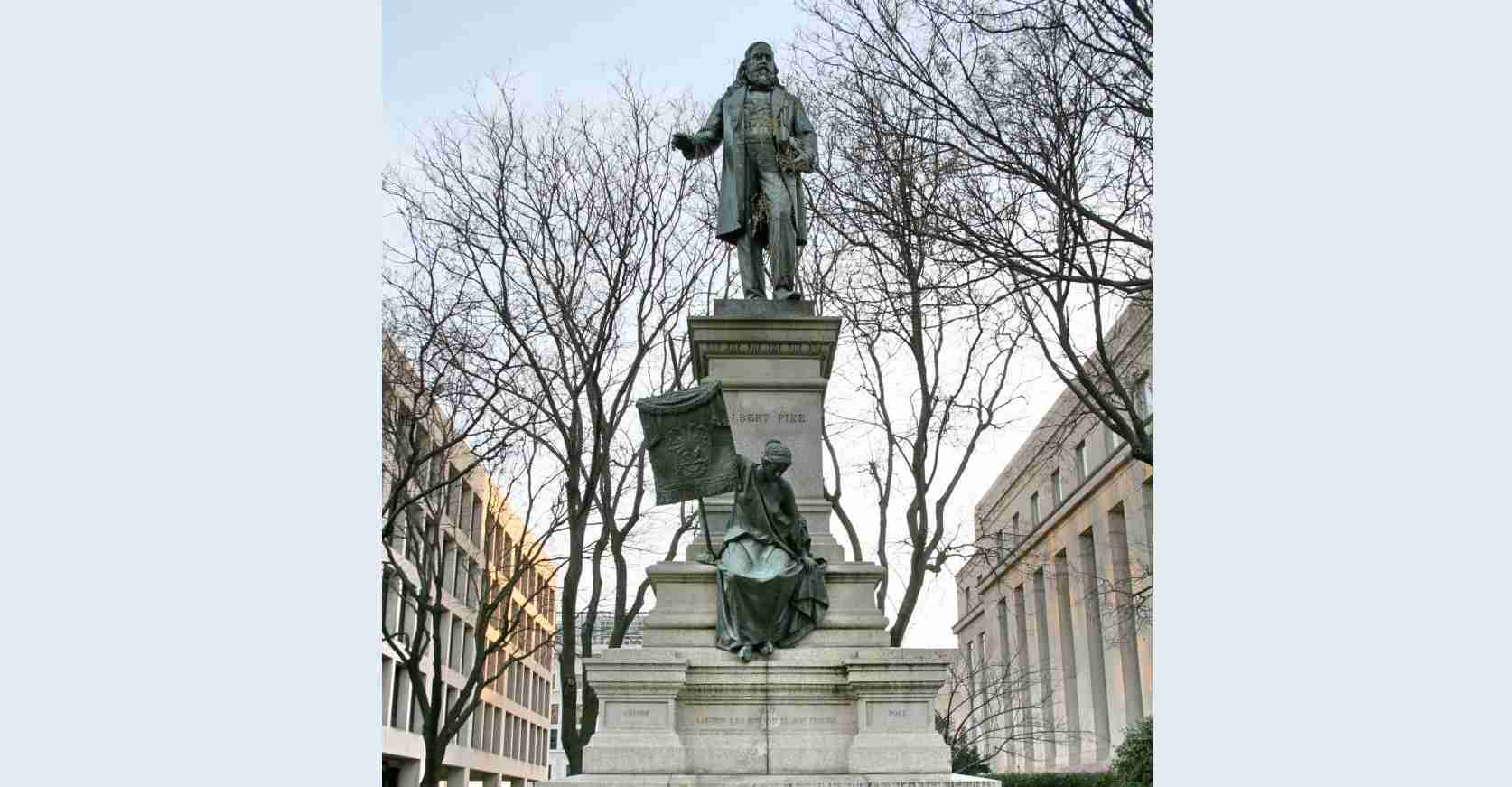
Trump administration to reinstall toppled Albert Pike Confederate statue in Washington, D.C., sparking renewed debate
The Trump administration announced plans to reinstall the toppled Albert Pike Confederate statue in Washington, D.C., by October 2025, reigniting fierce national debates over public memory, Confederate symbolism and the role of federal historic-preservation directives.
Key takeaways
- Reinstallation planned: The National Park Service will repair and reinstall the bronze Pike statue by October 2025, under directives from President Trump and cited historic-preservation law and executive orders.
- Toppled in 2020: The statue was pulled down, spray-painted and partly set on fire during Juneteenth protests in June 2020.
- Local opposition: D.C. Delegate Eleanor Holmes Norton called the move “odd and indefensible” and will push legislation to place the statue in a museum.
- Broader debate: The decision fuels national conflicts over monuments, memory and whether disputed figures belong in public spaces.
Key information
Toppling: Pulled down, spray-painted and set on fire by protesters on June 19, 2020 (Juneteenth) during nationwide Black Lives Matter protests, according to Global News and TAG24.
Restoration: The National Park Service will restore and reinstall the statue and its plinth by October 2025 under directives issued by President Trump (Mother Jones coverage).
Opposition: D.C. Delegate Eleanor Holmes Norton calls the move “odd and indefensible” and plans legislation to move the statue to a museum (TAG24; Mother Jones; video).
Background and the 2020 toppling
On June 19, 2020, demonstrators in Judiciary Square used ropes to pull down the bronze figure of Albert Pike. Witnesses and video show the statue falling to the pavement; protesters cheered, spray-painted the bronze and lit parts of it on fire as they chanted against racism and police violence following George Floyd’s murder.
The incident was part of broader protests that led to the removal of nearly 100 Confederate monuments across the country that year, an action documented by Global News, TAG24 and analysis in Mother Jones. Video footage of the toppling is publicly available online.
After its removal, National Park Service officials placed the damaged statue into secure storage while assessing repairs. Because the Pike statue had been one of the few Confederate-era outdoor monuments remaining in the nation’s capital, its fall drew national attention and became a flashpoint in debates about public memory.
Who was Albert Pike?
Congress authorized the monument in 1898 and it was unveiled in 1901. The inscription and supporters historically emphasized Pike’s role in Freemasonry and scholarship rather than his Confederate service. But Pike was a senior officer in the Confederate Army, commanded Native American troops in the conflict, and faces historical allegations linking him to early Ku Klux Klan activity — issues that have fueled calls to reconsider the statue’s place in public space (Global News; Mother Jones).
Administration actions and legal rationale
Officials say the National Park Service will repair the statue and masonry plinth and reinstall the monument by October 2025. The decision follows executive orders issued by President Trump early in his second term — notably “Making the District of Columbia Safe and Beautiful” and “Restoring Truth and Sanity to American History” — instructing federal agencies to preserve and restore historic monuments on federally managed land (Global News; TAG24).
The National Park Service frames the action as a matter of historic-preservation law: under federal rules, the NPS can conserve works it manages on public lands. Supporters argue that federal stewardship requires repairing vandalized works and preserving the historical record, regardless of controversy.
Political responses and public reaction
Local leaders and civil-rights advocates reacted quickly. Eleanor Holmes Norton called reinstalling Pike’s statue “odd and indefensible,” arguing monuments to “a racist and a traitor” should not occupy public spaces in the nation’s capital; she plans to reintroduce legislation to place the statue permanently in a museum (TAG24; Mother Jones; video).
President Trump previously condemned the 2020 topplings; critics say the reinstallation is politically motivated and part of a broader effort to preserve symbols many view as celebrating a racist past. Supporters counter that restoring the Pike statue protects the historical record and resists what they call efforts to erase parts of American history.
“Preserving contested monuments in public plazas effectively honors figures linked to slavery and white supremacy,” said opponents, while supporters argue federal stewardship is about conservation, not veneration.
Broader context: monuments, memory and the 2020 protests
The Pike decision comes amid intense debate after the 2020 Black Lives Matter protests, when renewed scrutiny fell on monuments, place names and public symbols tied to the Confederacy or colonial-era oppression. Nearly 100 Confederate monuments were removed or taken down in the year after George Floyd’s death as cities and institutions reassessed which figures belong in public spaces (Mother Jones).
The clash over monuments is a proxy for broader fights about historical interpretation: for some, removal corrects historical honor; for others, restoration or preservation prevents erasure. The administration’s move aligns with a political strand prioritizing preservation of longstanding symbols and pushing back against changes championed by 2020 protesters.
Implications for Fresno, California
Economic impact: Fresno is not directly financially affected by a statue in Washington, D.C., but national controversies can influence local tourism and funding priorities. If protests spread ahead of the October 2025 reinstallation, federal law-enforcement deployments and security spending could shift resources that otherwise go to grants or community programs.
Political consequences: Fresno voters and local leaders often mirror national debates. The decision may sharpen local discussions about public memory and monument policy. Elected officials in Fresno and Fresno County could face constituent pressure to take positions on monument preservation and public-space policy.
Social effects: Fresno’s diverse communities — Black, Latino, Native American and Asian residents — may view the Pike reinstallation differently. Local civil-rights groups and faith leaders may organize demonstrations, teach-ins or public forums. Schools and community centers could see increased demand for programming on racism, local history and civic engagement.
Cultural relevance: The decision could prompt Fresno museums, libraries and historical societies to reevaluate how they present contested histories, including whether statues and plaques should be reinterpreted, moved to museums or accompanied by contextual signage.
Practical considerations: Municipal leaders may review local monuments and public-space policies proactively. Residents can engage by contacting city council members, attending public meetings and supporting education efforts. Officials should prepare for peaceful demonstrations and community dialogues that protect free speech while ensuring safety.
Legal and civic action: If federal action sparks demonstrations that reach California, Fresno’s legal and civil-rights organizations may coordinate with national groups. Local lawmakers might explore resolutions affirming community values or requesting contextualization rather than celebration of controversial monuments.
What critics and supporters say — voices to watch
- Eleanor Holmes Norton: Calls the reinstallation “odd and indefensible” and wants the statue moved to a museum (TAG24; Mother Jones; video).
- Administration officials: Cite executive orders and historic-preservation law as the basis for restoring the statue (Global News).
- Activists and civil-rights groups: Likely to stage protests and legal challenges if reinstallation proceeds; they argue museums better contextualize contested figures (Mother Jones).



