Why Steamboat Geyser Has Gone Quiet: Experts Watch the World’s Tallest Geyser as Dormancy Grows
Yellowstone’s Steamboat Geyser, the world’s tallest active geyser, has remained largely silent since its April 14, 2025 eruption — marking over 230 days without a major blast and prompting sustained monitoring by scientists and park staff.
Key takeaways
- Long pause: Steamboat’s last major eruption was April 14, 2025; only brief minor activity has followed, with gaps exceeding 230 days.
- Uncertain causes: Experts point to mineral clogging, changing heat flow, or plumbing shifts — but no definitive explanation yet.
- Historic pattern: The geyser cycles between bursts of frequent eruptions and long dormancies; past gaps have lasted years to decades.
- Ongoing monitoring: Park scientists, the GeyserTimes community, and the Yellowstone Volcano Observatory continue observations.
Recent decline in 2025
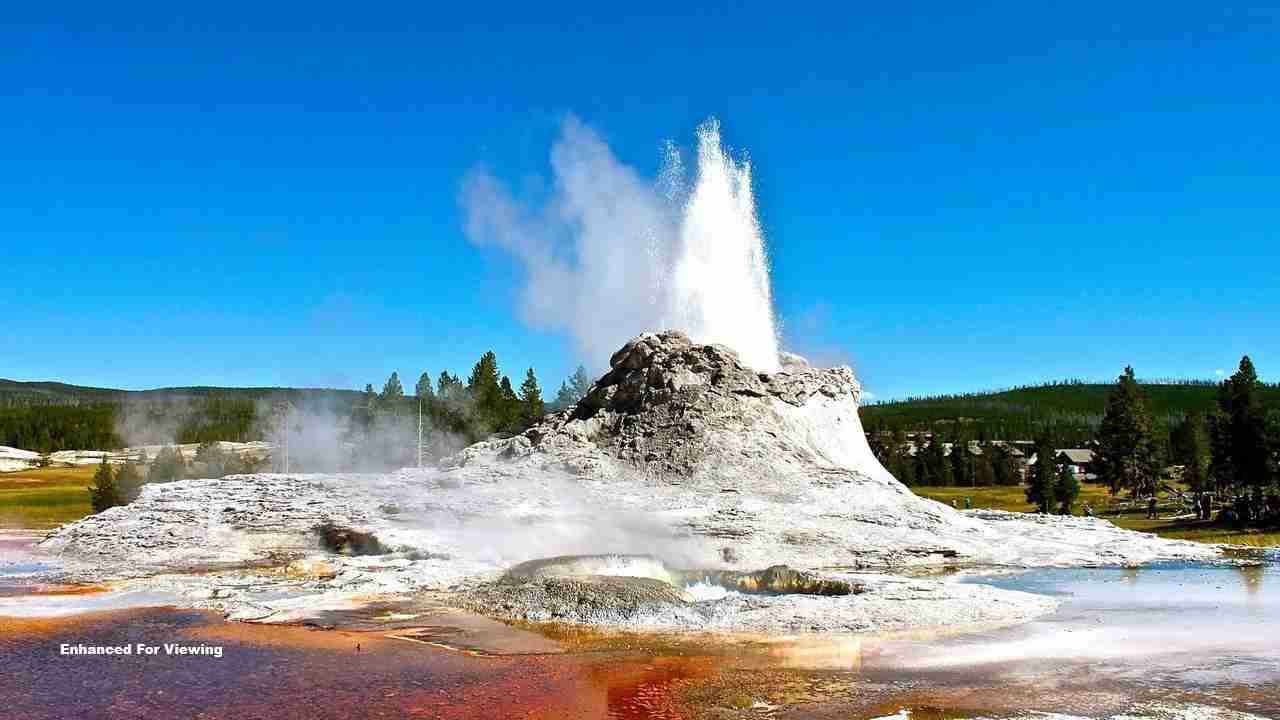
Steamboat produced a major burst on April 14, 2025, reaching roughly 300 feet and followed by the usual long steam phase. Since that event (recorded at 11:05 a.m. on the GeyserTimes log), the vent has not produced another major eruption and has shown only brief, weak activity.
Observers note that the pattern is a clear slowdown from the high-frequency phase that began in 2018 and peaked in 2019–2020. The contrast is visible in eruption logs and discharge graphs such as those used by park staff and citizen observers.
“The system is still active,” said Mike Poland, scientist-in-charge at the Yellowstone Volcano Observatory, noting steam and occasional weak bursts but no steady ramp-up to major eruptions.
A history of fits and starts
Steamboat’s record stretches back to at least 1878 and is marked by alternating periods of spectacular displays and long silences, according to the National Park Service. Recent decades highlight this unpredictability:
- 2014–2018: Mostly quiet — silent for about three years and 193 days until the 2018 reawakening (The River 97.9; NPS).
- 2018–2020: High-activity phase — 32 eruptions in 2018, then a record 48 eruptions in both 2019 and 2020 (The River 97.9; Cowboy State Daily).
- 2021–2024: Tapering — eruptions counted 20 (2021), 11 (2022), 9 (2023), and 6 (2024) per observer logs (The River 97.9).
- Long historical gaps: Examples include roughly 50 years with no major recorded eruptions from 1911 to 1961 and a near-decade of quiet in the 1990s; the 1961 revival followed the 1959 Hebgen Lake earthquake, though causation is debated (NPS; Cowboy State Daily).
Why experts are cautious about explanations
Steamboat sits in the dynamic Norris Geyser Basin, where subsurface conditions change frequently. Scientists warn that multiple factors — mineral deposition, heat-flow shifts, and plumbing reroutes — can alter eruption behavior, and no single cause is proven for the current slowdown (Cowboy State Daily).
Mineral-laden water can deposit silica that gradually clogs conduits, and small changes in magmatic heat or groundwater movement can modify pressures that drive eruptions. Because these processes act over variable timescales, direct cause-and-effect is hard to establish — as with the debated role of the 1959 earthquake in past behavior (NPS).
Eruption behavior and hazards
Major events begin with a water phase lasting 3 to more than 40 minutes, then hours or days of intense steam audible up to a mile away. Outwash from large eruptions can flood boardwalks and, in rare cases, alter the local landscape (National Park Service).
Park officials urge visitors to stay on boardwalks and obey closures. Even during quiet spells, the Norris Basin is unpredictable: new hot springs can appear and small hydrothermal explosions can create hazards for people and infrastructure (Cowboy State Daily).
Why Steamboat matters to science and the public
Steamboat’s unpredictability makes it scientifically valuable: studying its cycles sheds light on underground plumbing, mineral deposition, and potential links between seismic events and hydrothermal behavior. The 2018–2020 activity offered a rare window into sustained, world-class geyser behavior (NPS; Outside Online).
Steamboat Geyser dormancy: what it could mean
A prolonged pause does not mean Steamboat is finished erupting. Historical patterns include pauses of days to decades; the current silence could last any of those timeframes. For that reason, scientists prefer the term dormancy rather than declaring the geyser “dead” (GeyserTimes; Cowboy State Daily).
How scientists are watching
Monitoring includes temperature and steam measurements, ground movement sensors, discharge graphs such as Tantalus Creek records, cameras, and community-sourced timing and video. Agencies involved include the Yellowstone Volcano Observatory and the U.S. Geological Survey, while citizen scientists contribute logs to GeyserTimes.
Implications for Fresno, California
Economic: Yellowstone tourism draws visitors from across the West, including Fresno. Extended dormancy could slightly affect trip timing and travel bookings for operators offering Yellowstone in multistate itineraries.
Political and social: The pause may heighten public interest in national-park funding, science, and monitoring. Fresno educators and families can use the event as a teachable moment about geology and long-term observation.
Practical travel advice: For Fresno travelers, expect uncertainty: plan flexible itineraries, book refundable travel when possible, and follow park guidance. Tour operators should promote a range of attractions beyond a single spectacle.
Sources and further reading
- National Park Service – Steamboat Geyser
- GeyserTimes – Steamboat eruption log
- The River 97.9 – Steamboat slowdown report (2025)
- Cowboy State Daily – Analysis of long dormancy possibilities (2025)
- Outside Online – Reporting on the geyser’s pause
- U.S. Geological Survey – Yellowstone Volcano Observatory
Parent Publication: Times Media Service